Fishing the Margins
Winter gray and falling rain, we'll see summer come again, Darkness falls and seasons change (gonna happen every time).

Looking out my back door.
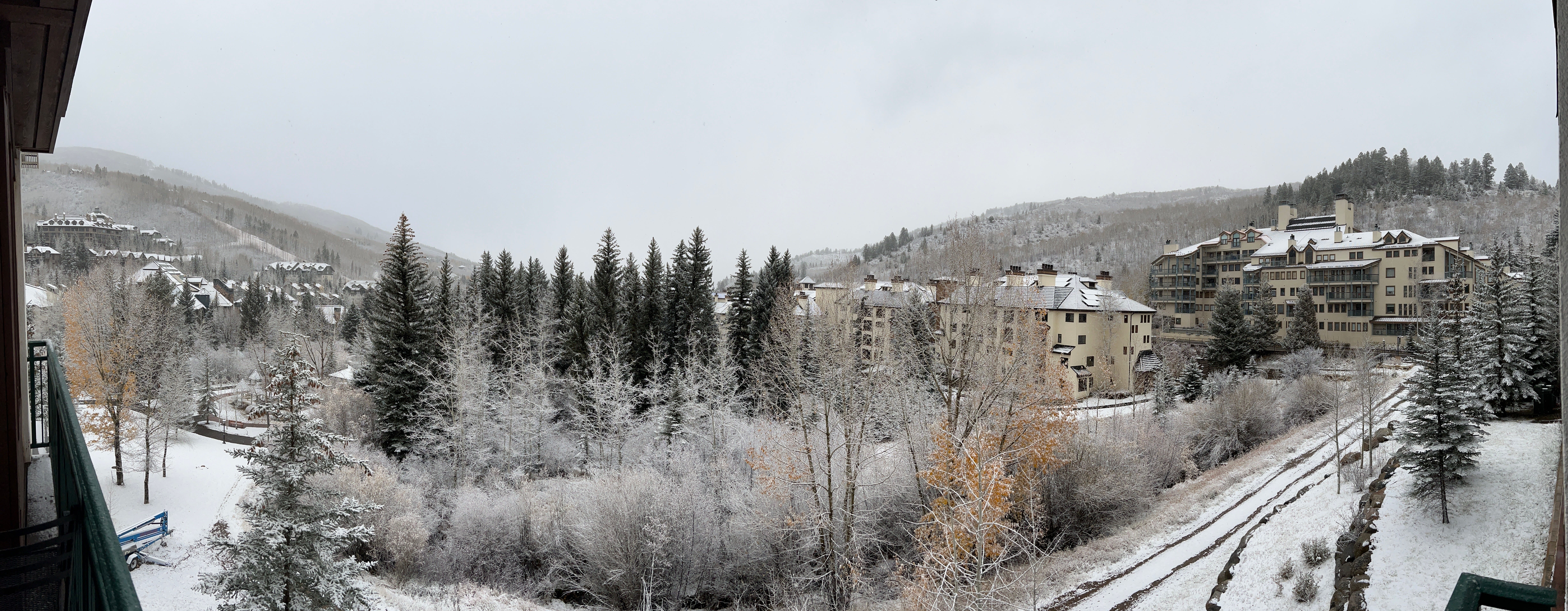
Soon all this will melt, and fill the little creeks and streams that merge into the bigger rivers. Streams that are gentle flows in summer and fall
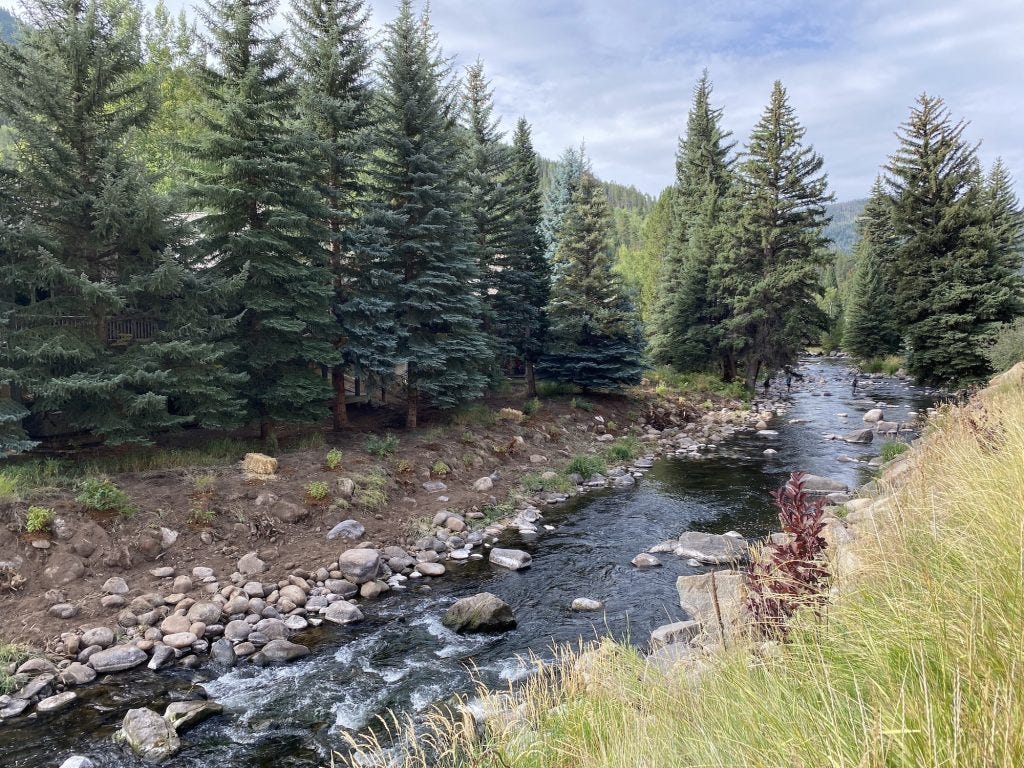
become raging torrents, thundering their way down to large rivers.
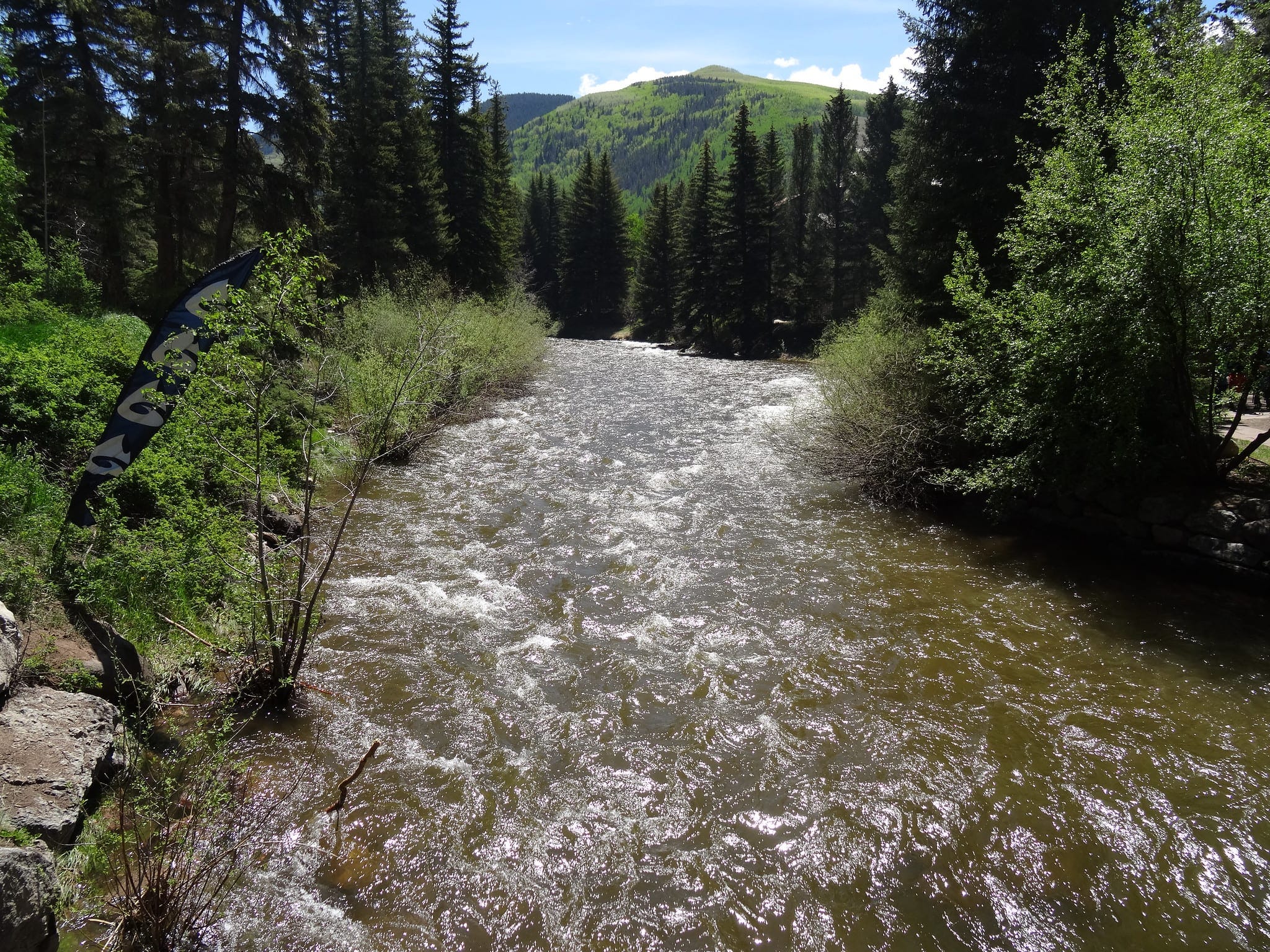
The water is turbulent, and churning, often stained, but relentless, pouring down, for days on end. Even as it draws down, as the runoff cools, days and weeks can pass before it gets to, what some may consider, prime levels.
But the fish are still there. And they’re still feeding. And they aren’t fighting the roiling heavy water. They’re sitting in comfortable spots, waiting for all the stuff that gets dislodged by the currents to come drifting by. And they are remarkably easy to catch, if you can get to them.
Personally, I like fishing the big rivers when the water is high. A trusty oarsman, a stable boat, a good long rod, and the trout are there for the taking. You just have to be able to get to them.
Forget the slots, and the runs, and the deep water where some people are slinging about two pounds of lead attached to their leader, or half a chicken wrapped around their hooks. Forget the baloney about flies that move water, and all the guff about a big fly tempting a trout in troubled waters. That’s not where the answer lies. It lies in daintily picking apart the margins with finesse. Often done while whizzing by at the Mach 1, but nevertheless a delicate task like a microsurgeon with his micro knives.
Fishing the margins is always a delicate task. There is a narrow slot right along the bank, where the current is soft, the water relatively shallow and food abundant. These are the slots that need to be fished.
I am by training an aerospace engineer, a fluid dynamicist. In the world of fluid dynamics we have a phenomenon called cavity flow. On broad terms cavity flow, to the fisherman is just a back eddy. But in actuality cavity flows are myriad and 3-dimensional. The diagrams below show a number of different cavity flow conditions.
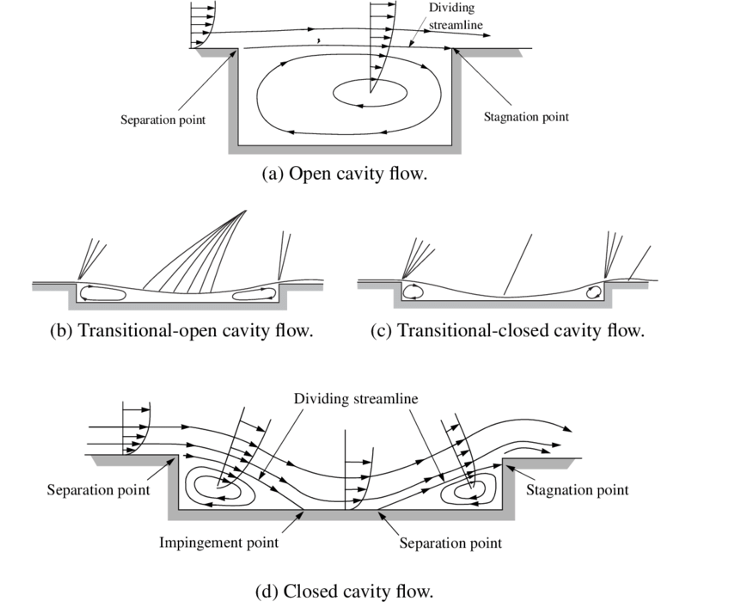
But the thing to remember is that these cavity flows can be created both in the direction of the depth and the distance away from the bank. The open cavity in (a) is one everyone knows about and on a small scale they are difficult to fish. But the other cavities have large sections where the flow is linear and one directional. The streamlines shown above reflect the state of the flow.
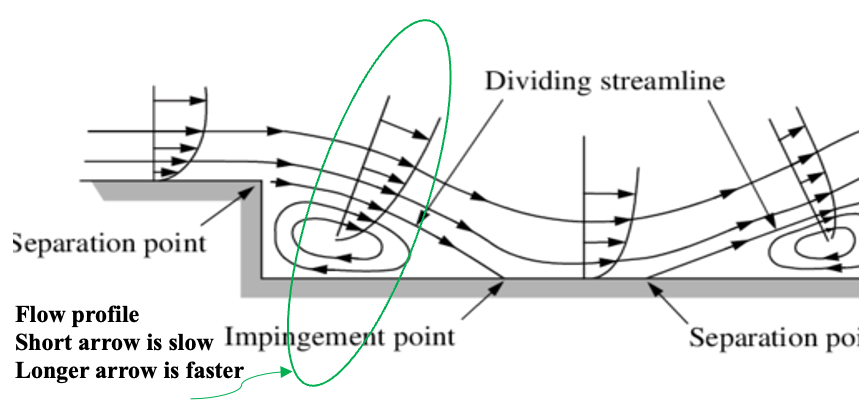
A simple matter of fluid dynamics is that at the interface between the bank or bed and the water the actual flow speed is exactly 0. These transitional cavities are the holding spots for the fish and the external currents as the dip in and out bring the food into the cavity and hence to the fish. Now imagine that the solid wall we’re looking at here is actually the stream bank. The cavities can be formed by indentations in the bank itself, or by other obstacles such as root balls, rocks, bridge abutments, riprap, or whatever else may cause a slight impediment to the flow. Each and every one of those provides a have for trout.
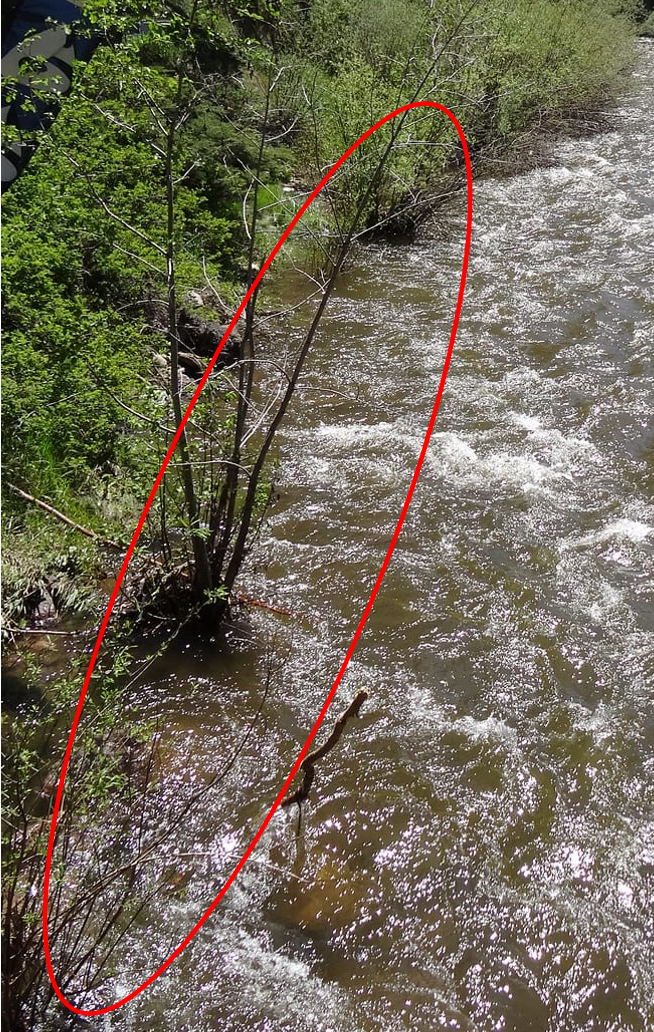
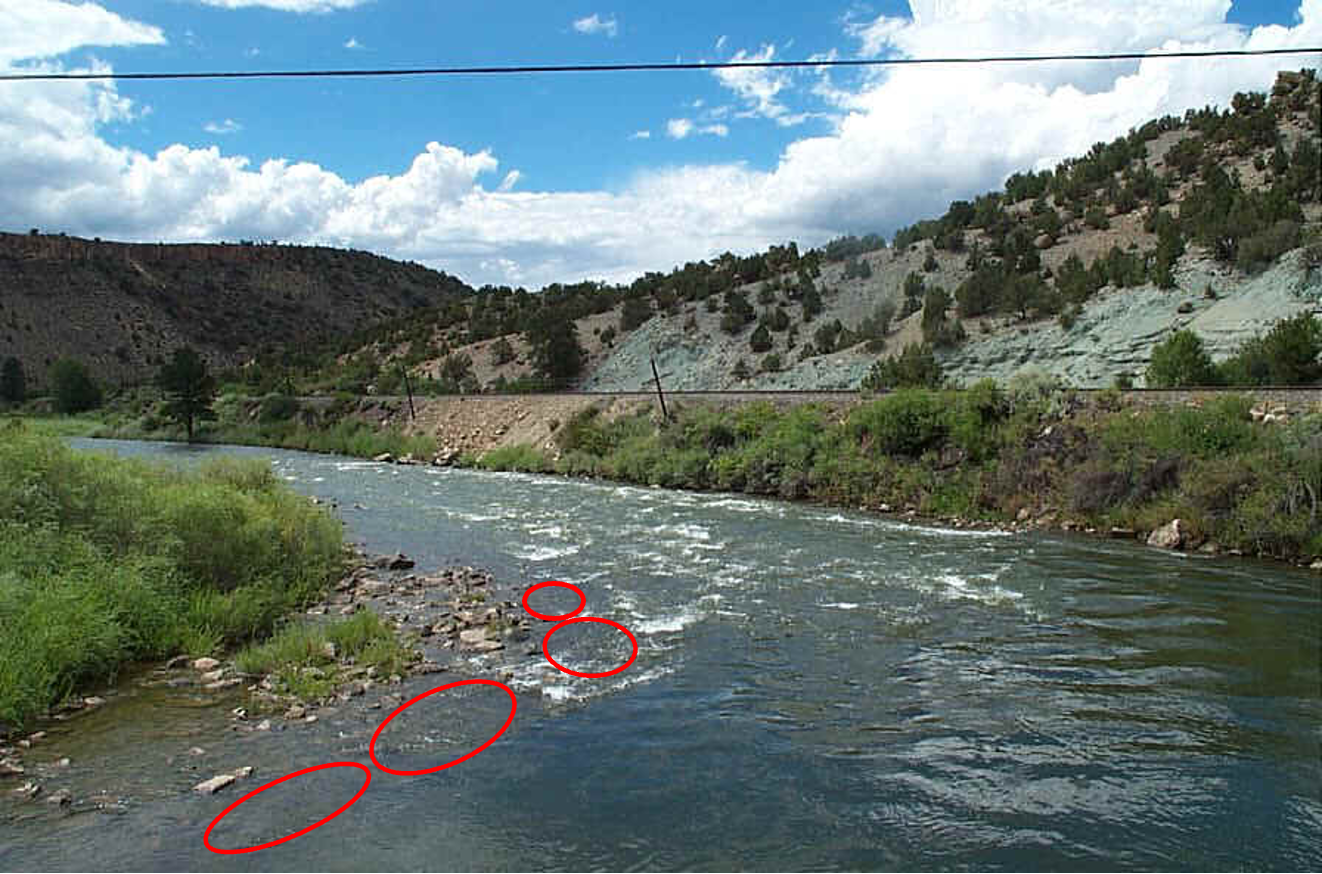
Look at this section along a Colorado stream in runoff. That’s where those fish will hang. Once you get a fly in there you’ll realize that your problem actually will be how slow the water actually is.
It isn’t always high water that causes fish to hold in the margins. The characteristics of some rivers, or areas of rivers force trout into the margins at any time of the year. Here’s an Eastern river in July at nominal water flows. But the conditions in this area are such that there’s a fast moving center section and a nice soft margin along the banks, particularly river right.
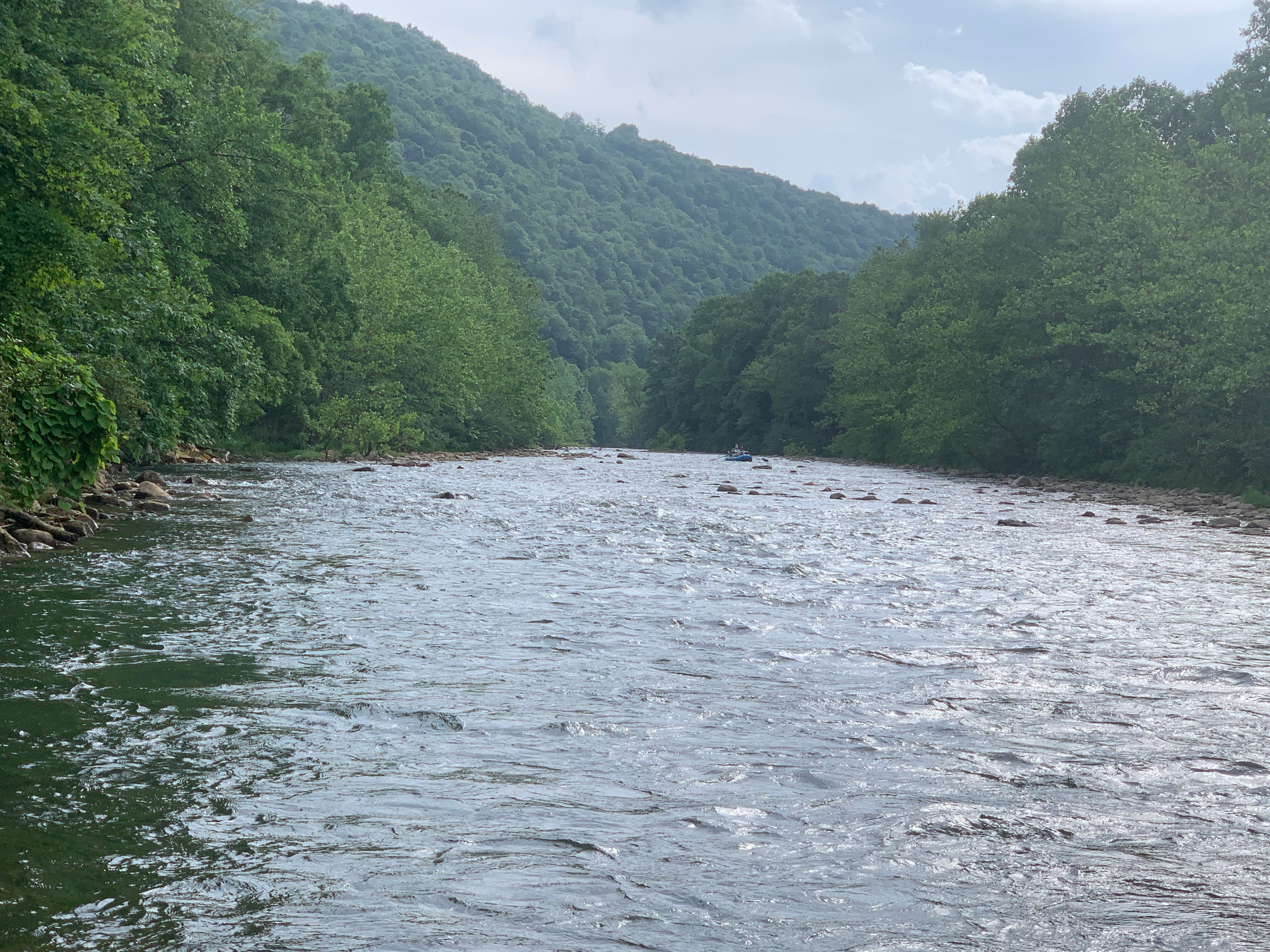
That’s the left side of your view. The trout line up in that soft water and with a little dint and persuasion you can walk right up to them. That’s my fly line hanging over the water
Big, ripping stretches of water offer up the same sort of thing along the shoreline. This is a section of the Yarmony Rapids on the Colorado. Get the right kind of boatman and probe those margins. Big fish live there, and they’re suckers for a well placed fly.
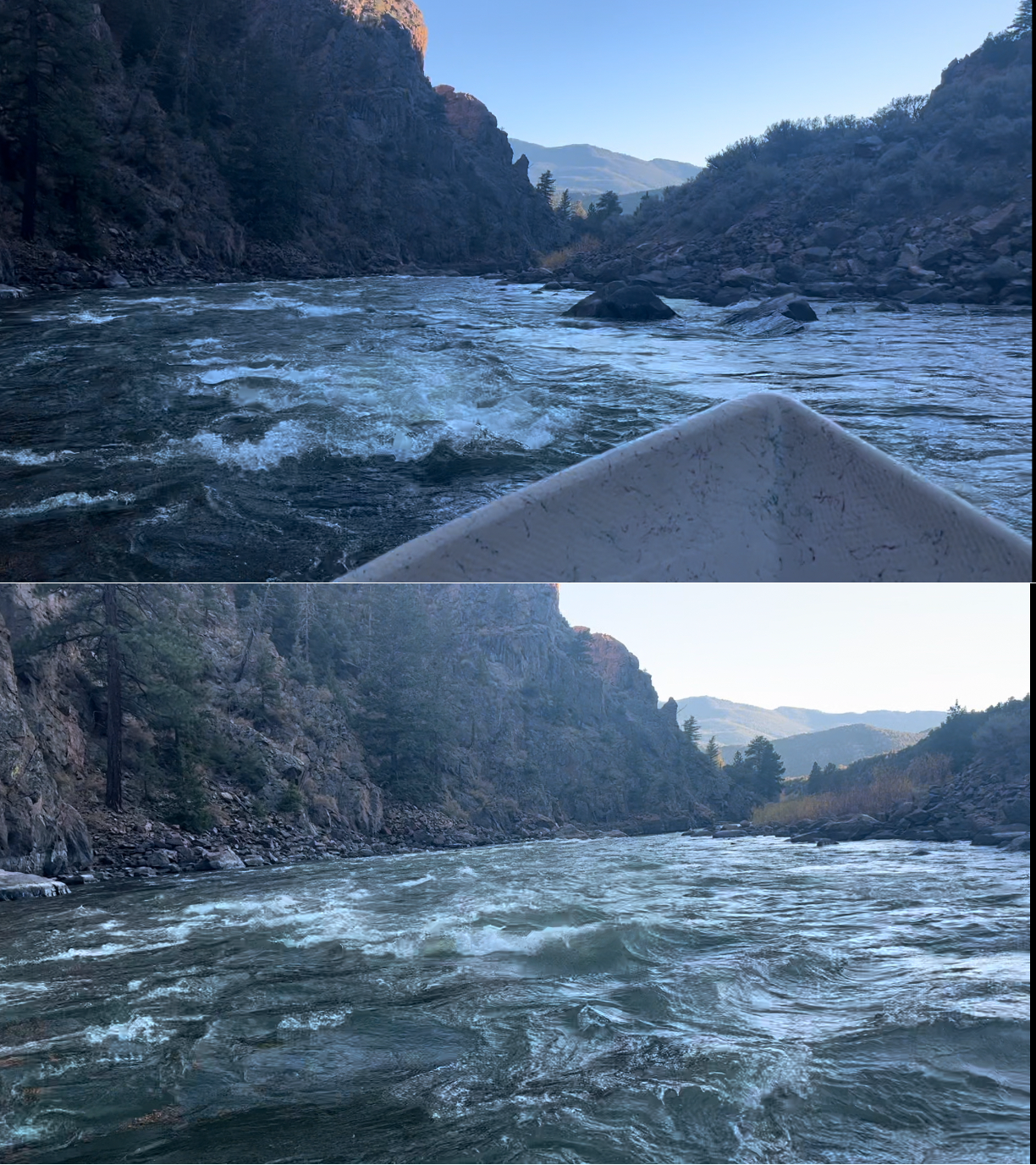
The fish hang in the margins because the flow is gentle (sometimes exceedingly so), and yet the main flow pumps food into these margin areas. In some rivers the margins may make up only 1-2% of the overall volume of the stream and yet hold more than 90% of the fish. But there are some tricks to catching these fish.
The first thing to remember is that a fly outside the margin in unlikely to pull a fish to it. You’re trying to get a trout out into inhospitable water, and one where the fly is zipping by. This is a low probably game. So casting accuracy is a must.
I like fishing from a boat. And I’ll tell you why. But that’s not always possible, so see if you can implement these strategies wade fishing. First, don’t cast perpendicular to the bank. This spells disaster in many ways. Before all is said and done, I’m going to convince you to fish with more than on fly on your leader. If you agree, you’ll find that casting perpendicular to the bank will inevitably point the point flies onto the ground, if the top fly goes where it’s supposed to go.
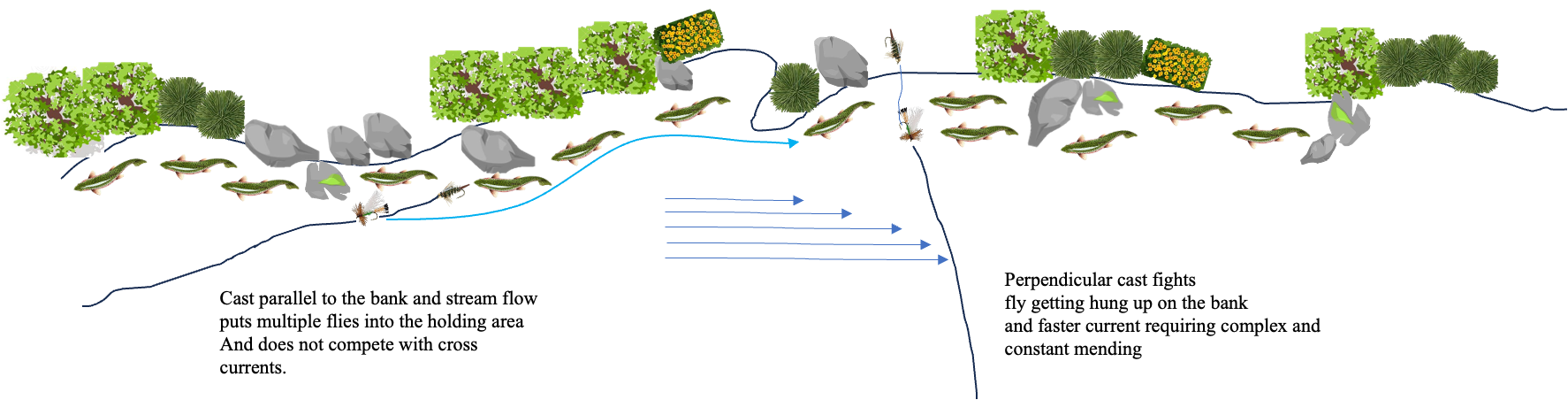
A cast made parallel to the streamflow allows one to drop the flies into the right spot, without potentially getting one hung up on shore. It also positions the flies for a longer float in the holding zone, as opposed to the faster current pulling the fly away from the holding area. With one exception I like to fish downstream, when plying the margins. Trout will typically hold in front or to the side of boulders or behind them. Unless they are some distance behind the boulder they’re really tough to catch. I always refuse to apply some anthropomorphic explanation to trout behavior, so this is merely an observation. The ones in front and to the side are much easier to catch.
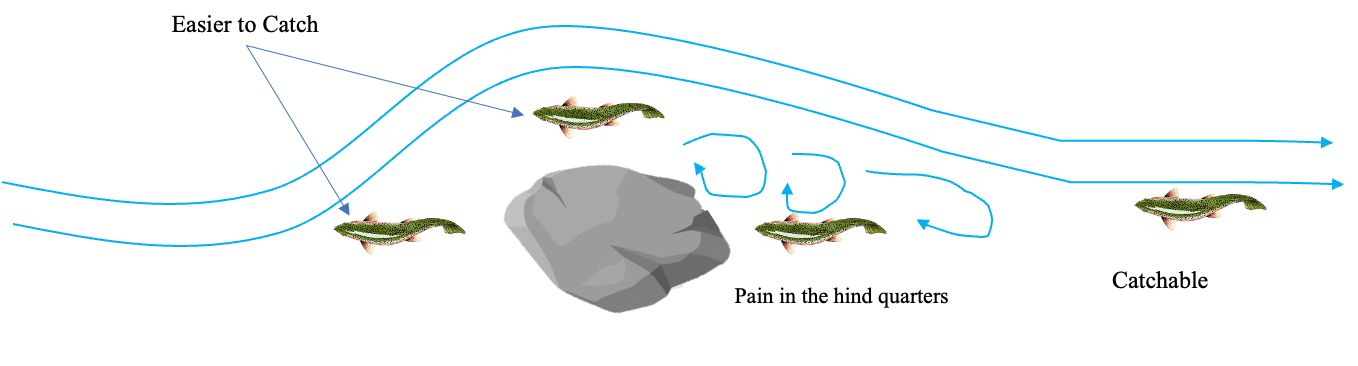
The best way to get a fly to the fish that are easier to catch is from upstream. The currents around those rocks and in the cavities make fishing a dead drift downstream nigh on impossible. Casting into these margins from the same shore is an equally tricky job. You still have to come at the margin from the stream side or run the peril of dropping your line on stream side vegetation, rocks, etc. Even a couple of feet offshore would make it easier but the margin fish lie in those margins.
The productive margins aren’t just a high water or extremely fast water phenomenon. Even after the snows have melted and gone, and as the trees start turning to shades of gold, the trout will still congregate in those margins.The food is still just as plentiful, or rare, but it doesn’t go whipping by. There are miles of water like this on rivers all over the world.
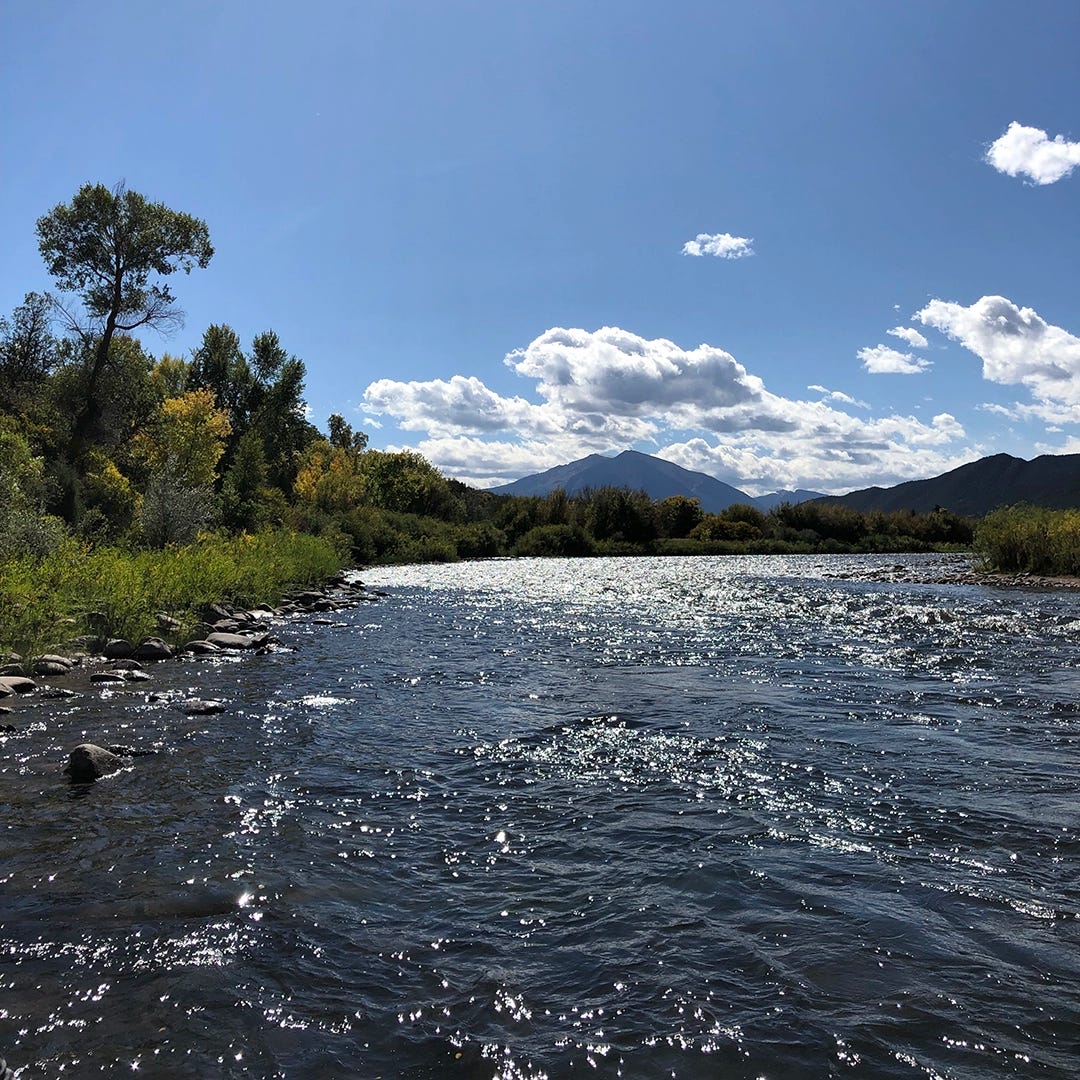
Those 2 feet or so from the shore out towards the stream can be extremely productive. But for all practical purposes this is like fishing a stream that’s about 4-5 feet wide. You have to be senaky and you have to keep moving.
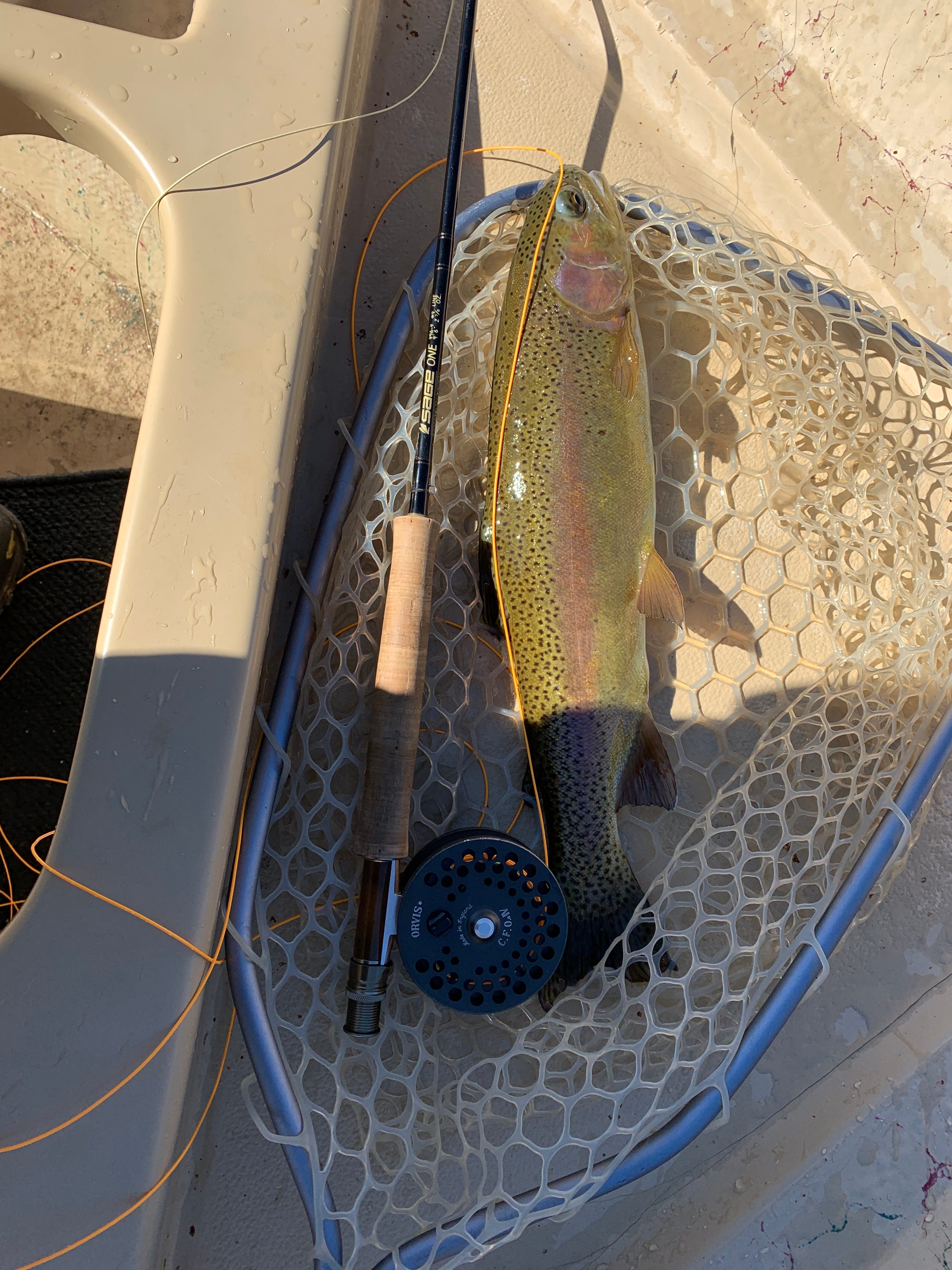
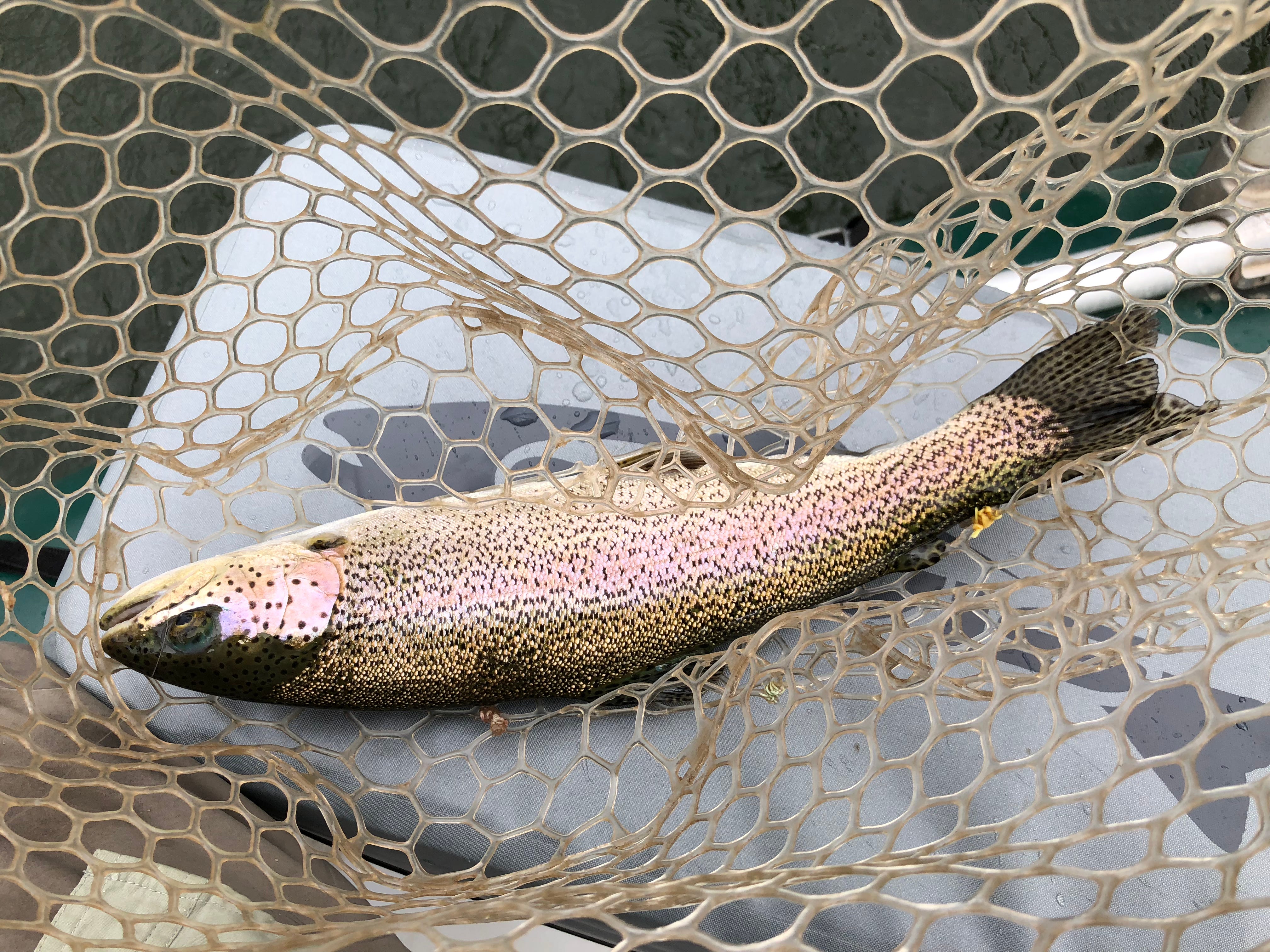
So whether it’s a brawling high water river or a late season gentler version of itsef, it’s just better fished from a boat, if you can get to one. You drift down the river casting ahead of yourself, gently laying your flies down in the margin and surgically dissecting it to find the fish. This chunky cutthroat and sleek rainbow both came from the margins of the Colorado downstream of Glenwood Springs on fine late October day marked by spitting snow and a westerly breeze.
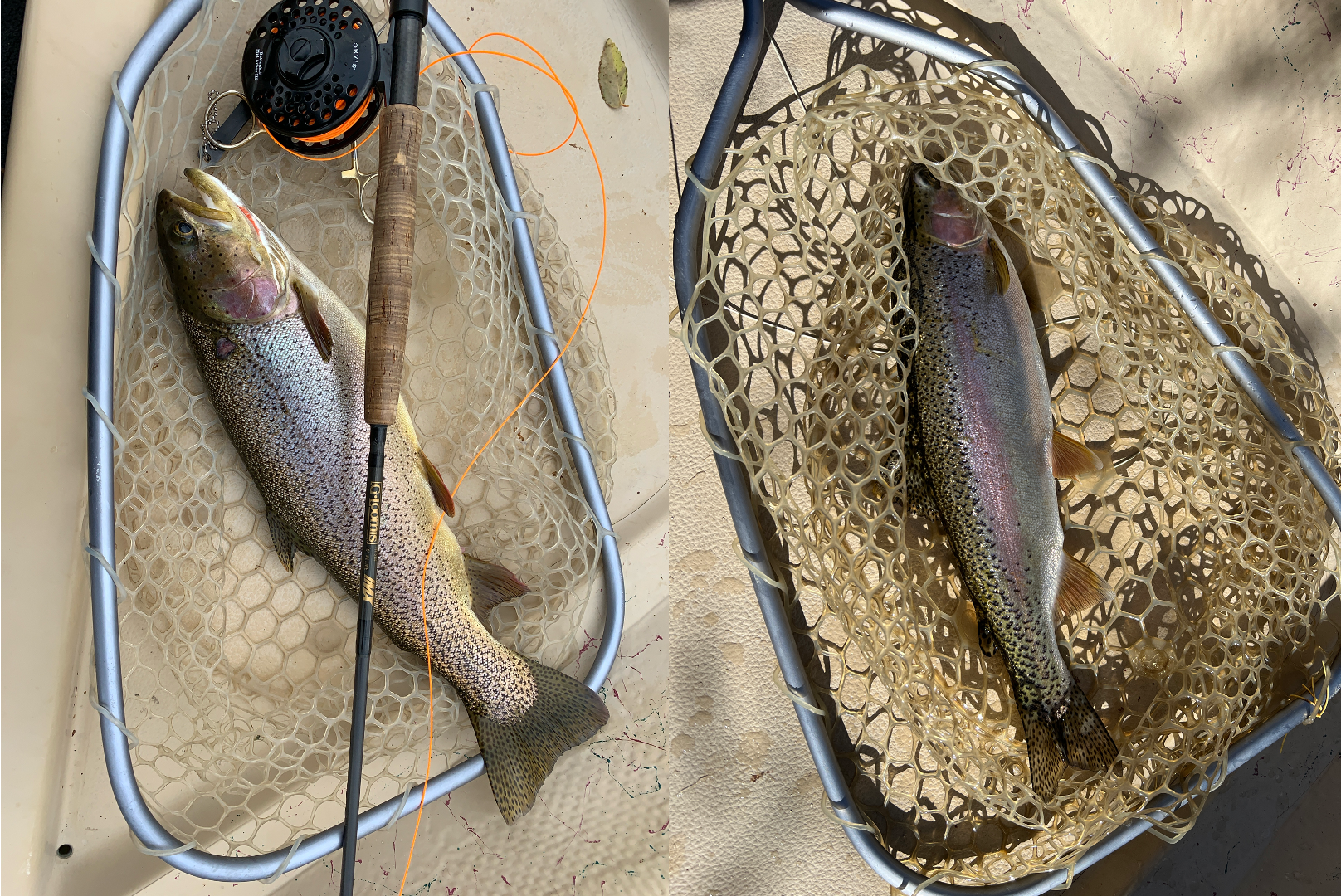
They both took dry flies about a foot off shore.
Rigging up to fish the margins is where the trick lies. Obviosuly you want a rod that can list a fair amount of line up and lay it back down with the minimum amount of fuss. Time spent false casting and such is just wated time. You want a line with a long front taper because you want the ability to left, mend and cast without having to drag in line. Don’t try shooting to get distance, you’ll just end up in the shoreline foliage. If you can’t find a sensible long taper weight forward, just buy a double taper. It’ll do just fine. Leaders, again don’t need anything special. Just drop them down to whatever size you like. I have, for about 50 years, used a formula of fly size/4 for dries and fly_size/3 for nymphs. Does me just fine. Explain to me why a trout looks past a hook and it still shy of 6X tippet and maybe I’ll buy into all that fine tippet horse hockey. It’s not the size of the tippet, it’s the cast management. I do go for finer tippets on nymphs because I want them to sink fast.
Most of the margins can be fished with tungsten bead headed nymphs. The tungsten gets them down quick, which is what you need because these drifts may not be long.
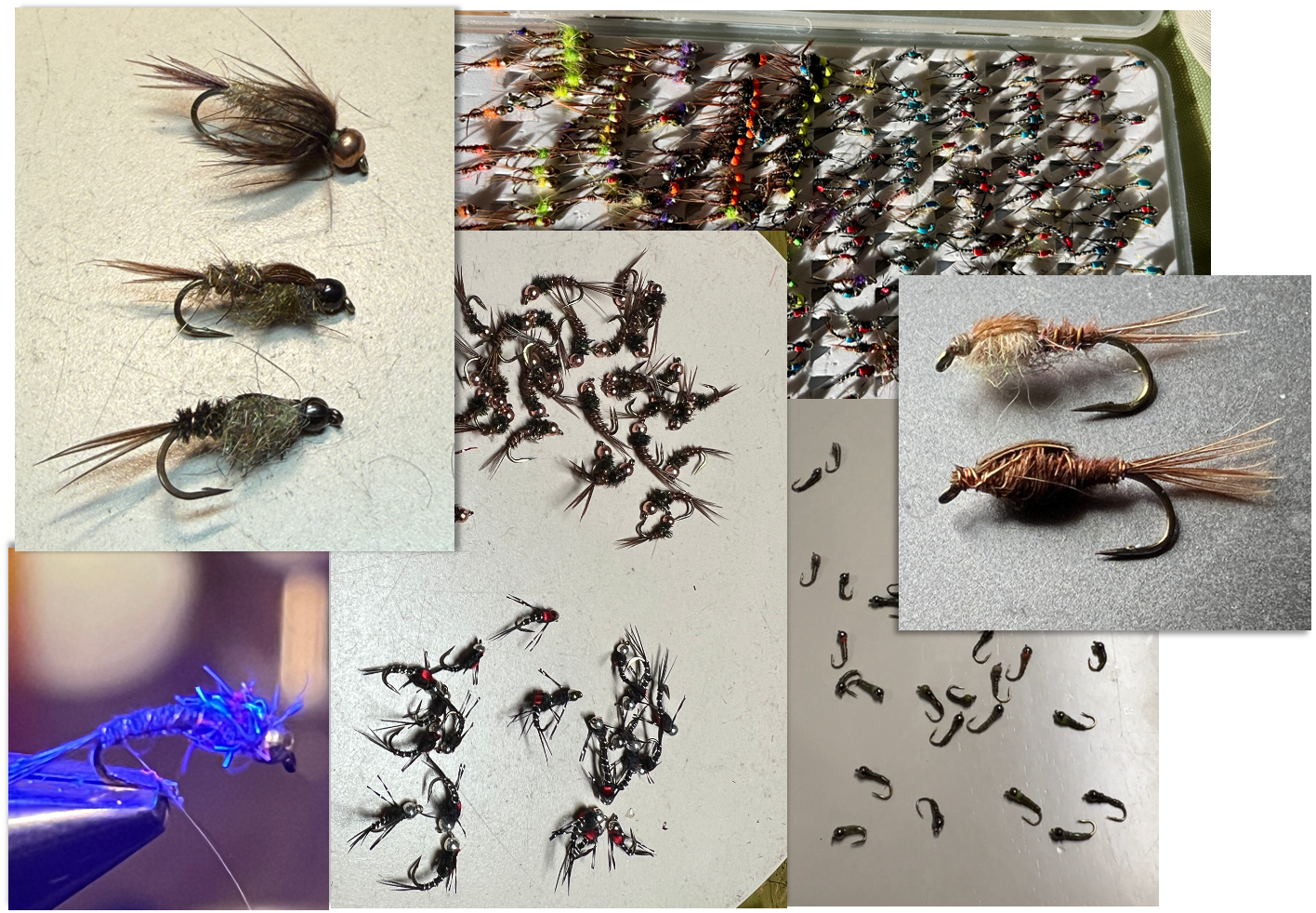
If for one reason or another I can’t use a beadhead I’ll hang a couple of slipshot aong the leader. Somewhere on this Substack I have articles on nymphs and the rigging thereof. All of that applies here. Just that yu want the flies to get down as fast as they can. I use the most number of nymphs I can for the water I’m fishing. Some places that allows for 2 nymphs, others 1 and in Colorado I always fish 3. It’s just the maximum number of flies minus 1. That minus one is held aside for the dry fly.
When you fish the margins you must have a dry fly in the mix. You must. With the right pattern, those margin fish will just eat it up.
Since the length of the slot you’re fishing can vary from the size of a wash basin to several hundred yards long, it’s best if you get any subsurface flies you’re using down to the fish as soon as possible. This post of mine talks about various nymph rigs.

You’ll notice that my rigging actively fights having to throw two and a half ounces of lead on your leader. Any of those rigs will do, but if you’re using beadhead flies you’ve automatically created what I call the maggot rig. If you aren’t using beads the maggot rig is a good one to go with. When fishing margins with a sunken fly in the mix I typically fish with a LaFontaine Double Wing. I’ve caught more fish with some color variation of that fly than any other fly. But that’s me, you do you.
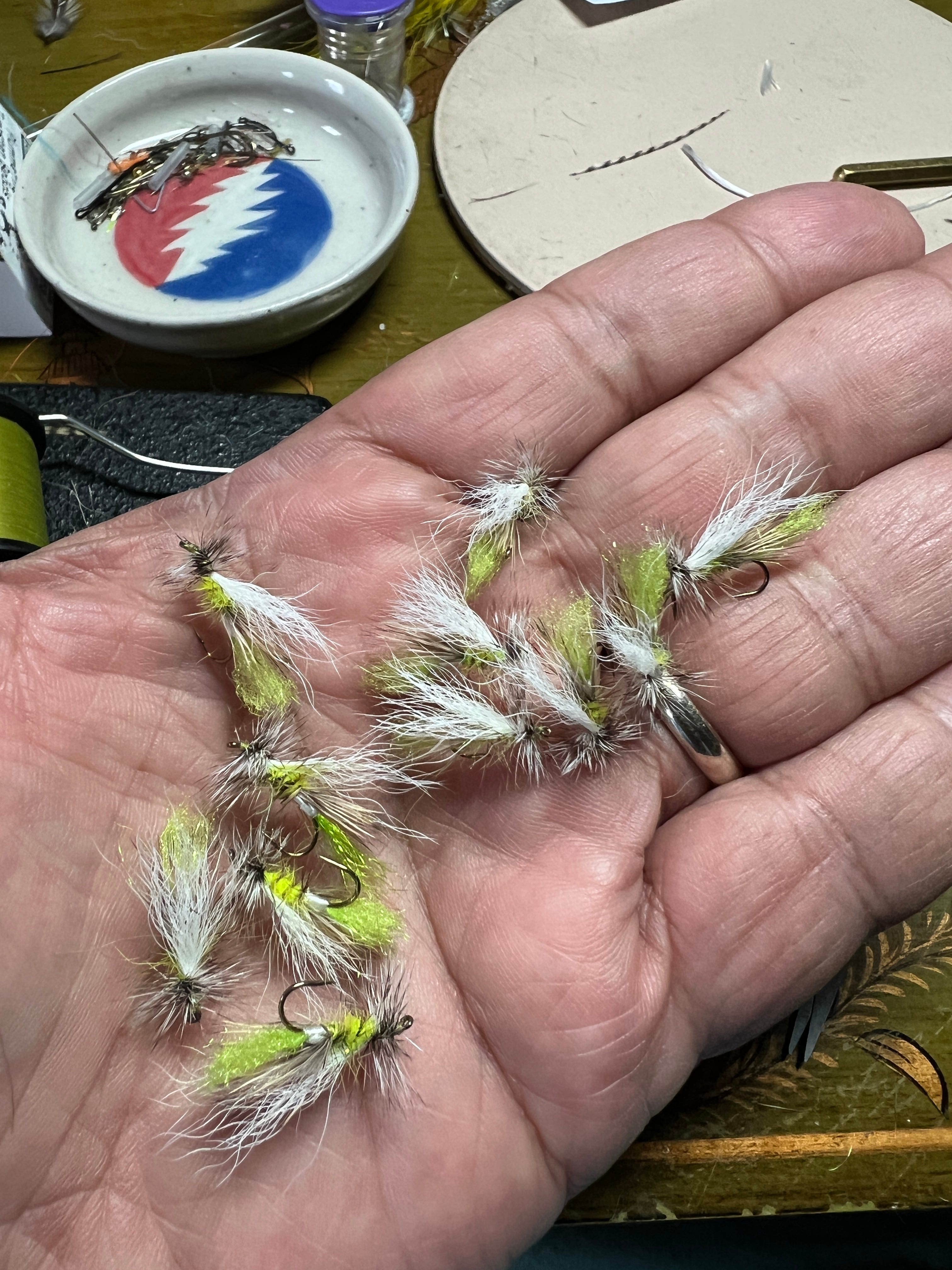
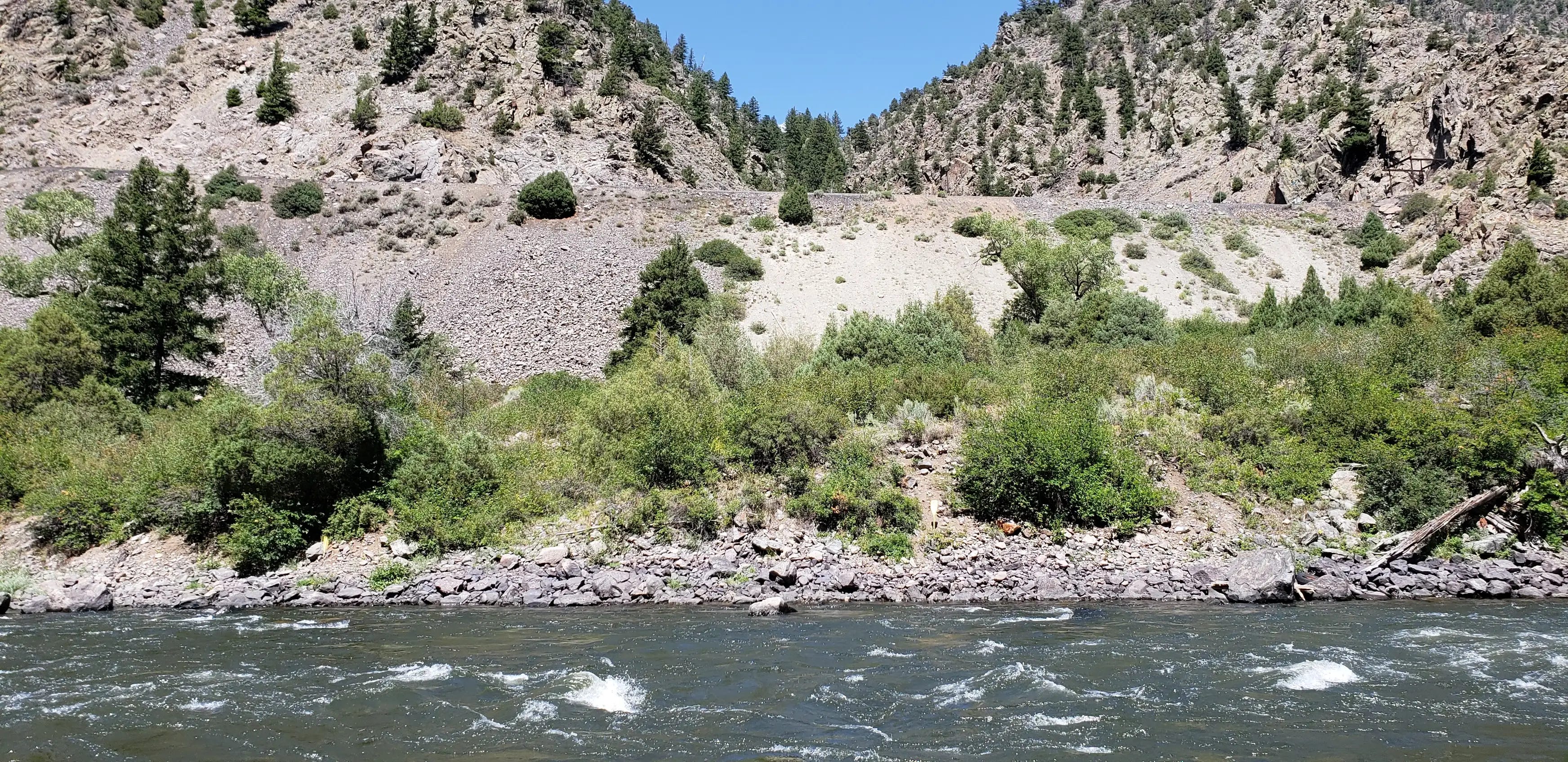
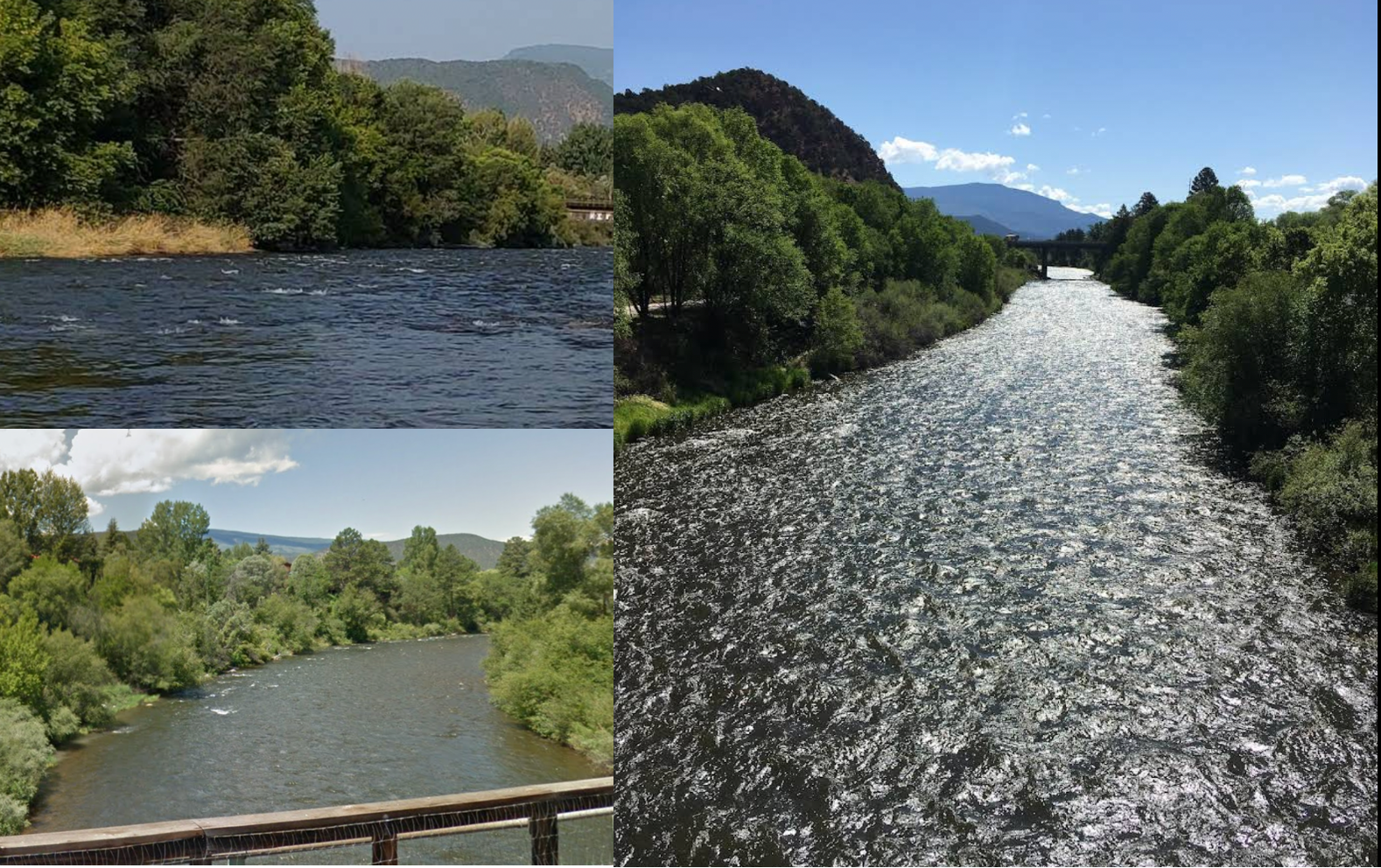
Fish in the margin seem to take dry flies at all times of the year. However, once the runoff is done, big rivers like the Colorado are the playground of margin dry fly eaters. This is not just the bank sippers during a hatch. The margins of stretches such as these
I love fshing rivers like the Colorado with two dry flies, Double wings during the day and a pair of caddises in the evening (unless a hatch or spinner fall makes me go that way). Those fish just slurp them down.
Of course if you’re fishing the margins you have to pay attention to terrestrials. The trout are used to seeing these. The best trout stream in my world has a section that gives you about 3 miles of water where you can just slide an ant and a beetle along at no more than a foot and a half from shore. People would ooh and aah and write tomes about these mile long riffles.
Flotillas of guides go merrily thingamabobbing down these riffles every day. The ones with slightly more advanced sports have them cast out to feel like they’re doing something. We go down with one of these
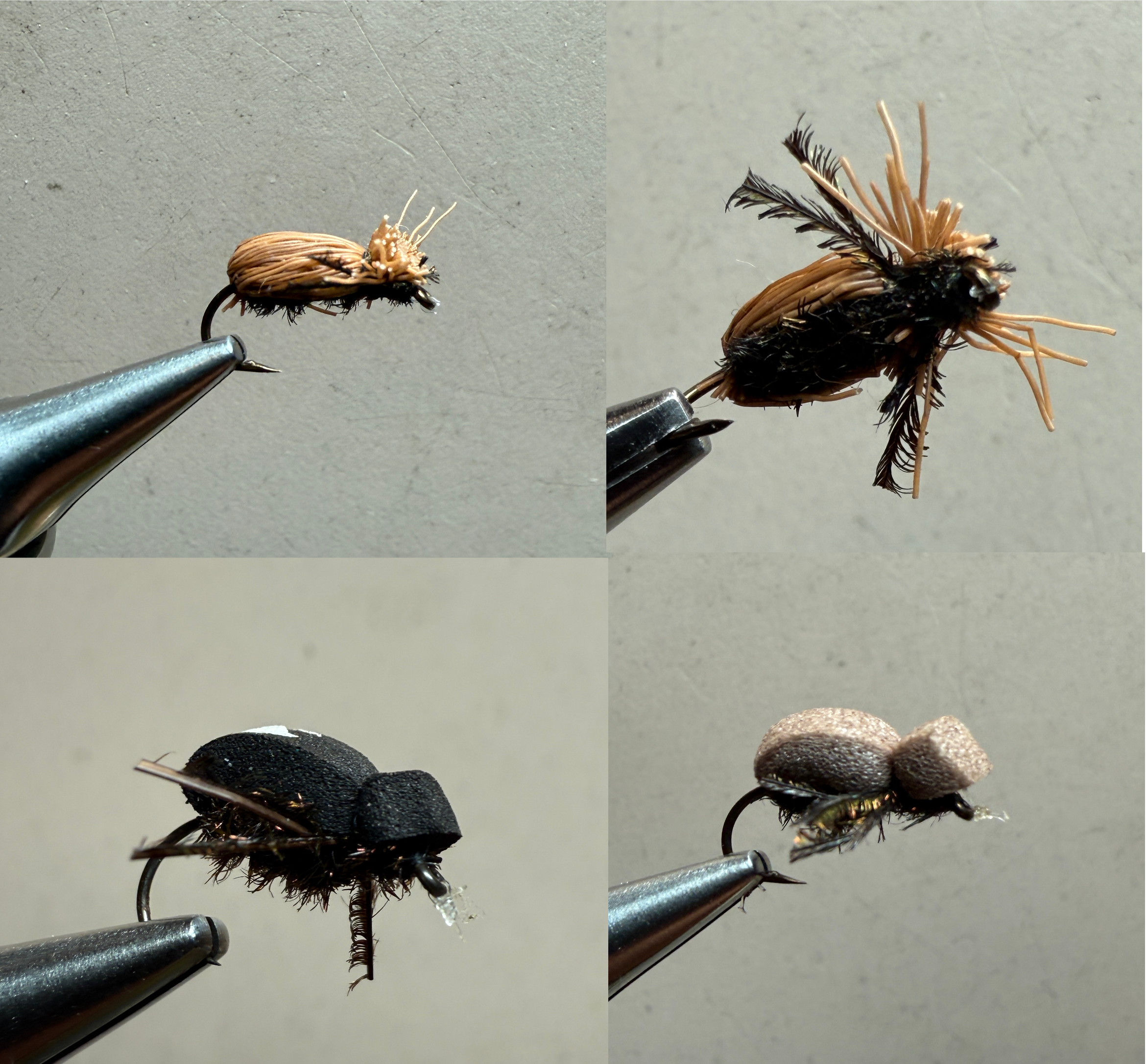
and something like this on the leader
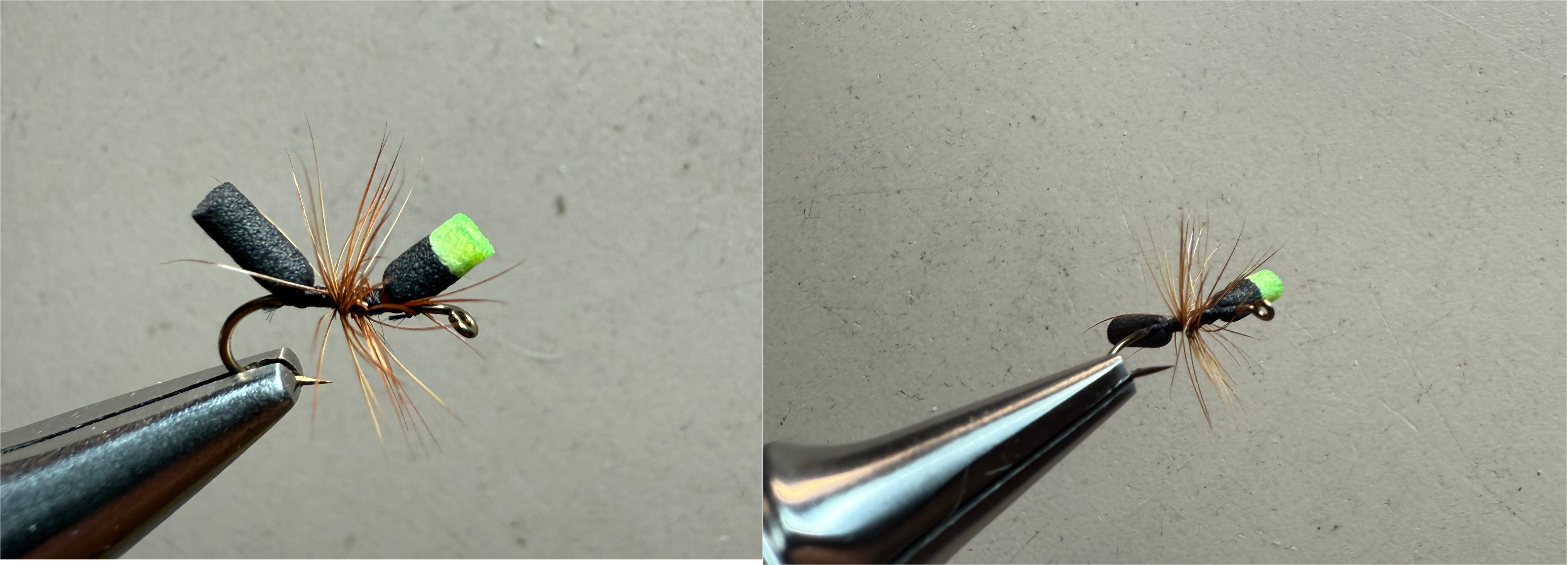
Fishing them right up in the margin along the bushes. And we take a fish or two every few yards.
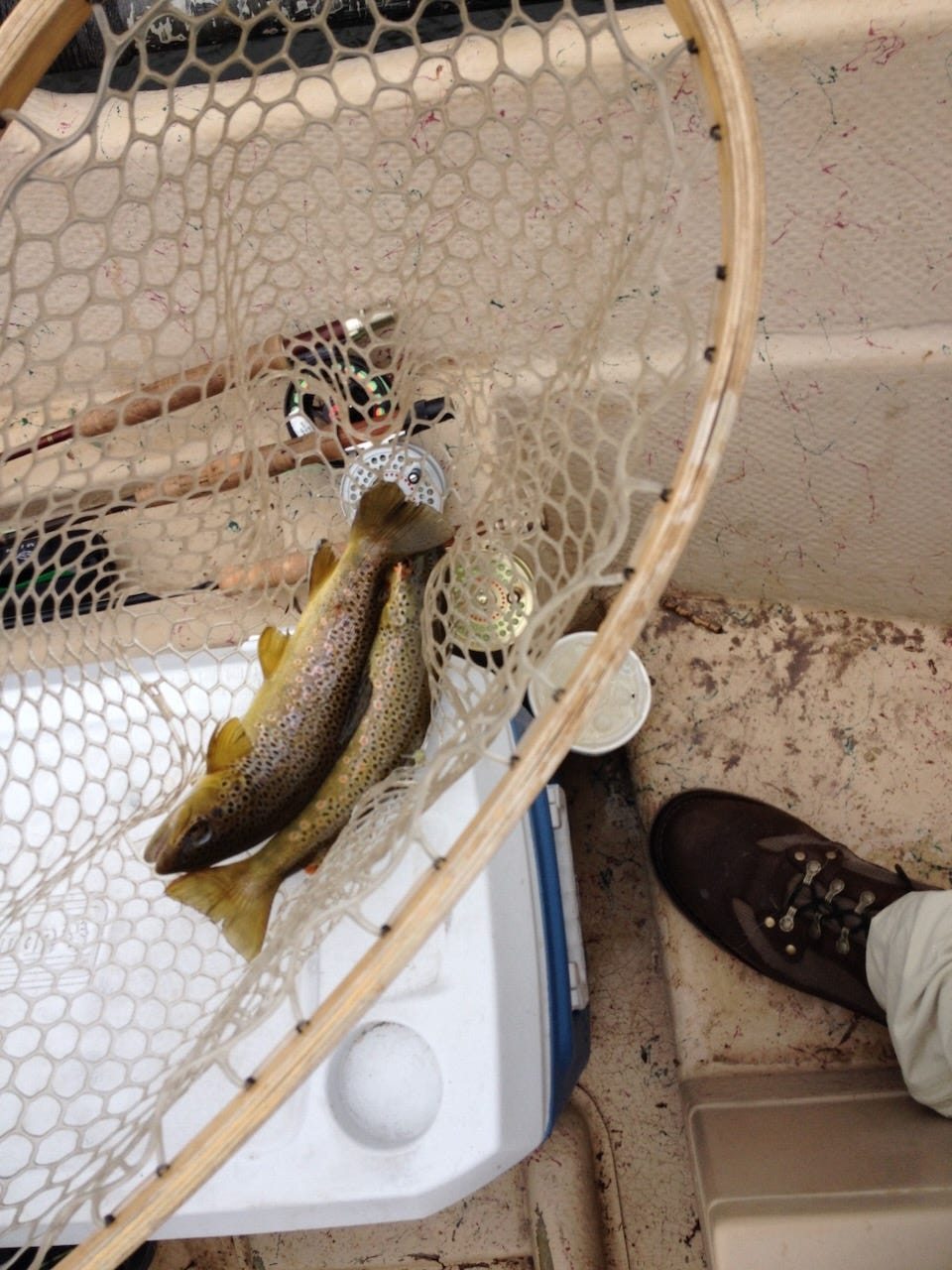
They’re sitting there, unmolested, unafraid and ever willing. The section from here down to where this meets the big river is probably the best caddis dry fly fishing anywhere. This is late summer ast low flow. But the bare stoney bank shows you where we started the year. for the next 3 or 4 miles the fish are all tucked in along those banks. The sit there, of an evening, slurping down every caddis that comes by.
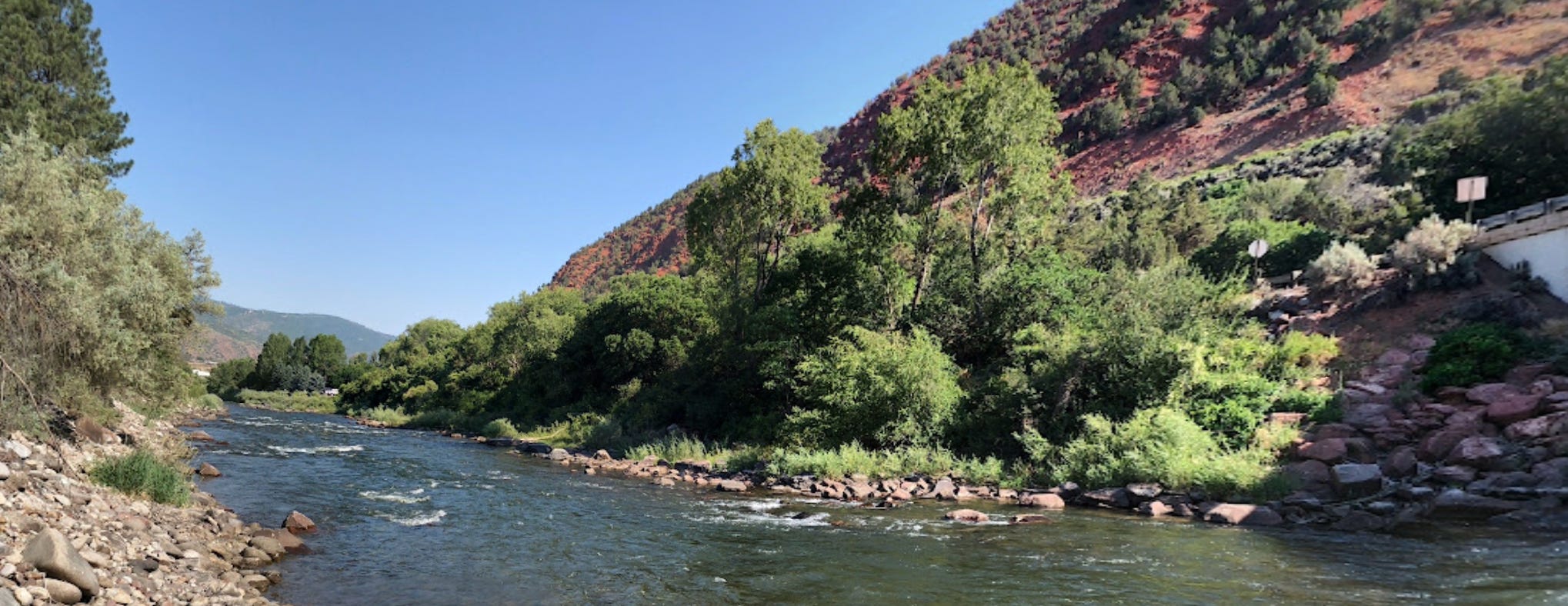
Sometimes the only ones coming by seem to be the ones I throw at them, but it doesn’t seem to bother them. These are nice chunky browns with shoulders to them.
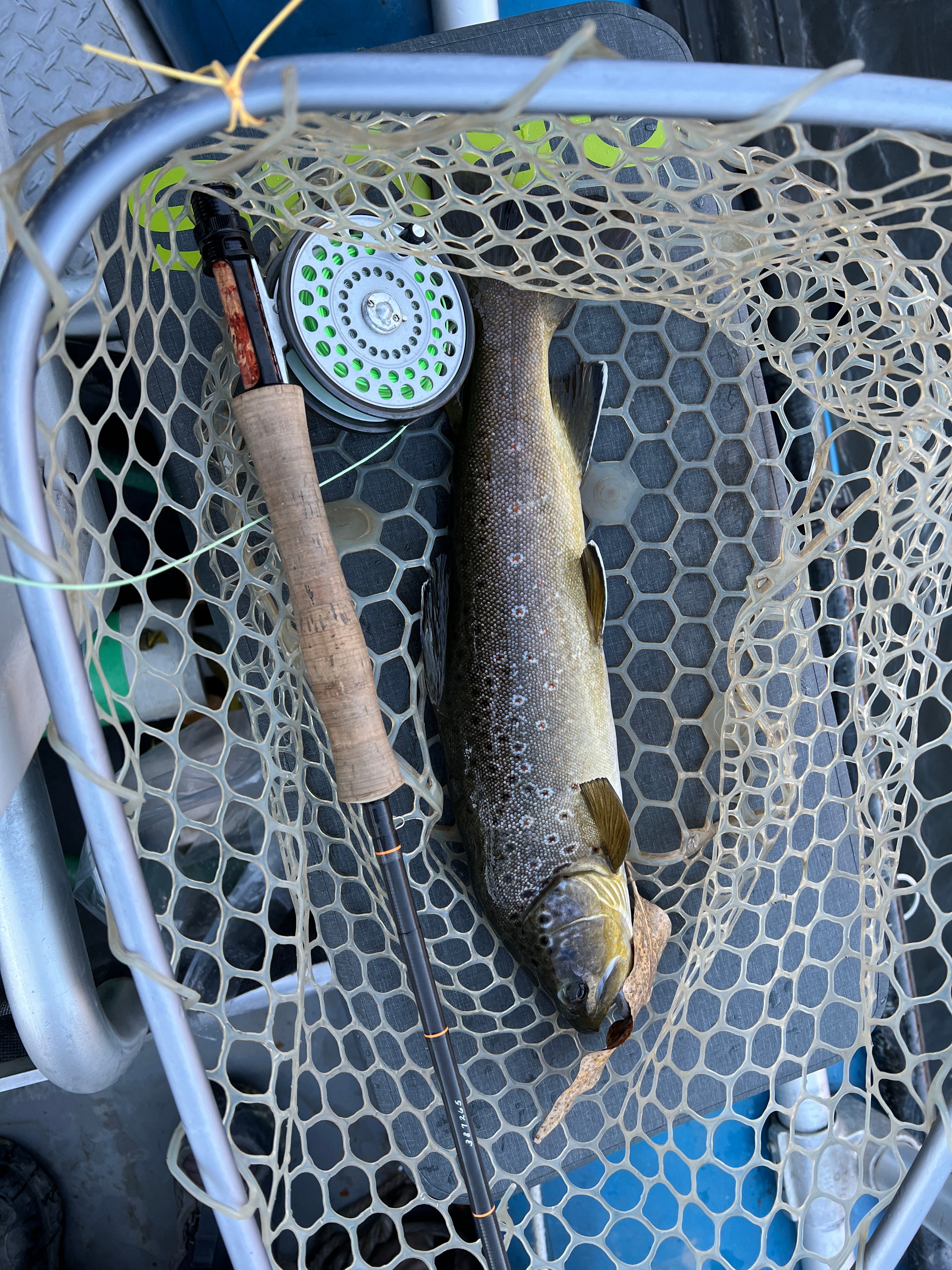
And just so much fun. Just run those flies along the edge right up to the front of the rock forming the cavity. That’s where they will be. Even large, slow moving pools often have a nice little streamflow on the margins.
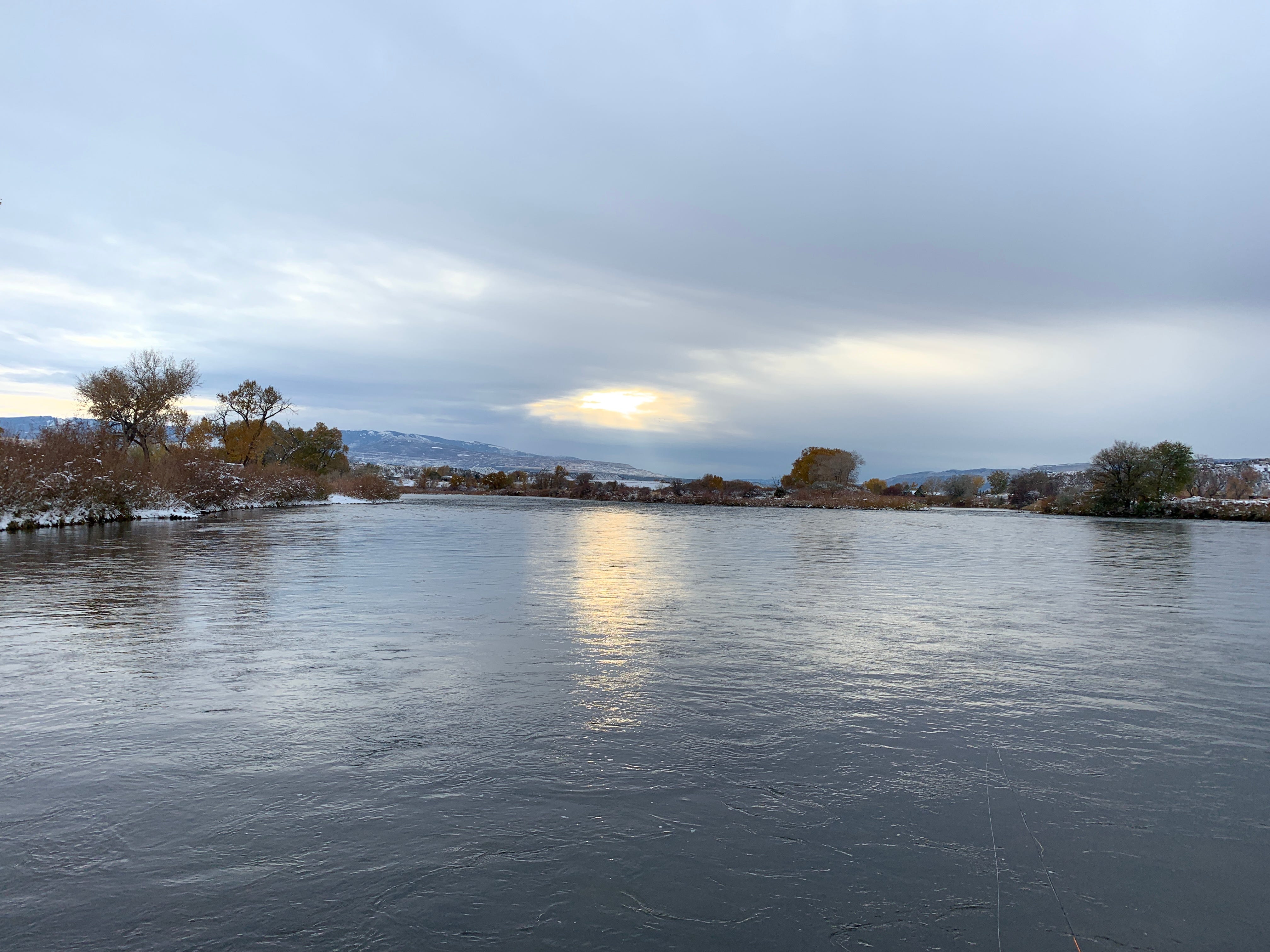
The margin of the far bank along this stretch of river is a haven for evening risers at just about any time of year, even on days like this.
Everything I do when fishing the margins sticks to my mantra of fishing multiple flies, downstream. But there are two exceptions. The first is fishing hoppers. On the late summer and early fall afternoons as the sun warms them up and the mountain winds flows down the valley hoppers in the Rockies set up an almighty crackling. At that time of the year the high plains grasses are in a burst of color from the autumnal monsoon (yes, for the Easterners reading this - that is a thing) The river vending its way through these grasses often nudges right up to the verge.
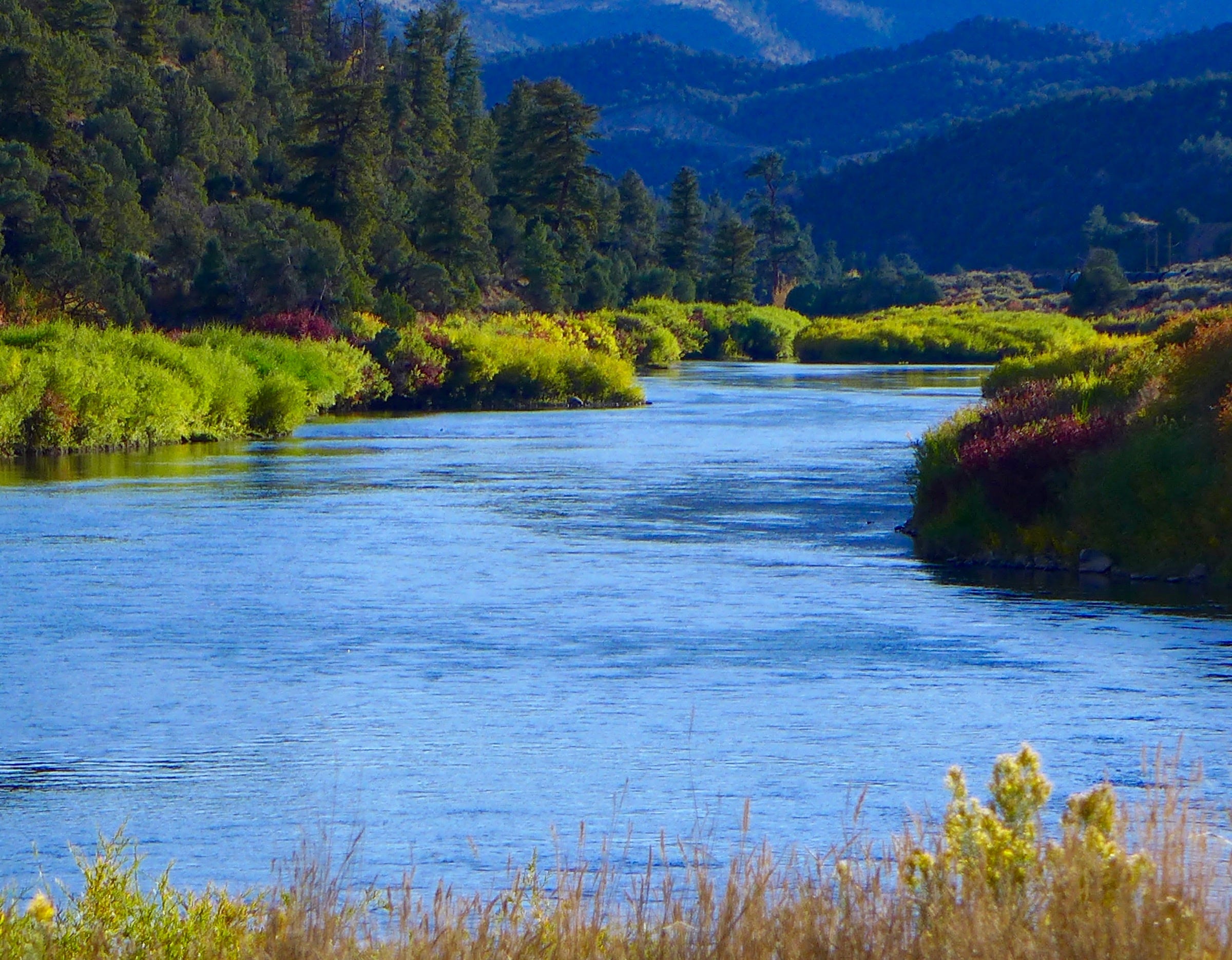
The crackling hoppers whirl out of the grasses like a spiraling, flying dervish crashing about from one clump to the other. Every so often one of them misses the mark and ends up in the stream, whereupon they begin a hasty retreat to shore. And waiting there, heading them off from their quest are various and sundry spotted fish. The best way to get them is to splat the hopper down close to the shore and twitch it, then let it drift and twitch it again. None of that works with multiple flies on the rig.
The other exception is fishing streamers. I do fish multiple streamers, on the rare occasion that I do fish streamers (I just can’t get past the fact that fishing streamers is work). But when fishing the margin I like to cast them upstream of where I am, mend the line up parallel to the bank and then draw the flies downstream.
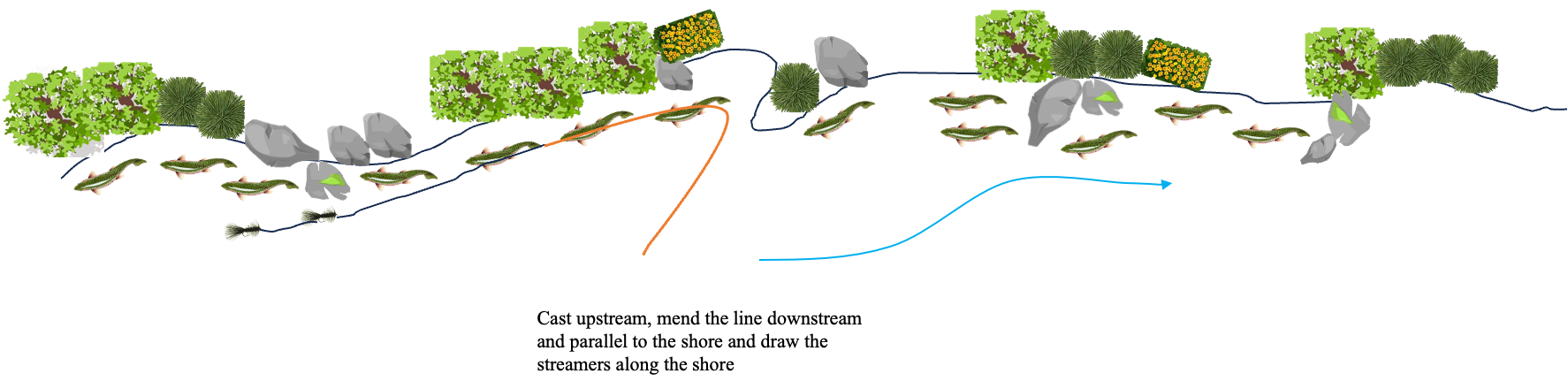
If you can, when the fly reaches the bottom of the strip, stop your line for a second and lift the fly almost to the top and then gently drop it back down. It’s a move my friend and super guide Kevin Wildgen calls the dipsy-doodle. And it works.
Big rivers, high waters all seem to conjure up images of trout wandering the depths. And I suppose a few do. But it seems most trout, even in those big rivers only occupy a small strip of water along the shore. yes some will hold in other structure, midstream and such, but if you don’t want to fight currents, and low probability spots, head to the margins - that’s where the fish are.