
Dry Fly Patterns - 2 Terrestrials
Because they do fall in and get eaten - Part 6 of N

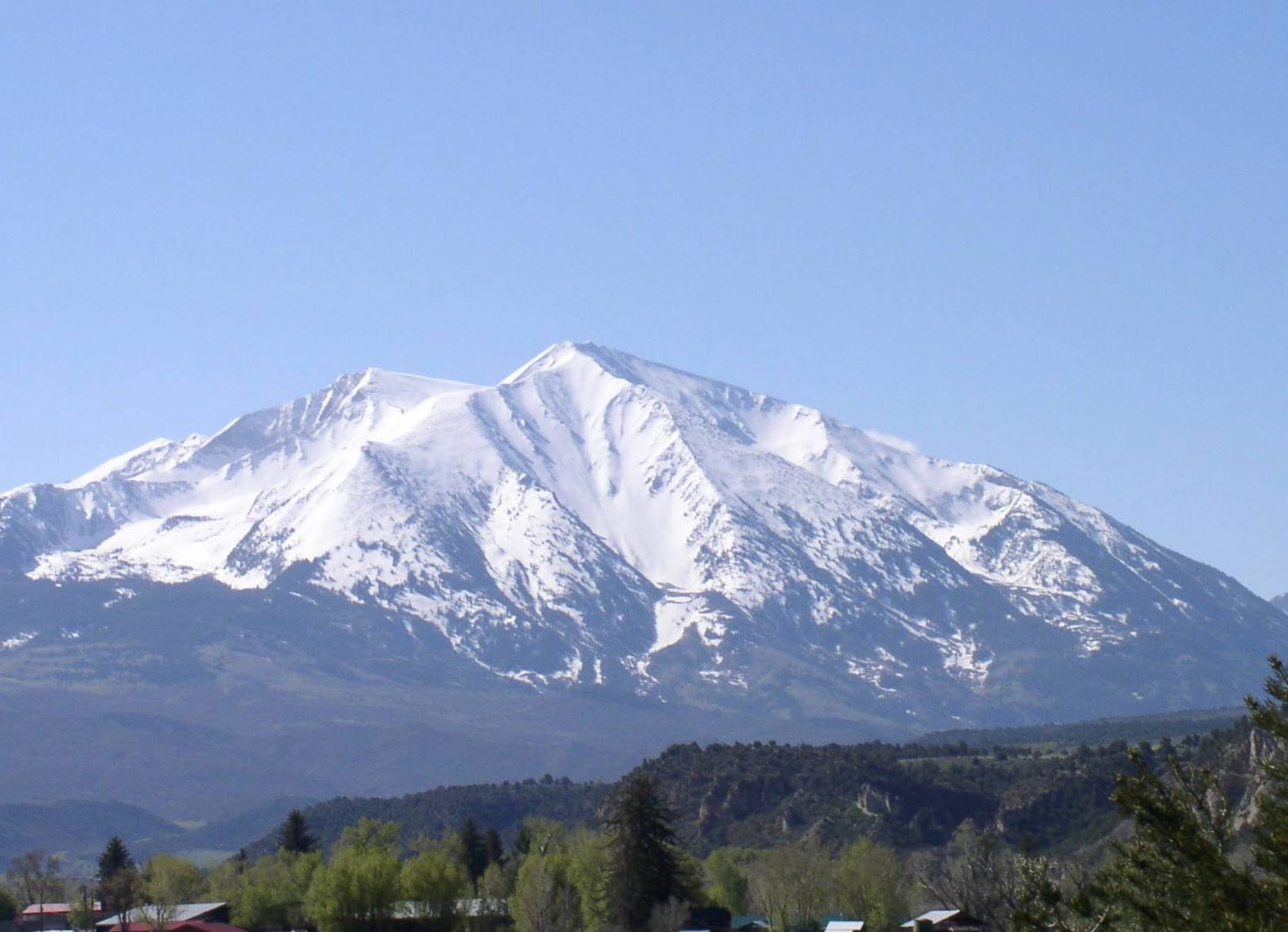
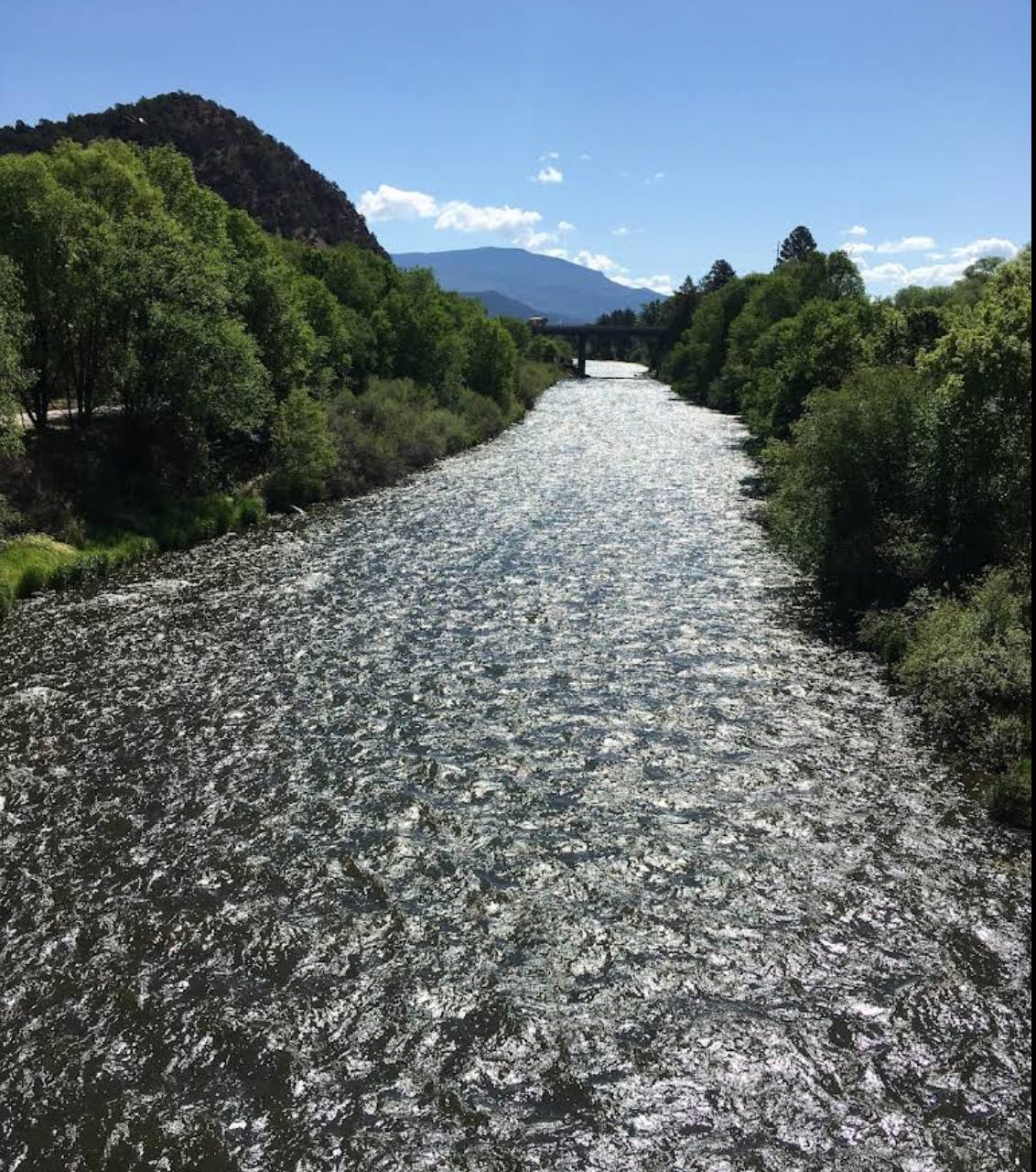
At the foot of this lofty mountain lies a river very dear to my heart. When I am tired or feeling down I often lie back, and in my mind I “listen to the river sing sweet songs to rock my soul.”
As the winter snows melt away, and the valley below becomes lush and green it comes alive with a world of teeming insects. About halfway down the floatable part of this river there is a boat ramp, and once the crowds are gone the beauty of the river and its banks comes into its own.
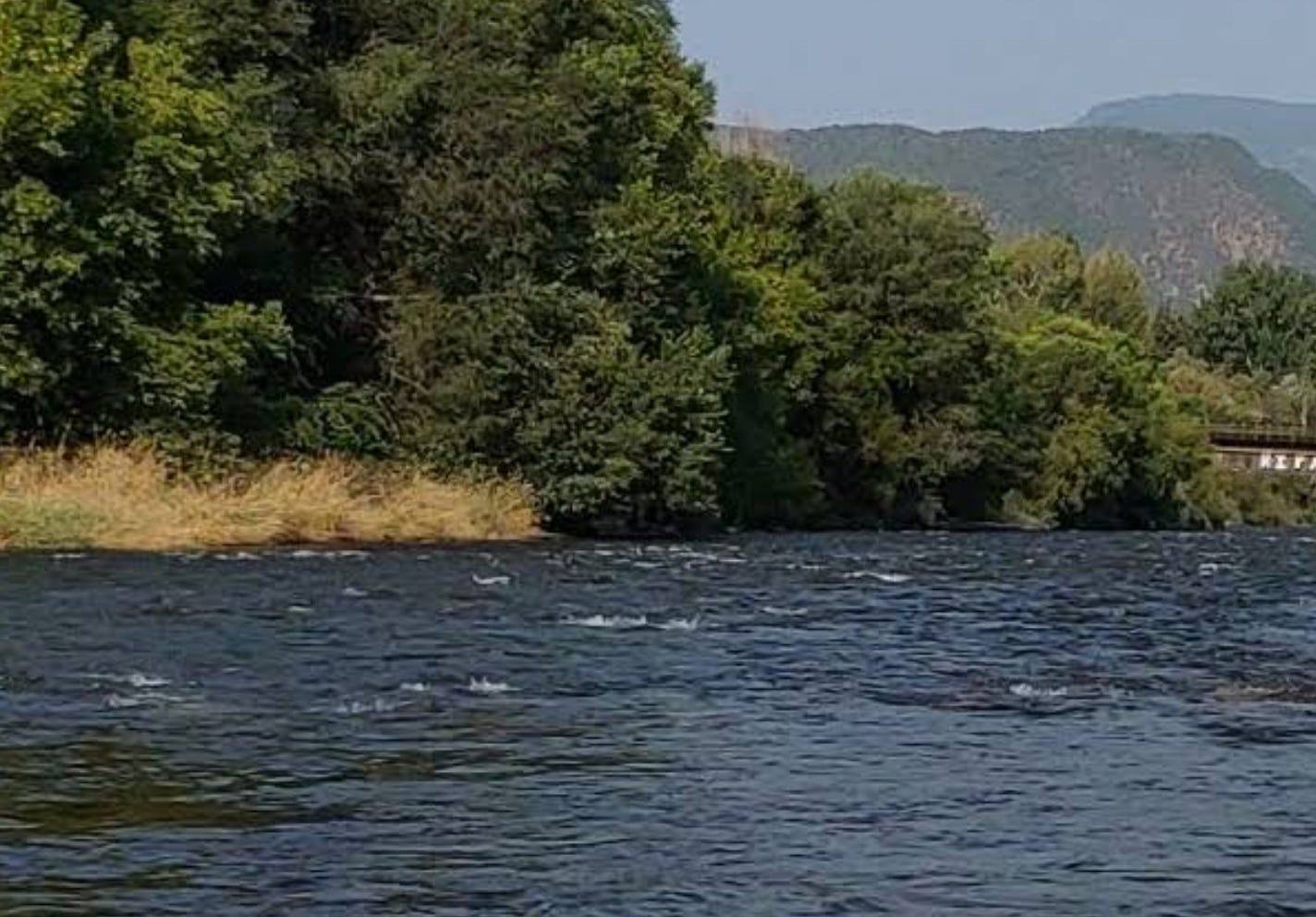
The left bank is a mass of trees that hang over the water, and there is a trough connecting numerous potholes running down that bank for almost two miles as you travel downstream.
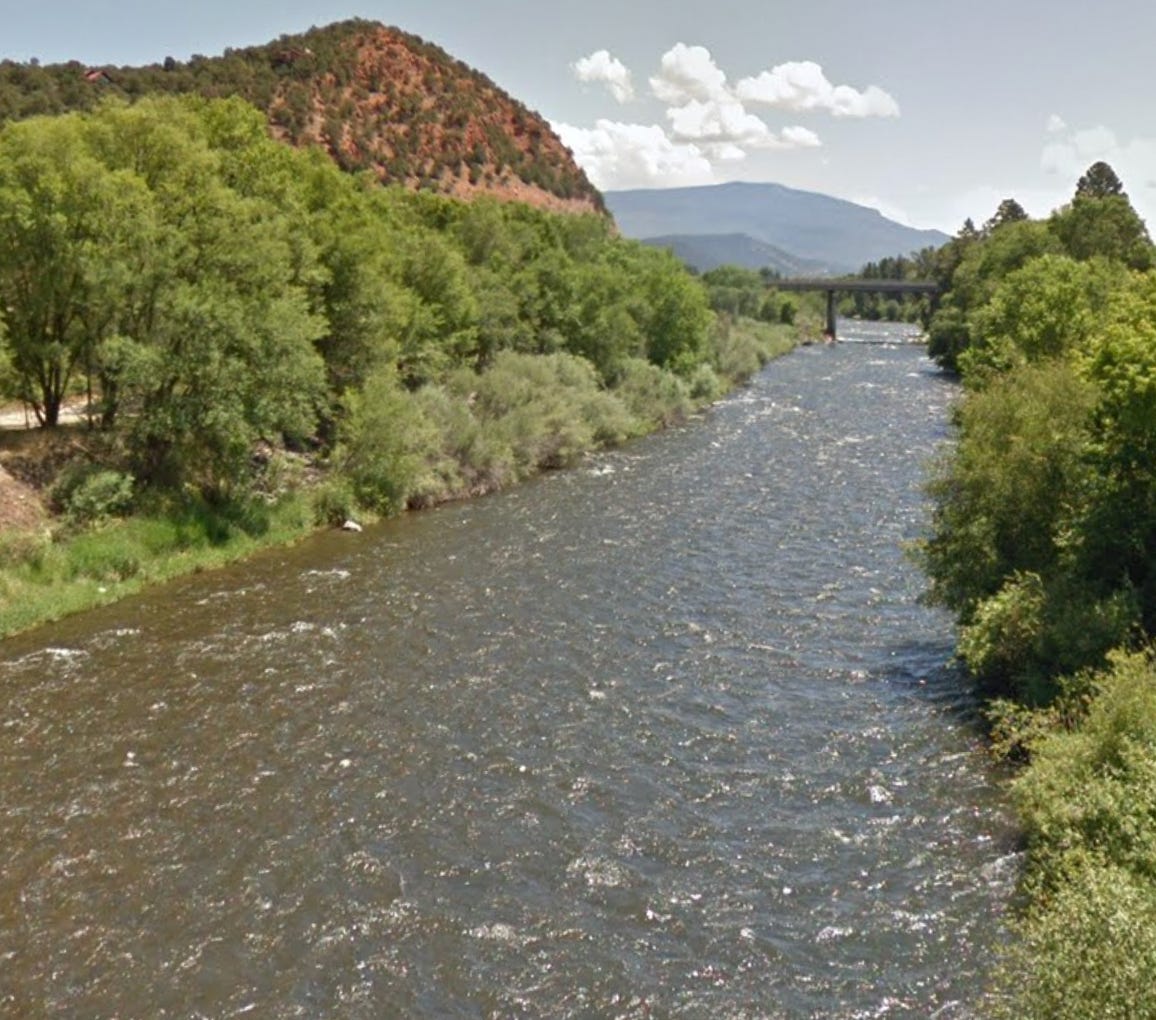
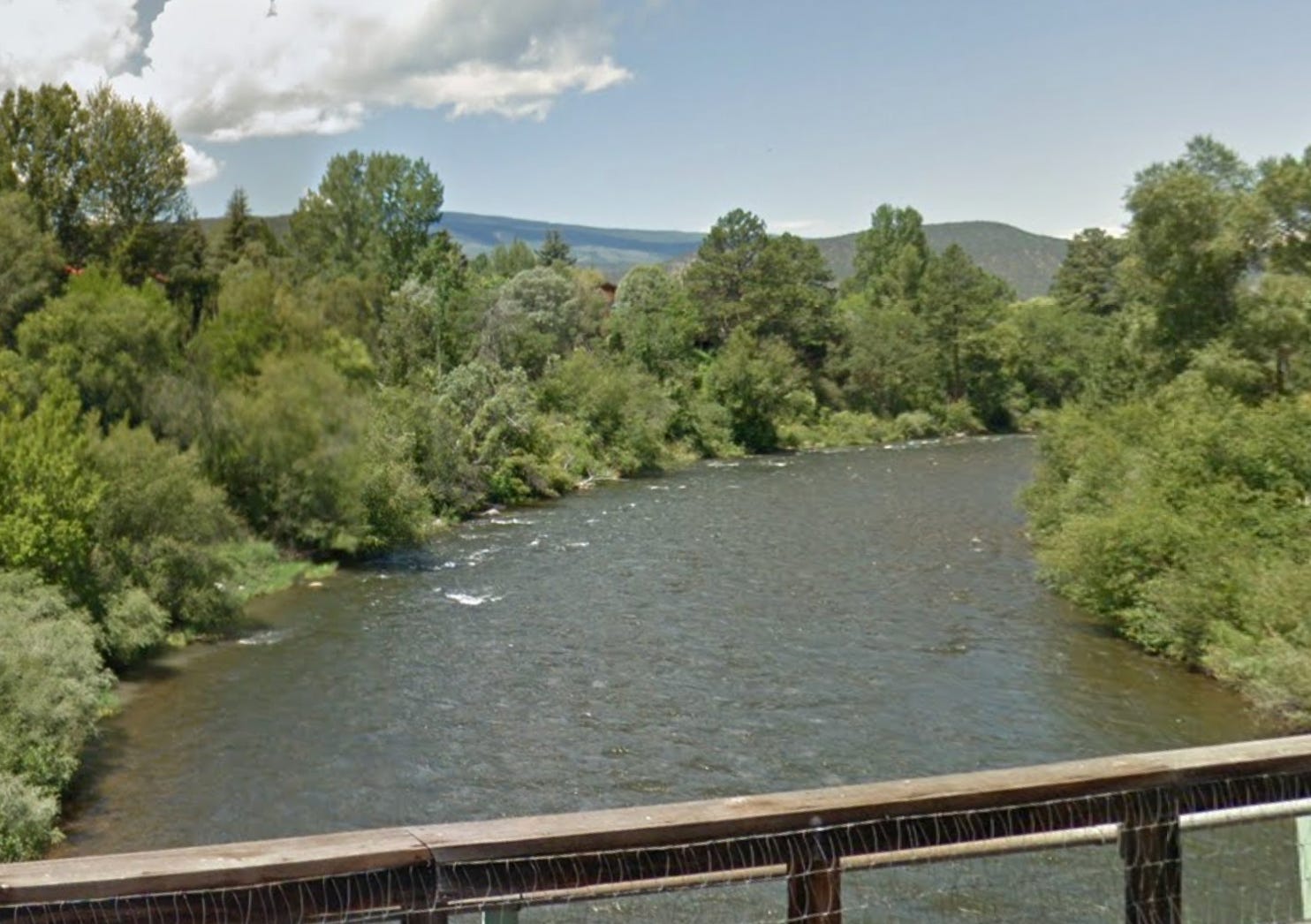
Even as summer fades into fall and the aspens turn gold, the tamarack and willows fade, and the waters drop the river still hugs that shore.
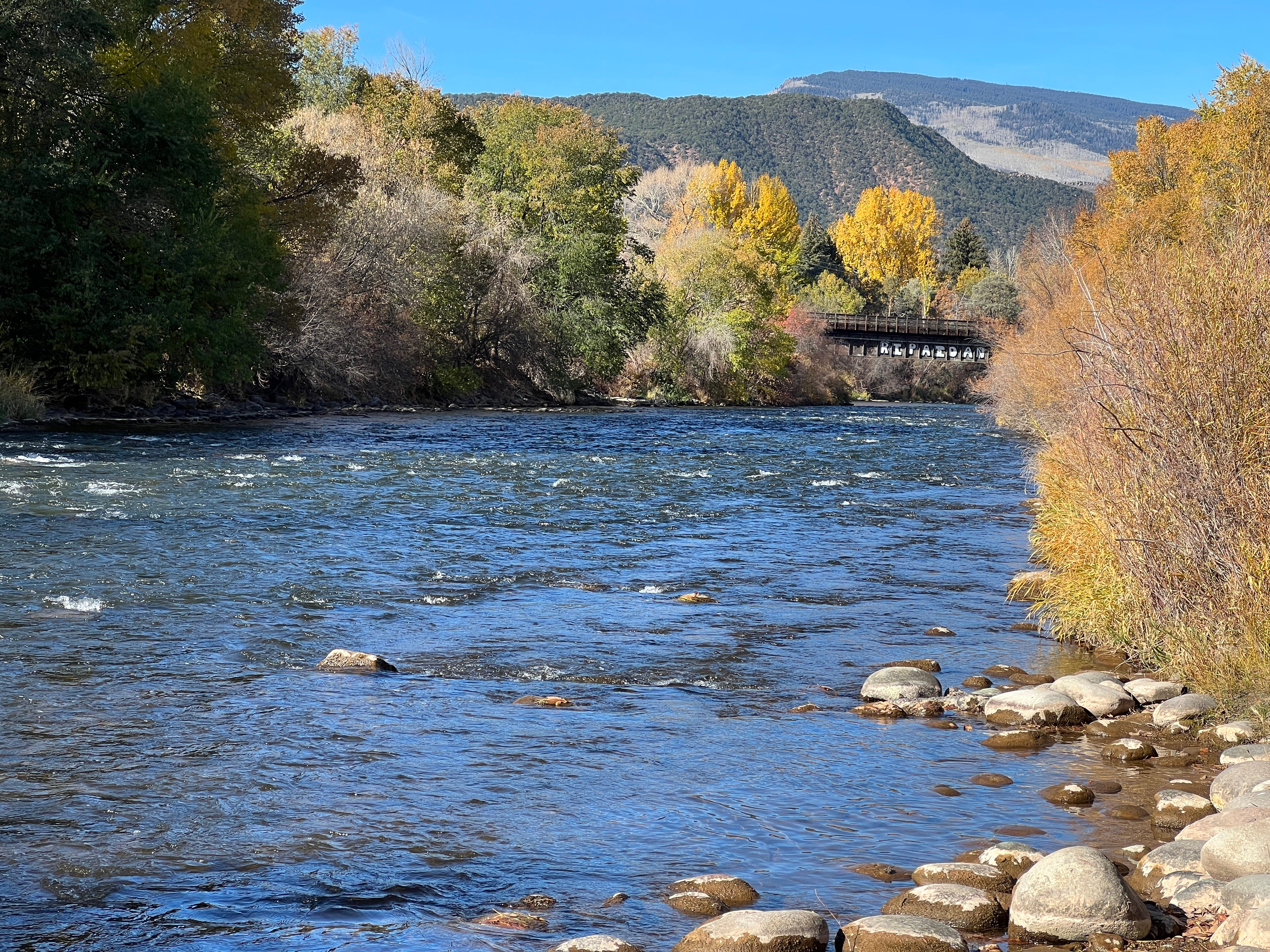
The trees and bushes that line that bank are the homes of divers varieties of ants and beetles and other little creepy crawlies, who, through various misfortunes find themselves in the river, to be seen and eaten by the trout that live along that bank.
Every morning in the summer a flotilla of boats leaves the ramp. They all bump down the middle of the river, Thingamabobbers bobbing, nymphs nymphing, tourists touristing and guides doing whatever it is guides are doing. Get to the ramp after noon and there isn’t a soul around.
"Now is the time of returning
With our thought jewels polished and gleaming"
If you’re up to it rig up your rods with a beetle and an ant (yes we out here fish two dry flies on our leader), polish up your side arm casting and start plopping those flies under the trees. The trout slurp them down with relish, sometimes two at a time.
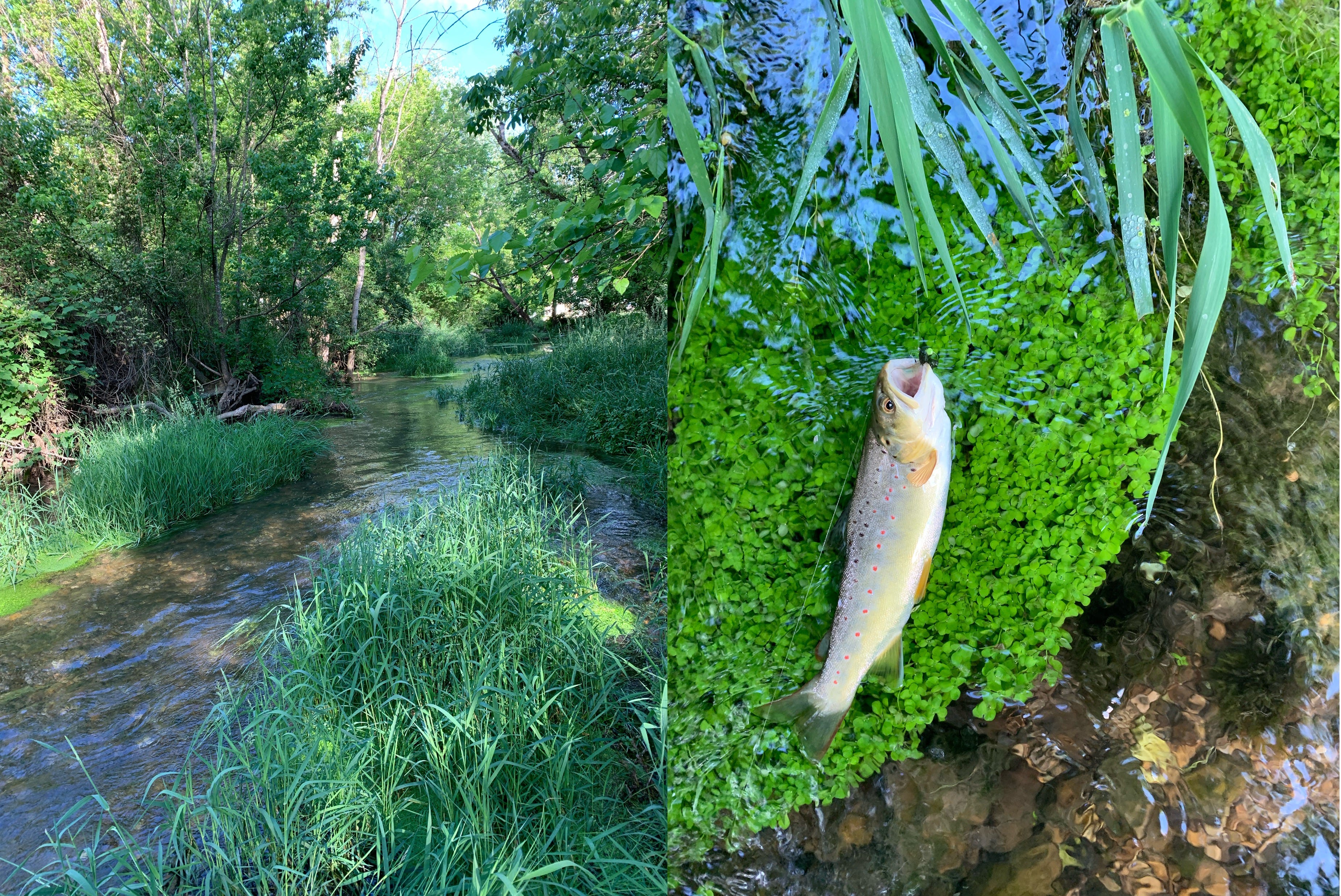
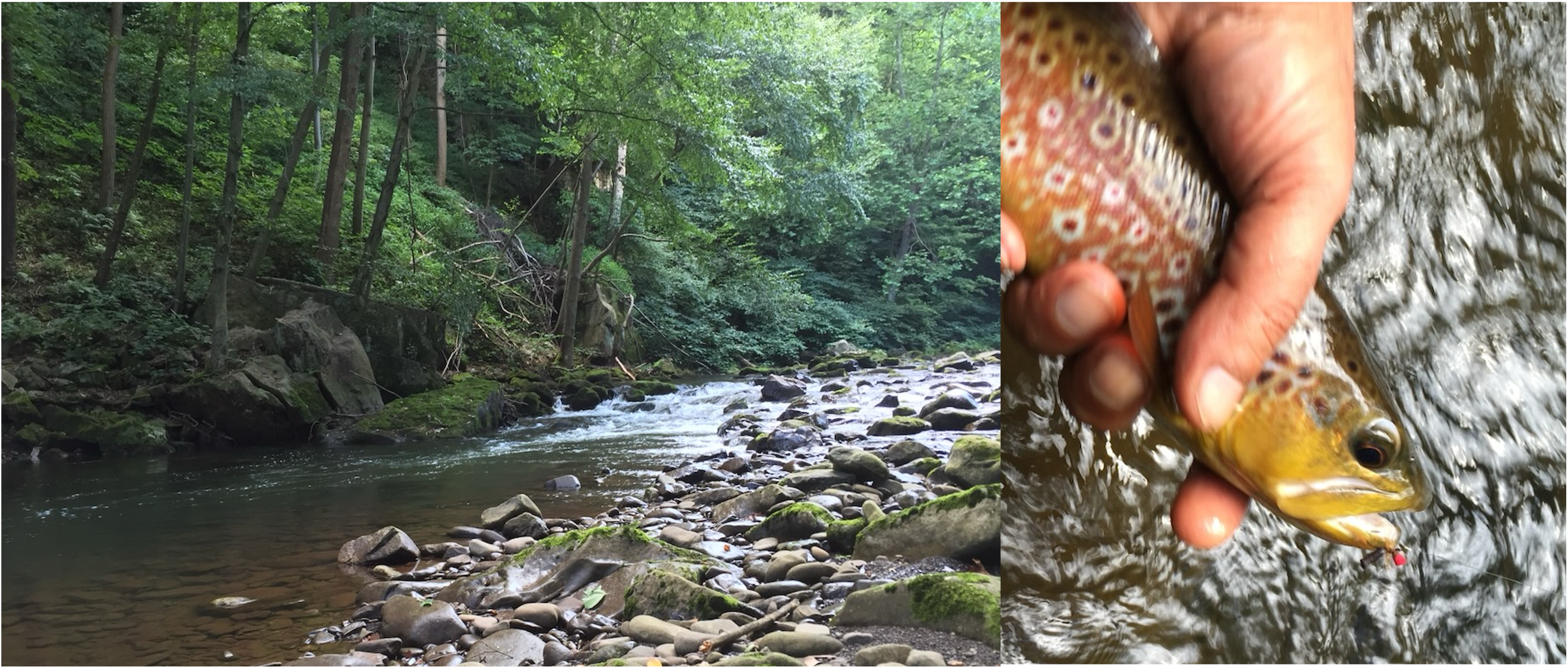
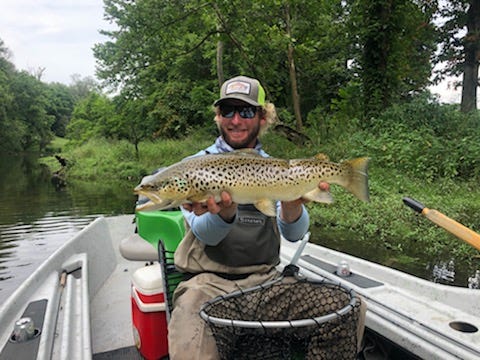
That is the beauty of fishing terrestrials. They do get deposited in trout waters, sometimes in copious numbers, but often regularly enough to be recognized as food. Their presence on the water is mostly happenstance. And so you don’t need a hatch or perfect timing to have fun fishing them. And they’re available to trout in streams big and small. This little woodland limestoner near my other home is another great terrestrial stream, and it is full of delightful little trout, like this little ant eating brown, appropriate to the size of the stream.
Fishing terrestrials is often an overlooked part of our sport. But when the hatches are gone, terrestrials provide fine action for the trout fisherman. Of course there are the fabled hopper waters, especially out west, but the lowly ant and beetle can be just as much fun.
One of the old timers, I forget who, Art Flick or someone allegedly ate an ant to see why trout like it and decided it was because of the acidic taste. I guess ants are full or formic acid or something. Good for him. I don’t believe the pea brains trout have allow them to register liking tastes and remembering that a year later when they happen to see an ant floating by. I suspect it’s just that ants have a form that allows them to be easily picked out by the trout’s hazy vision and once they do it passes the food test. Ants are light enough to be held up by the surface tension and their gangly legs and bodies form nice sparkly divots on the surface, all good trout attracting qualities.
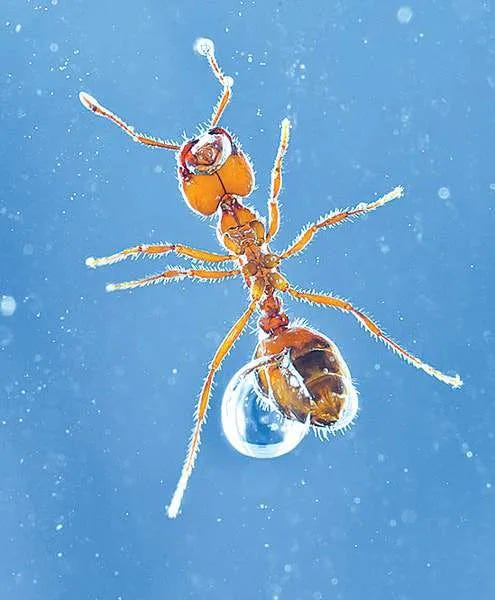
They also tend to wiggle about on the surface. Movement is always an attention grabber in hazy conditions such as a trout’s vision. The traditional fur ant works well, but even in my youth it required too much attention to keep floating right. 40 some years ago I came across a pattern called the McMurray ant and fished it for a long time. I still have some bodies left over and tie the occasional one up. The McMurray ant used two little cylinders of balsa strung onto a bit of monofilament and dipped in lacquer. Makes a pretty fly.
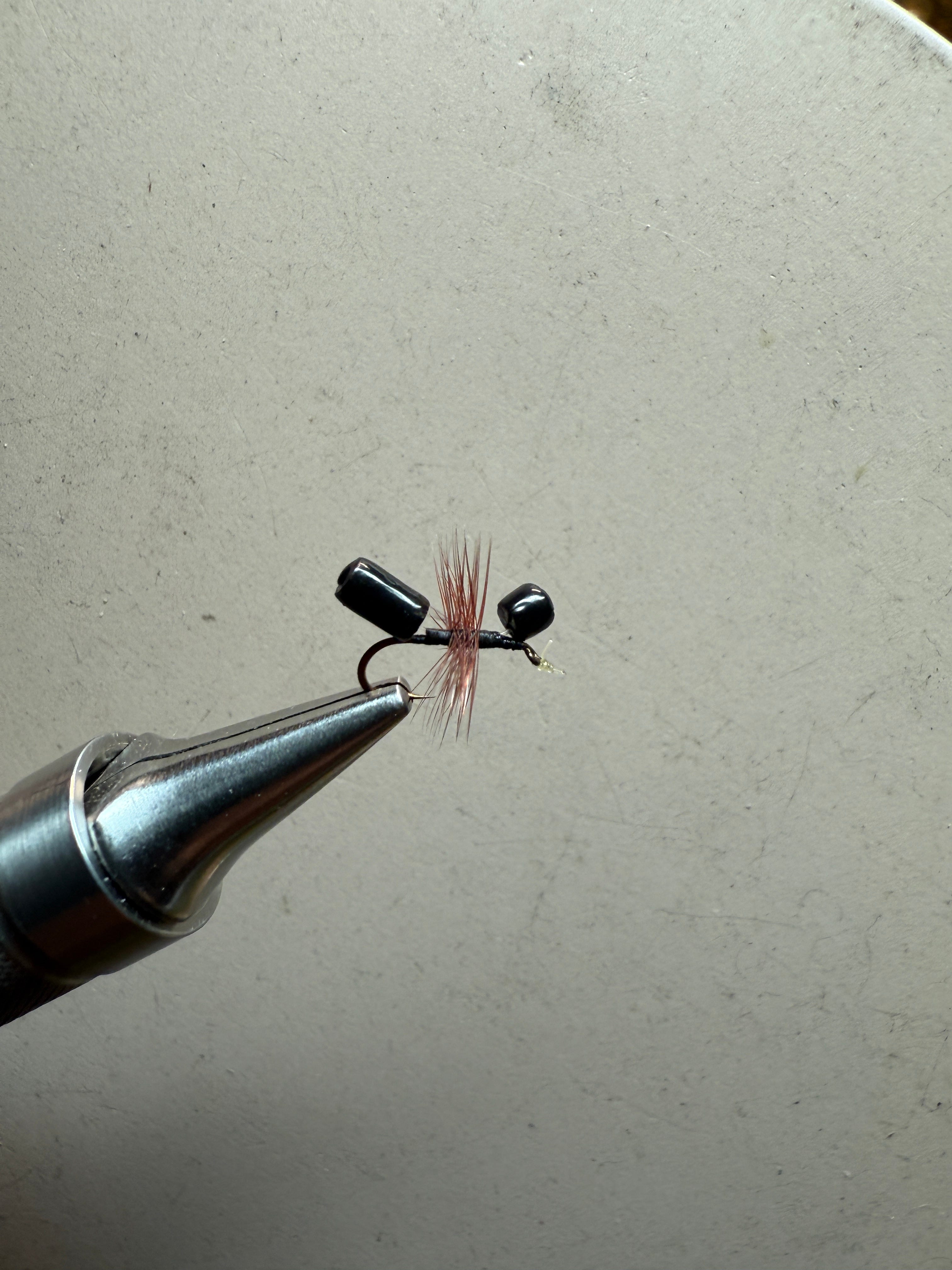
The thing about cylindrical bodies, especially when at an angle to the plane, is that their intersection with a flat plane is actually an oval. A fly with two cylinders as a body resting on the water surface looks like two slender ovals from below. Add a thin waist and some hackle and you get everything needed to get past the lousy eyesight trout have. Of late, as I get older I’ve taken to just tying foam bodied ants. Unless you think you’re living in and Edgar Rice Burroughs novel we’re not talking about those things that look like the flip flops from my youth tied to a hook. I’m talking about a much more gentile creature.
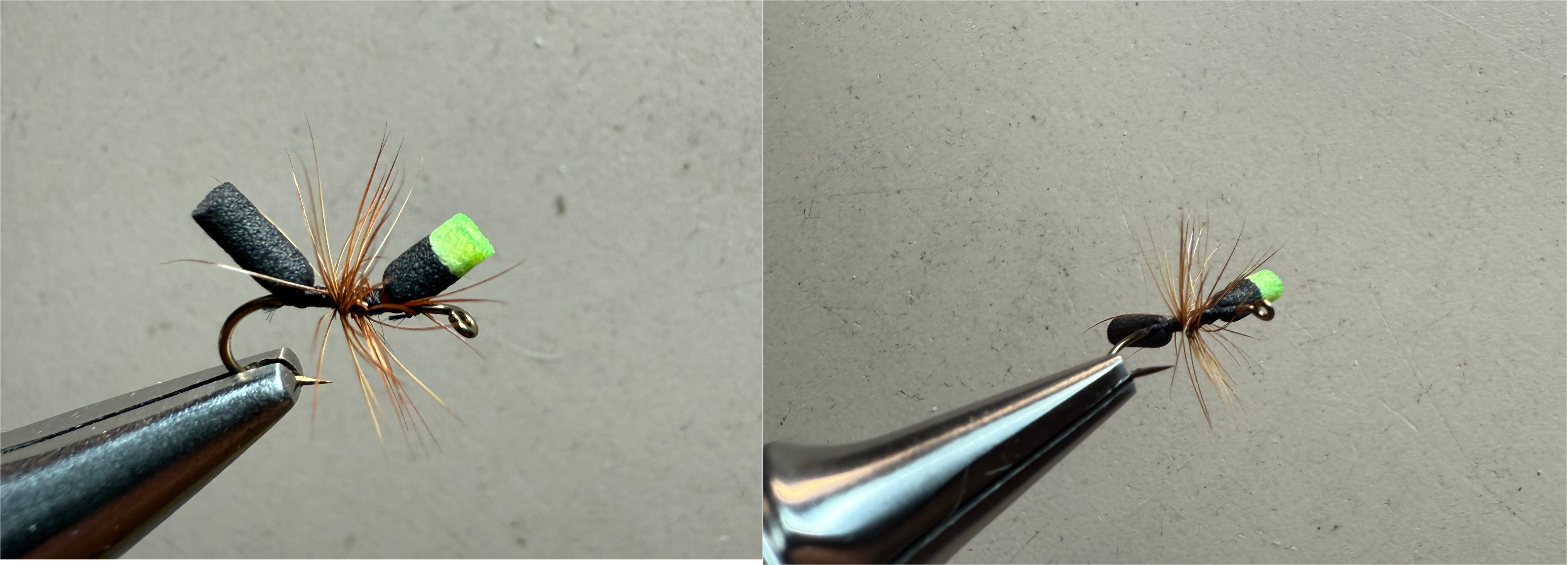
I normally buy the foam with white tips and use permanent markers to color them into shades I can see in different conditions. The trout don’t seem to mind. Like this fellow from this verdant mountain stream with a red dotted foam ant in his lip.
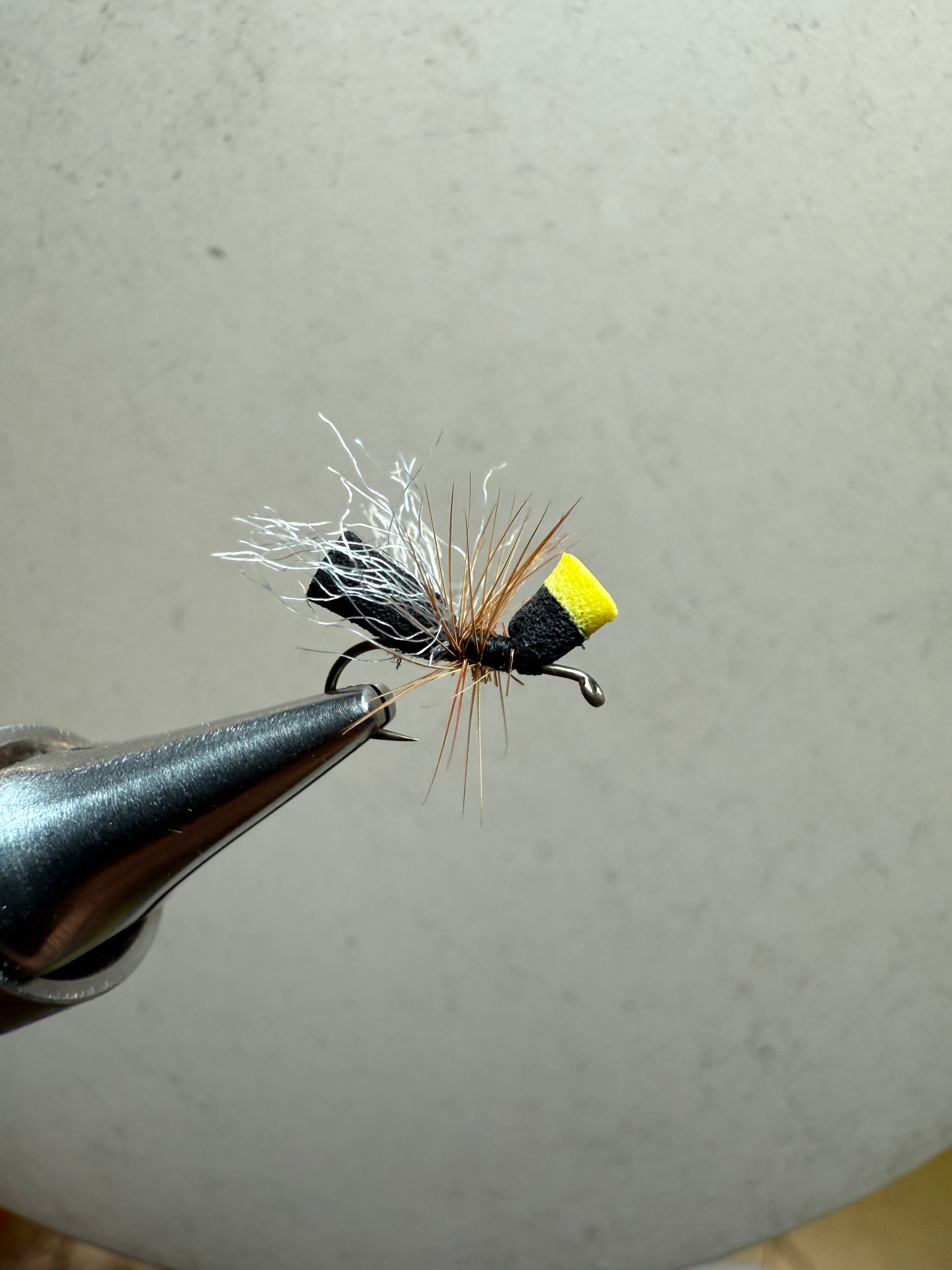
They do double duty as flying ants by the simple addition of a sparkle yarn wing.
My companion to an ant is a beetle. I rarely fish one without the other. The beetle is a slightly more robust and rotund chap, mostly hitting the water with a plop. A bulky body helps. I use either deer hair or foam folded over the underbody . I find the deer hair gives a most satisfactory ploy when dropped on the water with a firm hand. And I like an underbody created by twirling together and wrapping multiple strands of peacock herl. The compact and dense structure comes down with a resounding plop. If you fish both an ant and a beetle you’ll find the beetle normally gets taken within the first 12-18 inches of where the fly lands. The ant, could be a while down the drift.
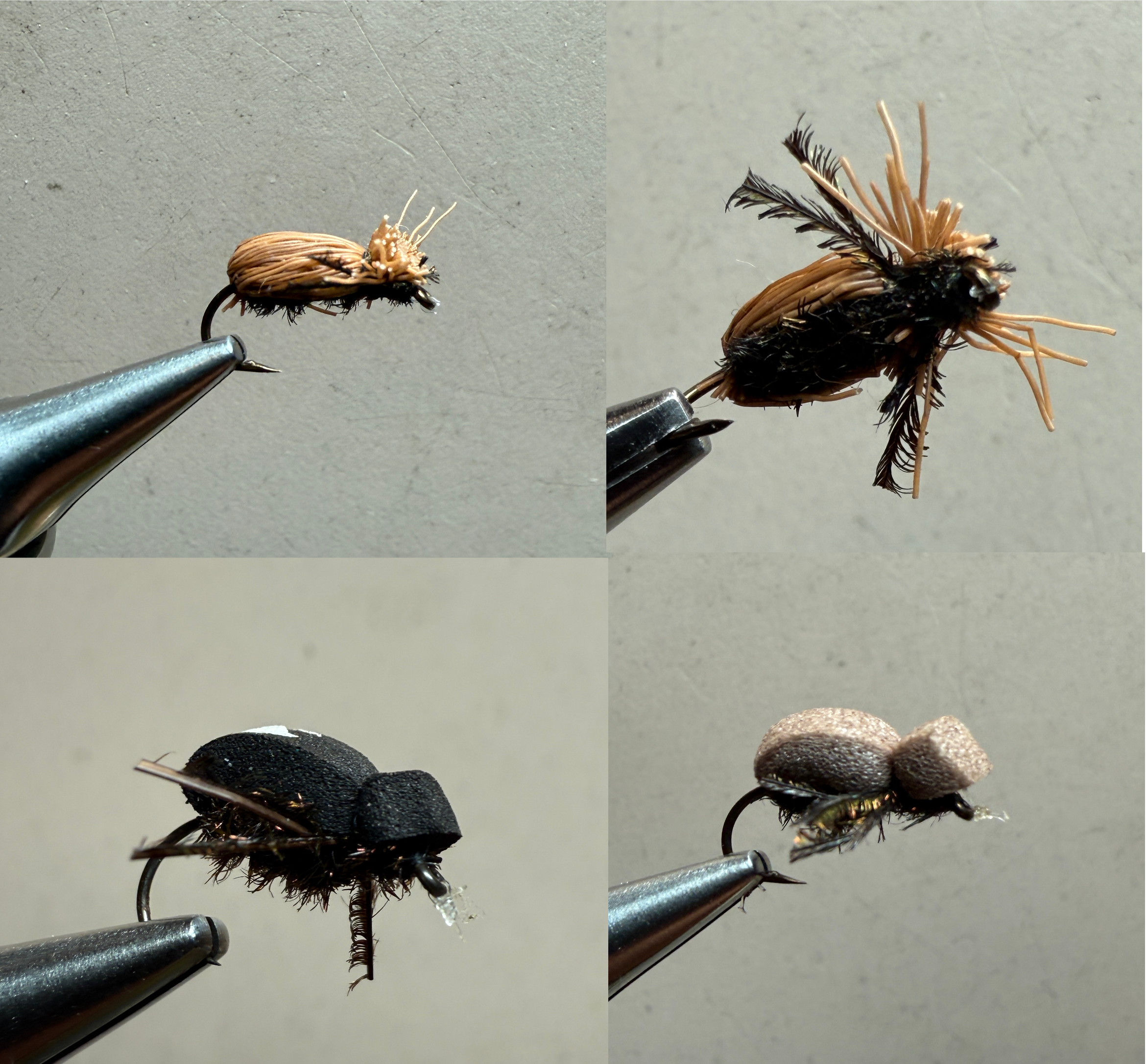
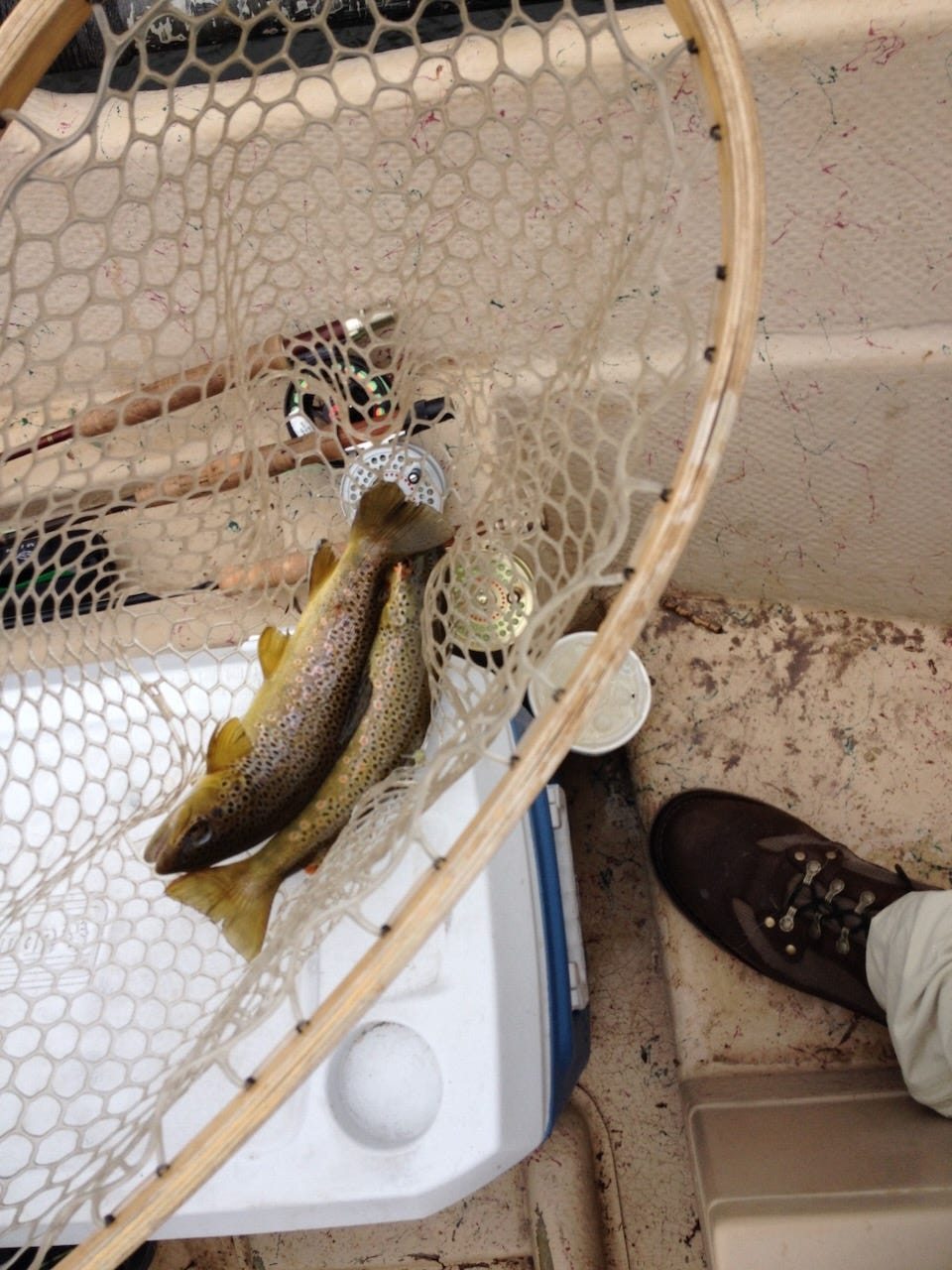
I consider the plop of a beetle to be absolutely essential. I’ve seen fish come running from far away drawn by that plop. My friend Matt Murphy is so enamored of the plop that he ties a bigger foam beetle with a black brass bead tied to the middle of the hook. That makes the kind of plop that draws even something like this up from an undercut under a big tree root ball.
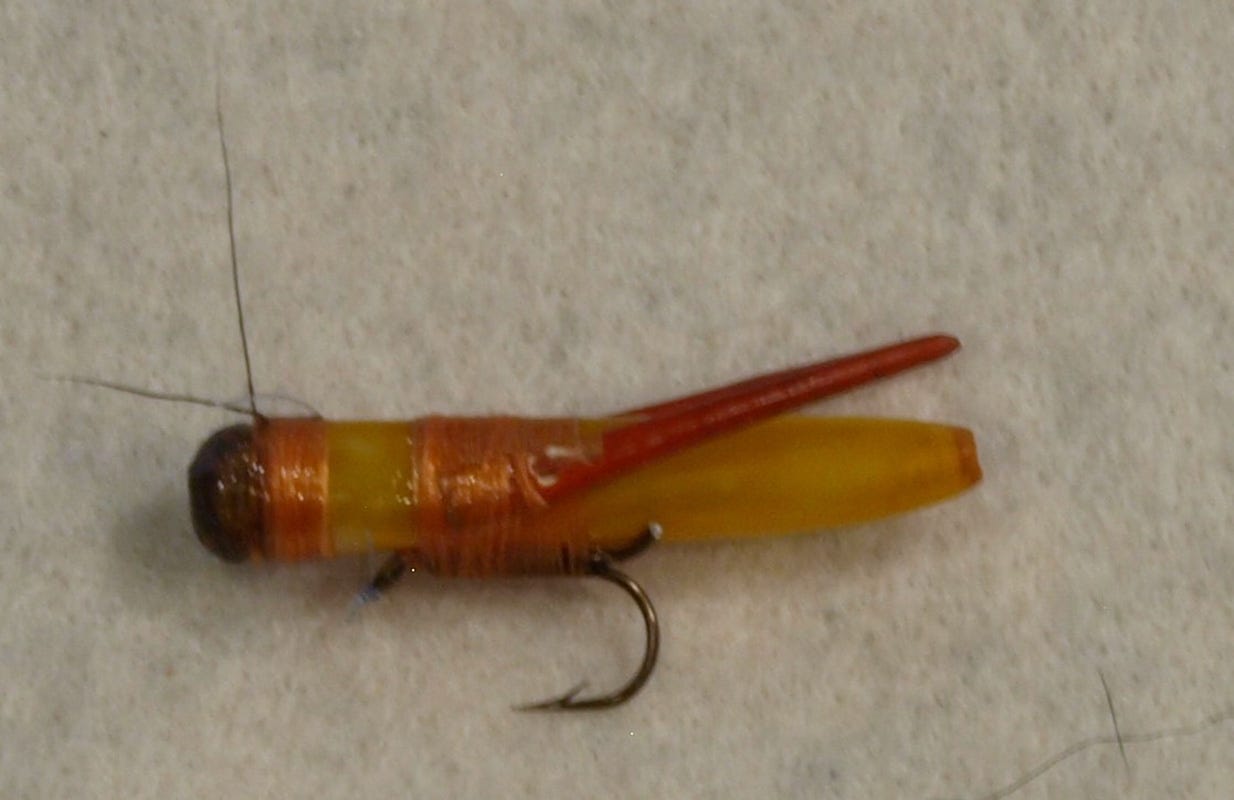
It was somewhere in the later half of the 1960s. I was an impressionable young lad who would sit in my father’s study and look through his copies of Outdoor Life, Field and Stream and other such magazines. I learned all about going on safari from Jack O’Connor and longed to be old enough to have a .270 Winchester. I was immensely upset the year Dad opted for a .243 - how could he, Jack swore by the .270 and had a whole plethora of African game to show for it. And amongst my fishing idols was one Vince Marinaro. A guy who once hooked a trout so large on the Letort that he, forevermore carried a salmon net with him on that stream. Amongst everything else he once wrote about a fly called the Pontoon Hopper. I tried valiantly to tie some, and the efforts were miserable. It was a complicated contraption with cutoff treble hooks, turkey quills and bits of cork, moose hair and whatnot.
Many years later, as a grad student I did start fishing the Letort, and still do. But I resorted to using Ed Shenk’s Letort Hopper and Cricket patterns. They’re durable flies that are relatively easy to tie and very easy to give that twitch to, that is so essential for effective hopper fishing. Plop the hopper down with a splash, let it drift for a tad then shake your rod tip just ever so little to make the hopper or cricket twitch, then let it drift some more and twitch again. The spun hair body and long hair wing do a wonderful job of creating the plop, giving the impression of legs and scooting the fly along the surface.
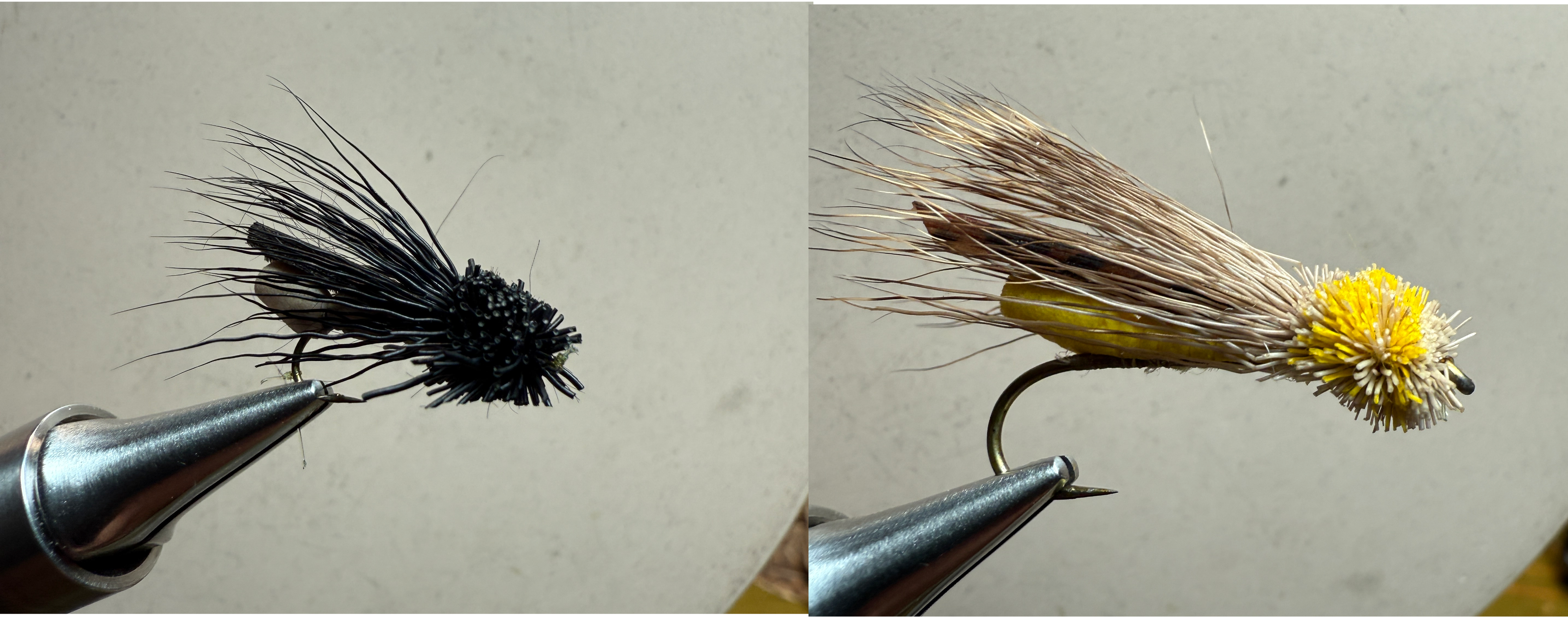
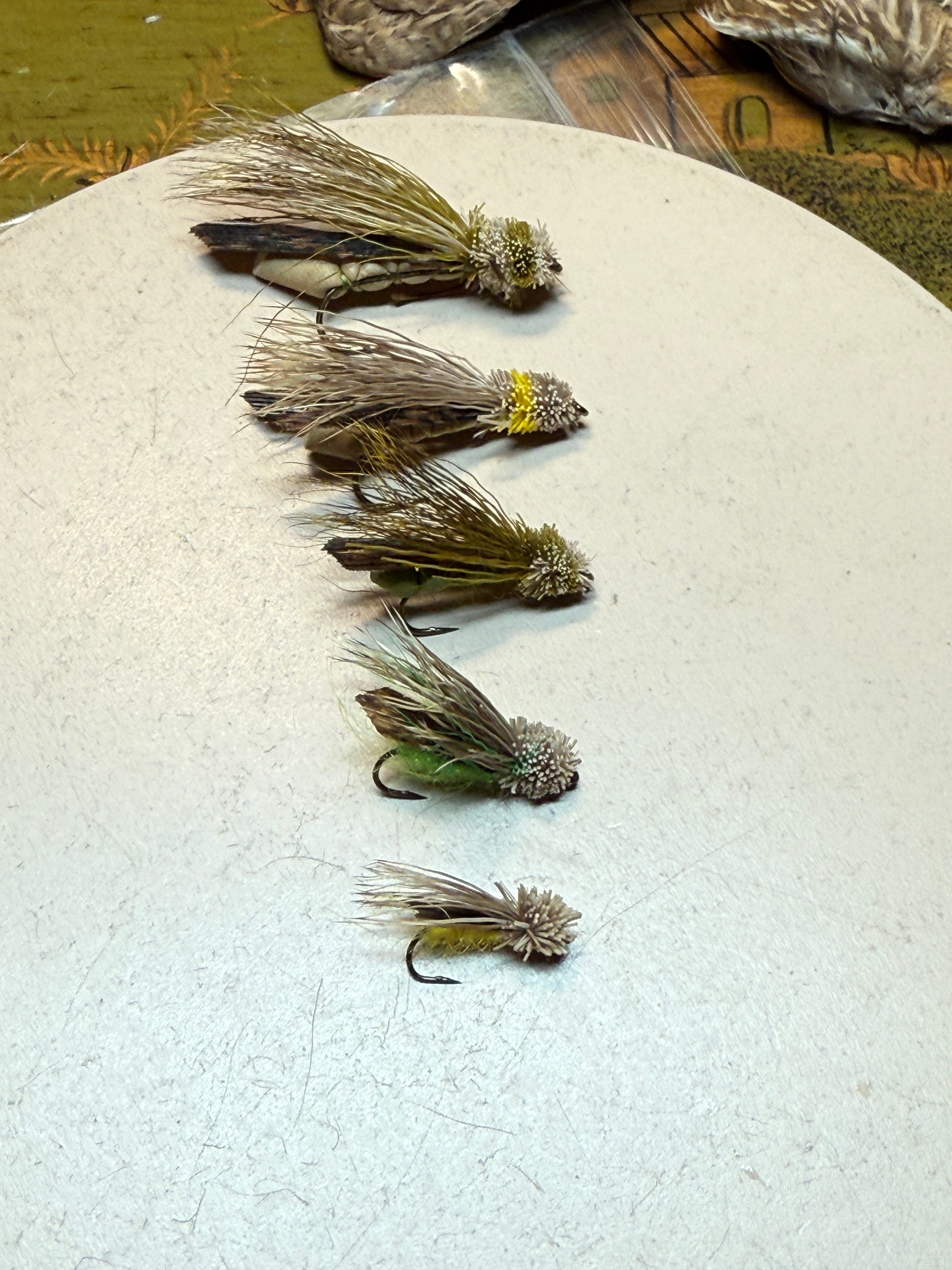
The traditional Ed Shenk pattern is tied with a dubbed body. But the Letort Hopper and Cricket tend to sink after a few fish have chewed on it. Before I looked at deer hair in detail I thought that was because the body got soaked after a fish or two. And that’s true. So I started tying them with foam cylinder bodies. But I found that the toothy browns I was bring up with these flies tore those bodies up. The dubbed bodies would sink, the foam ones would get chewed up. You could dry the dubbed ones out. The foam ones were shot after a few fish. So it’s back to the dubbed bodies. I tie them in all sorts of sizes and colors though a big yellow one seems best, even when all around are hoppers with green bodies.
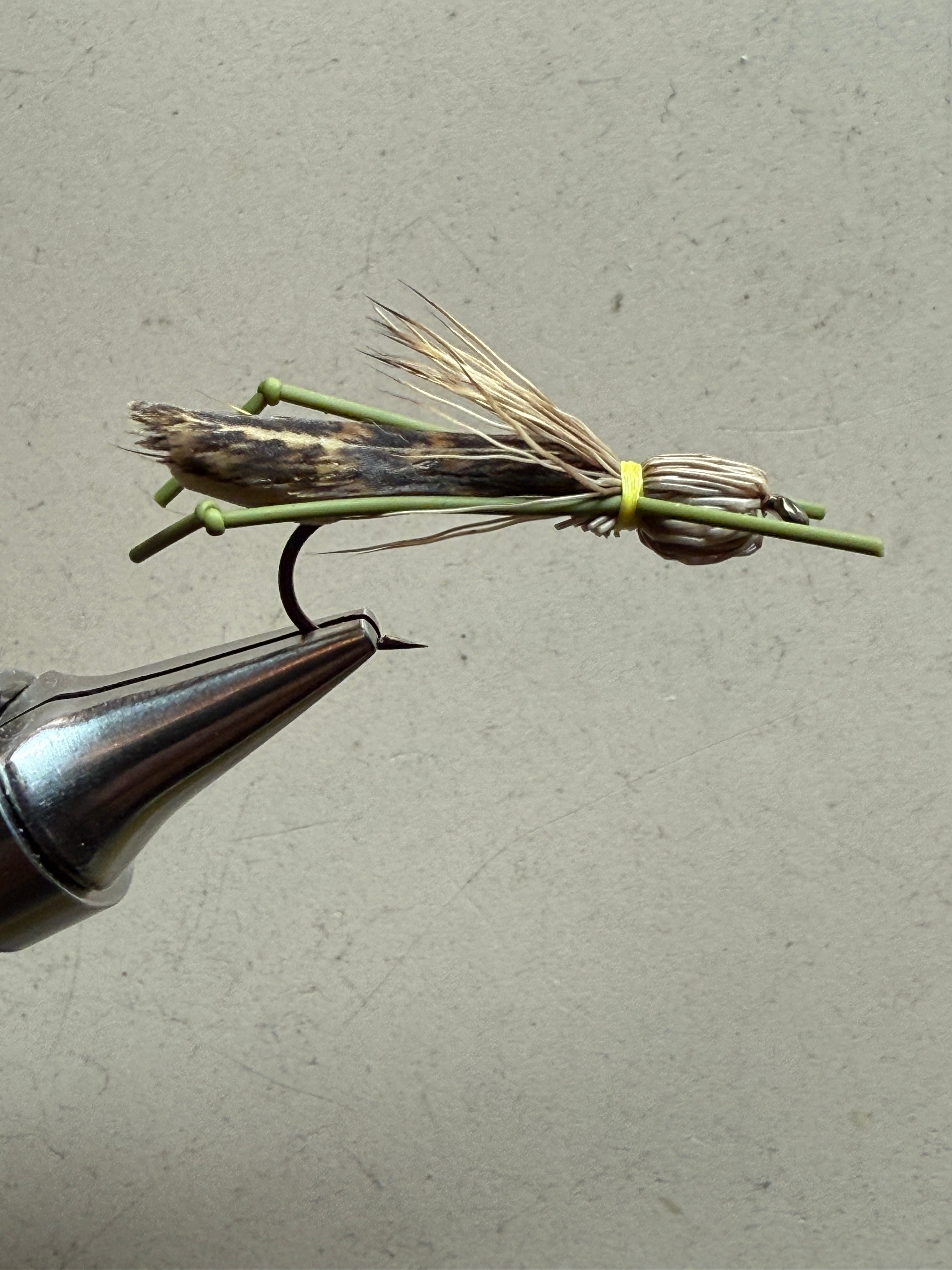
A good friend of mine swears by the Henry’s Fork Hopper, especially in slow water. I tied a few up. They look great. They are a royal pain to tie and they catch no more fish than the Letort Hopper.
And there you have the major food groups in the terrestrial arena. Every 14 years or so the “cicadas sing a rare and different tune”. And inchworms fall from trees and all sorts of other things find their way into the streams. But the ants, beetles, hoppers and crickets do the yeoman work of terrestrial fishing.
Just remember plop the beetles, slam the hoppers and crickets and twitch them. They’ll do wonders.
As the fall sets in and the first frosts hit the higher ranges the elk start moving down into my valley. Some say those first frosts actually kick up the hopper activity as the afternoon sun still brings respite.
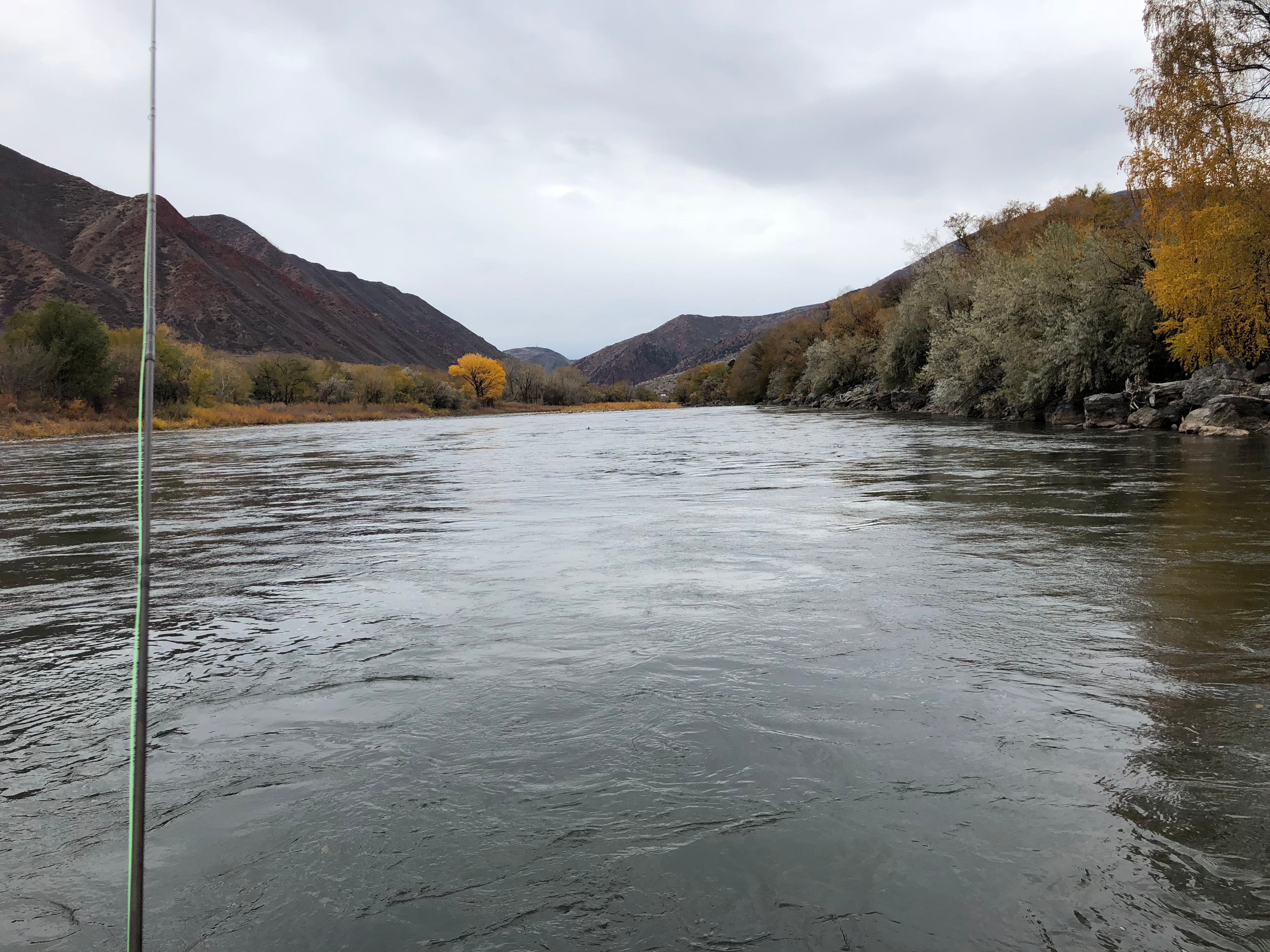
But way down in the lower reaches it’s now the time of the cricket. Even with a smattering of snow they’ll still crawl out and chirp their hearts out in the evenings. The river banks will now see elk and bear come down from up high, and as the days grow shorter we’ll find the trout eager to grab an errant cricket along the shore.
Our terrestrials tend to be of the small and black varieties, but are a staple here in Ireland june/September, my typical set up being a v slim black klink on a dropper above a back Stewart spider.