Stoneflies
Because someone asked and it's been a while

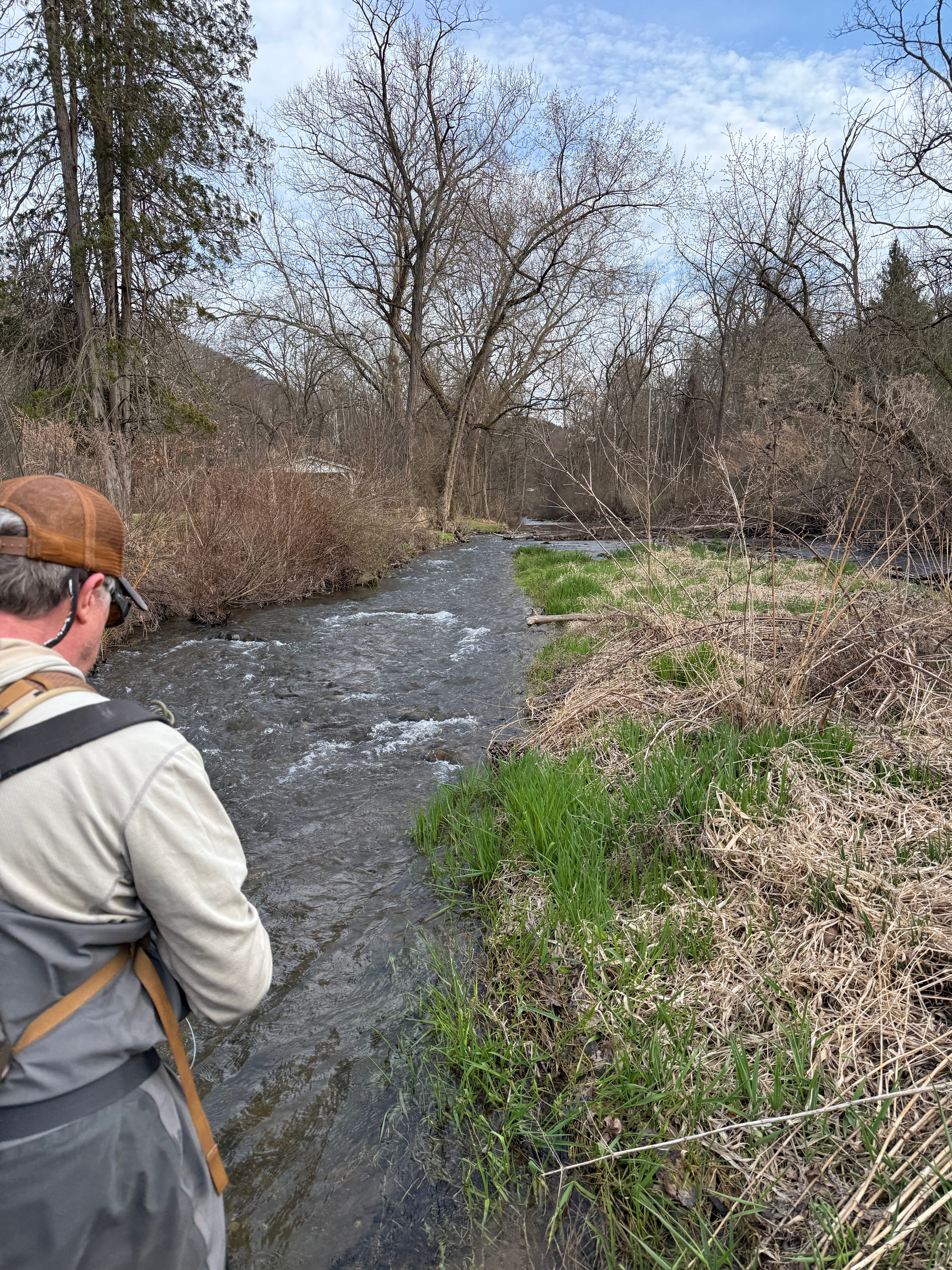
There’s a little stream my buddy Frank and I often fish. It comes gushing out of a hillside from, what I can only imagine is, a limestone cavern. It wanders through meadows and woods
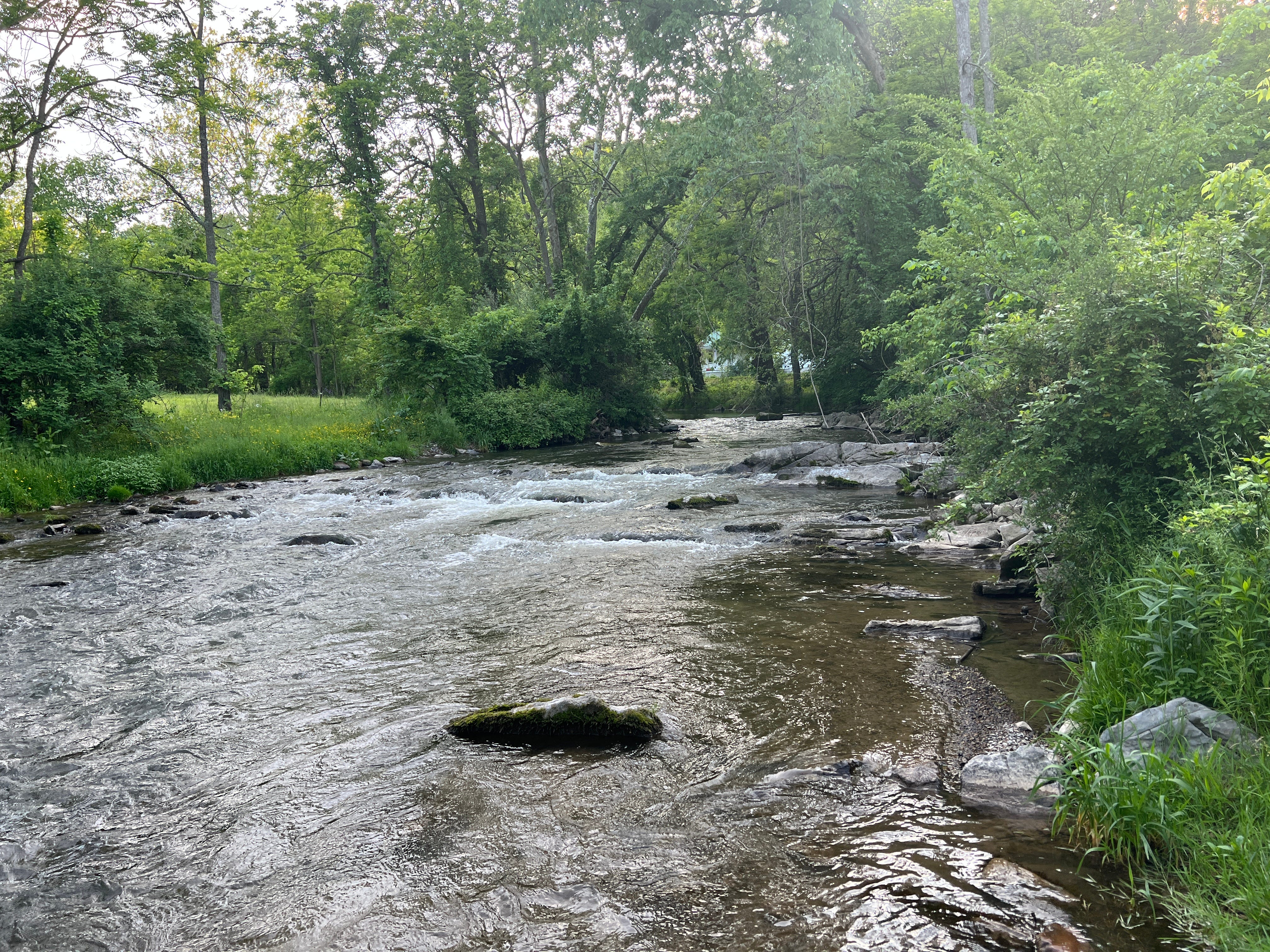
as it makes its way down to its confluence with a larger stream
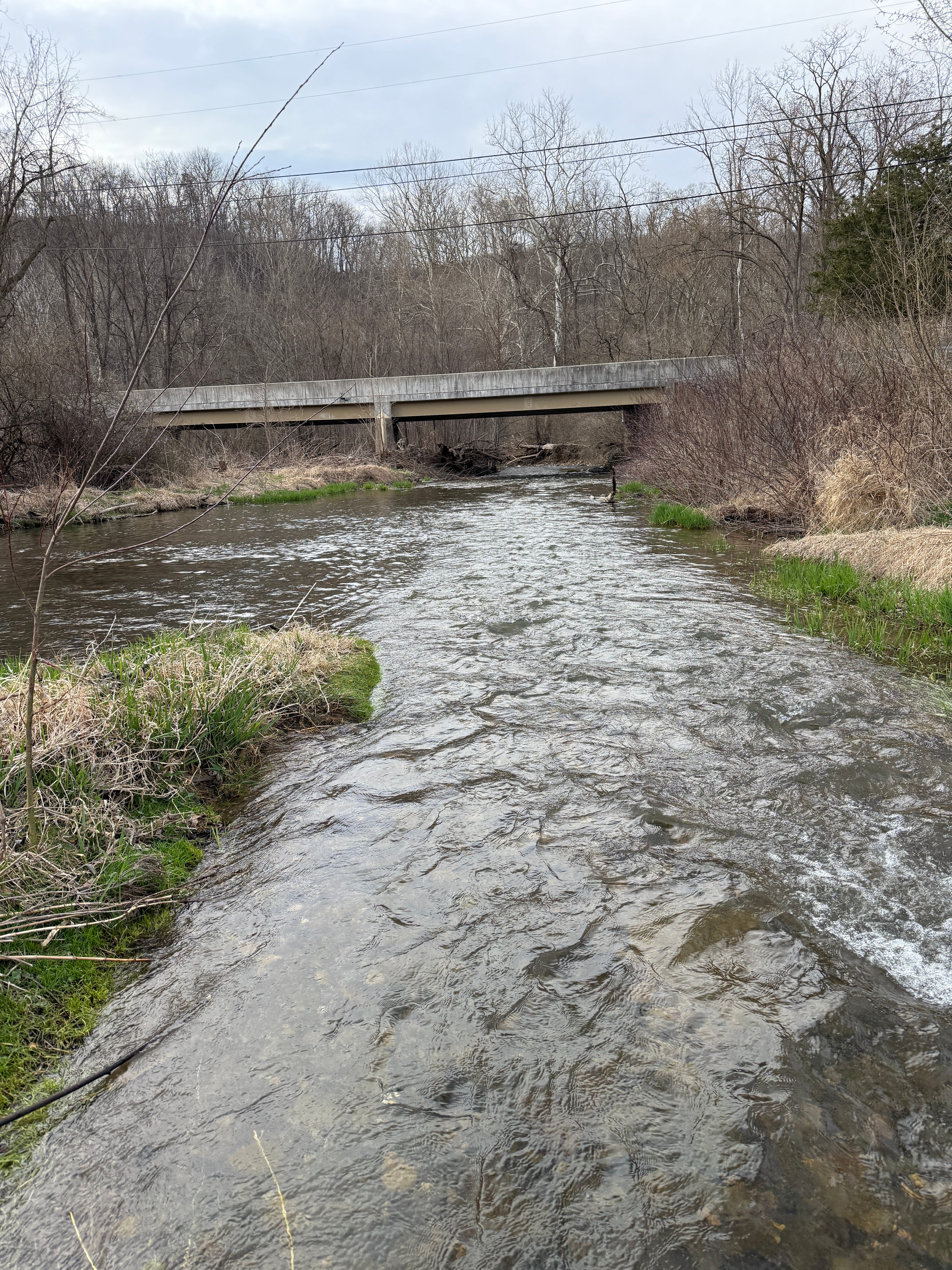
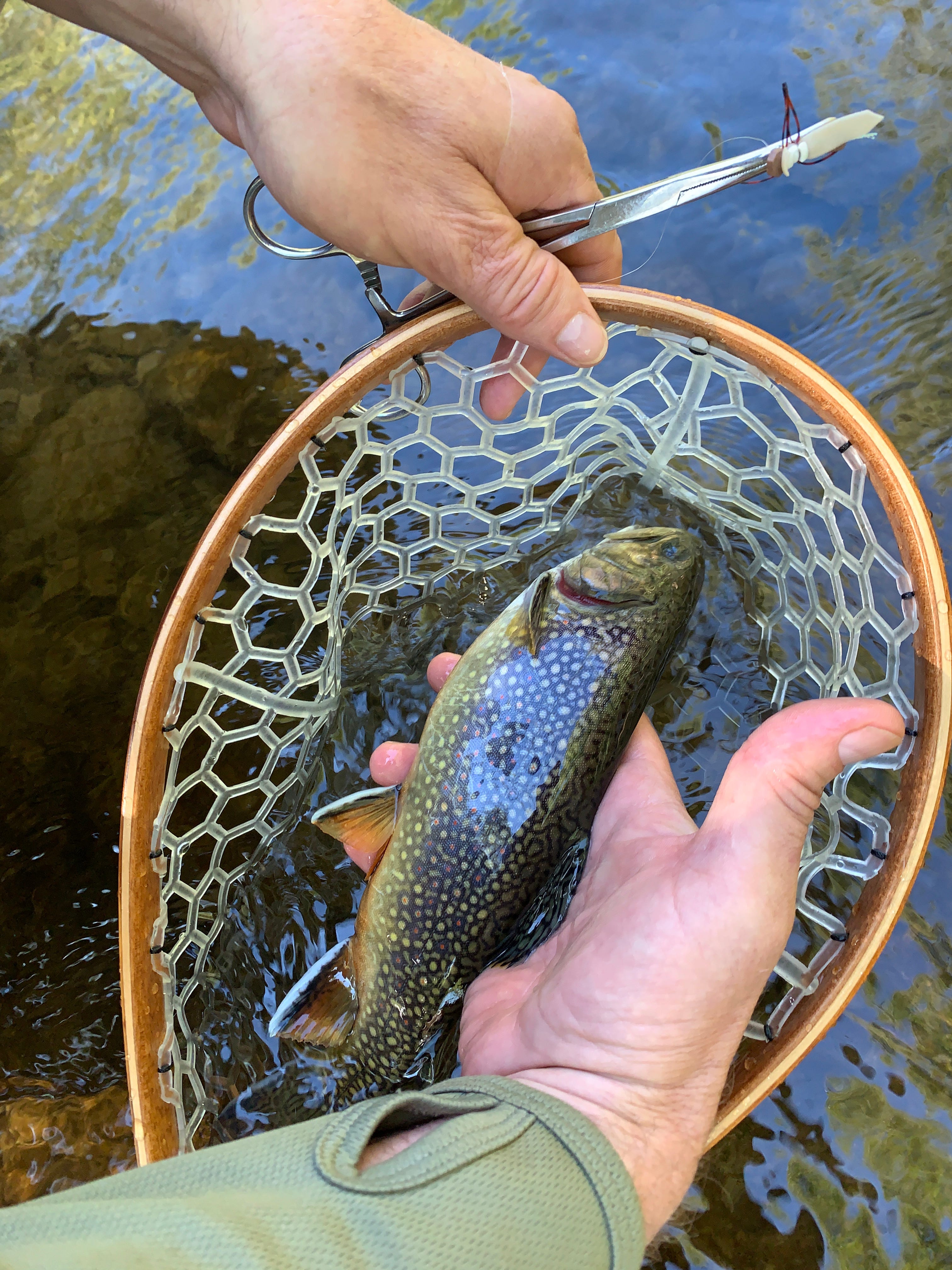
and finally down to a bigger river. For the most part it’s a tiny little brook. But as we explored it we found it held a very health population of brown trout. Even the brookies get chunky.
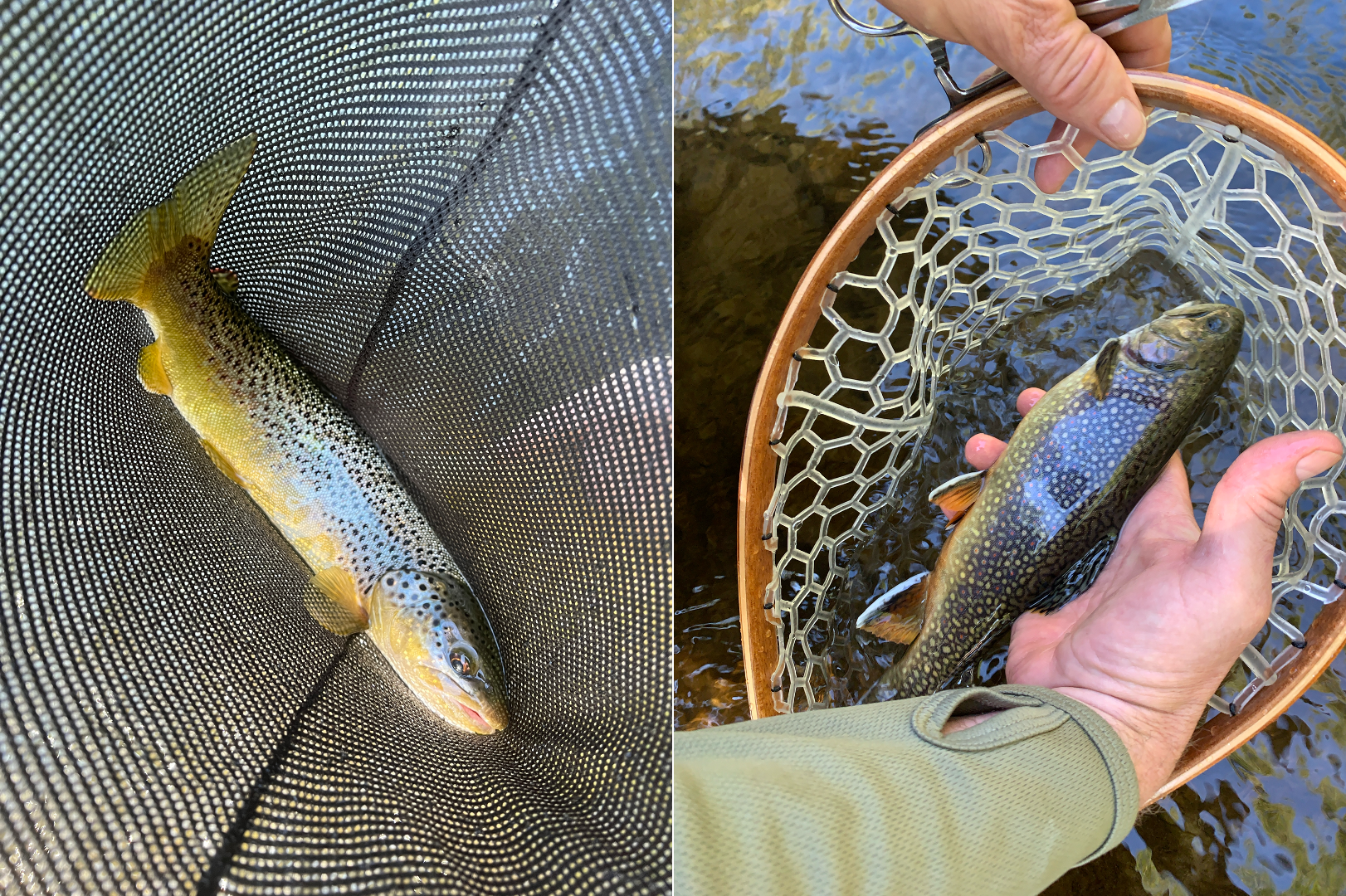
As you turn over the rocks or seine the stream you find the place is loaded with golden stoneflies ranging to over an inch in length. No wonder these little fish eat flies like this.
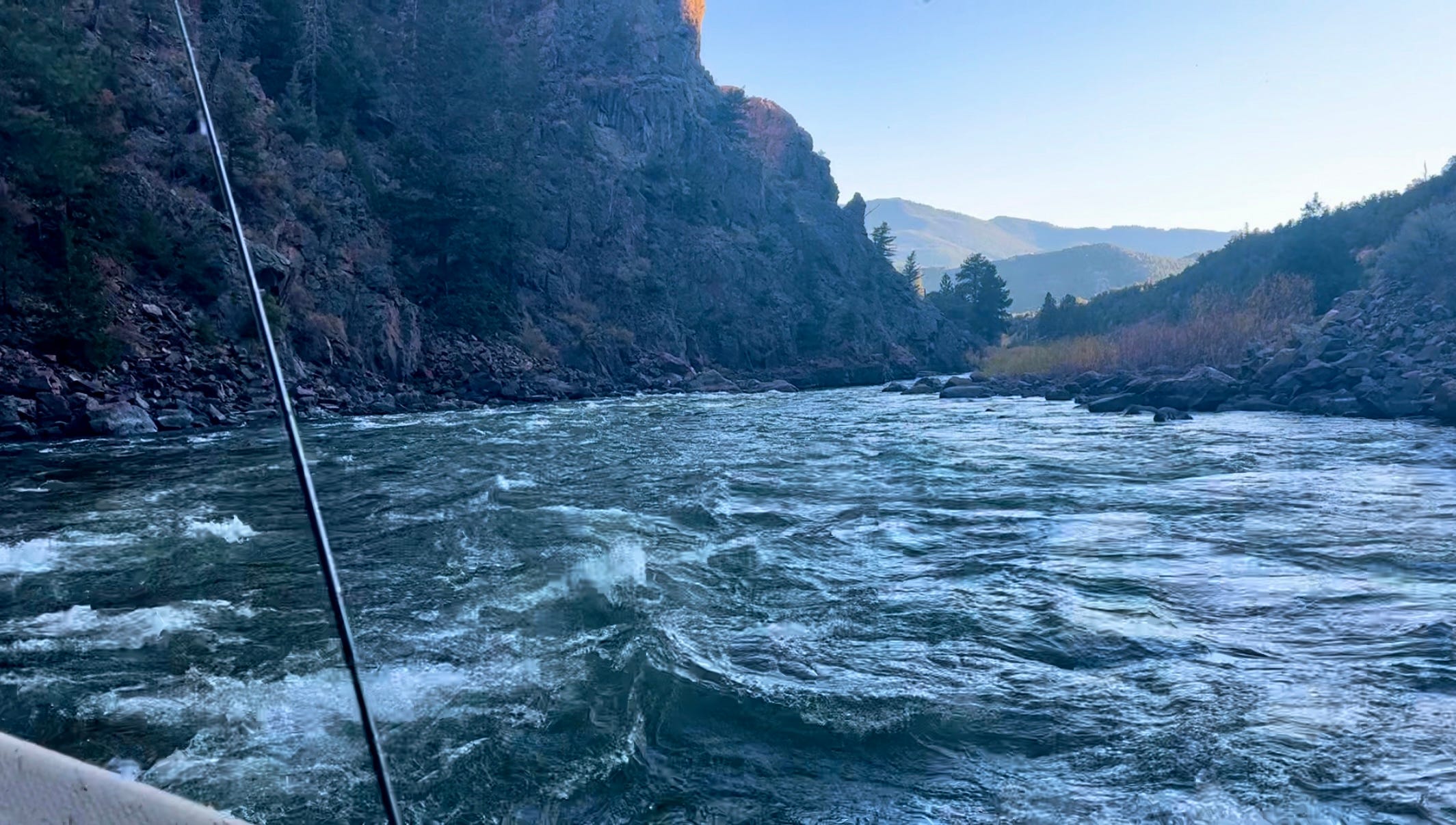
Half the continent over the brawling rivers of the Rockies pound their way down boulder strewn canyons
and flatten out into runs in the sagebrush flats. These are the homes of the mighty Pteronarcys Californica,
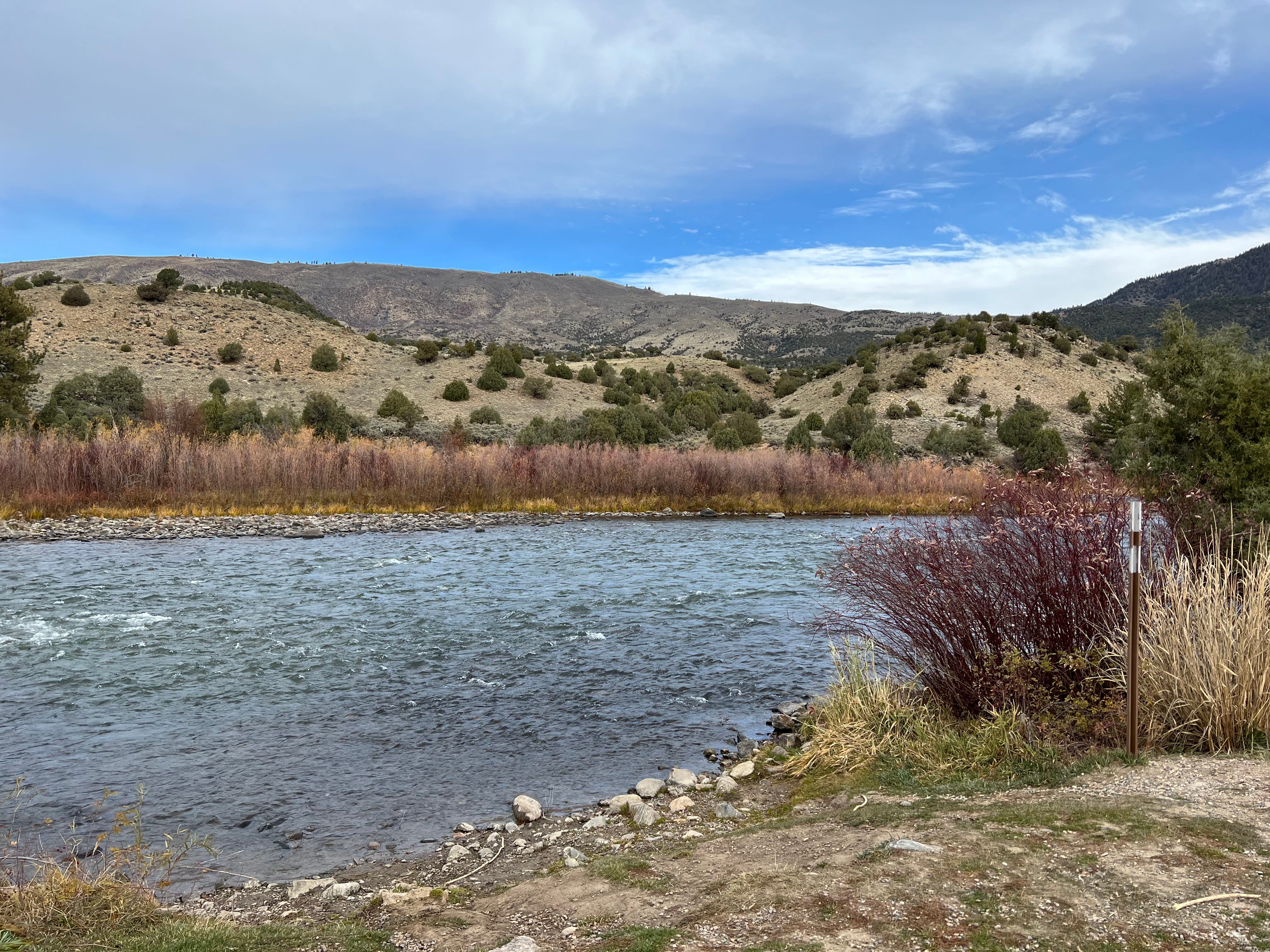
The Giant Salmonfly that comes crawling out in the spring. Tucked away between these two big ones are myriad members of perlidae or stoneflies.
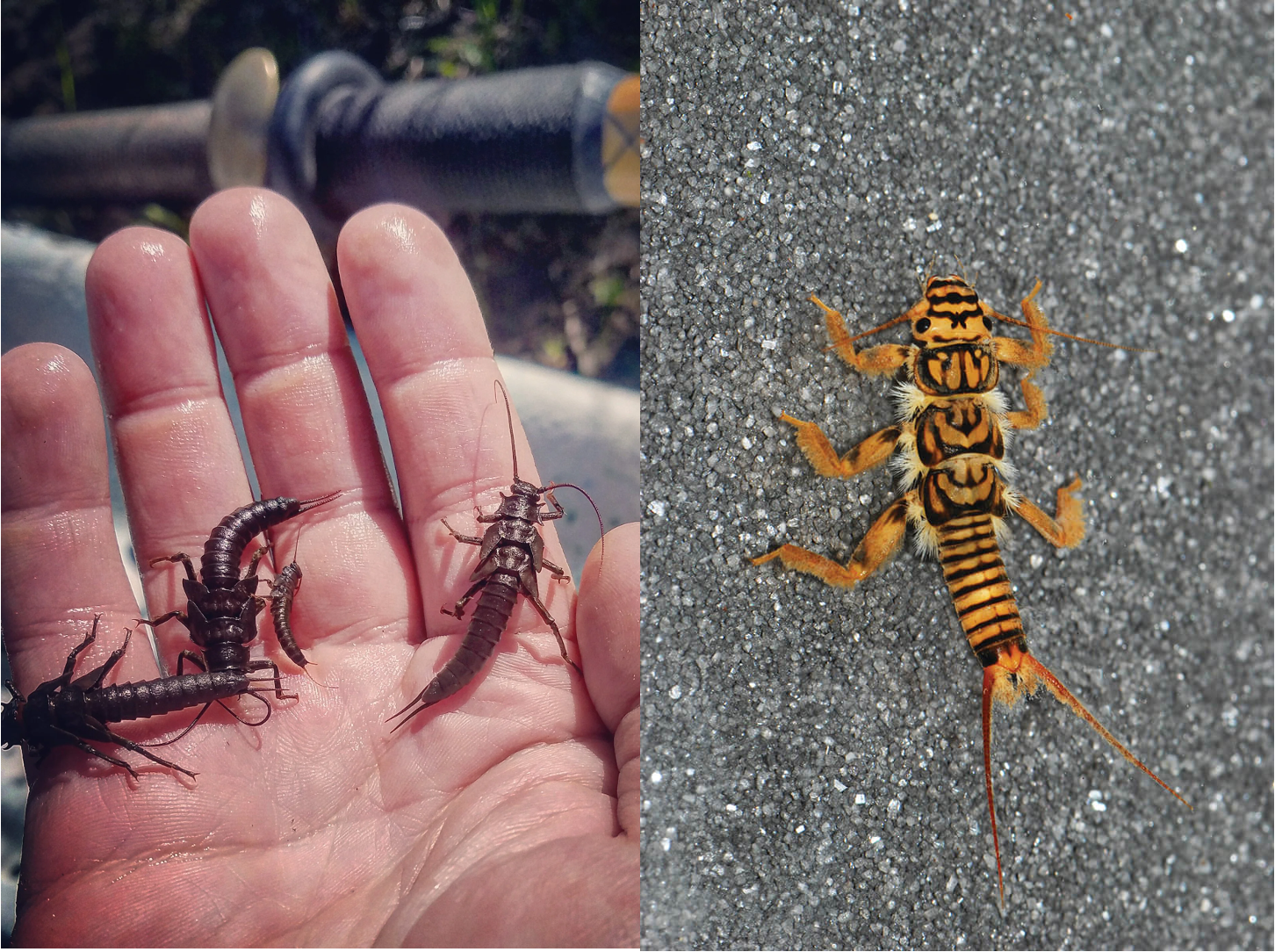
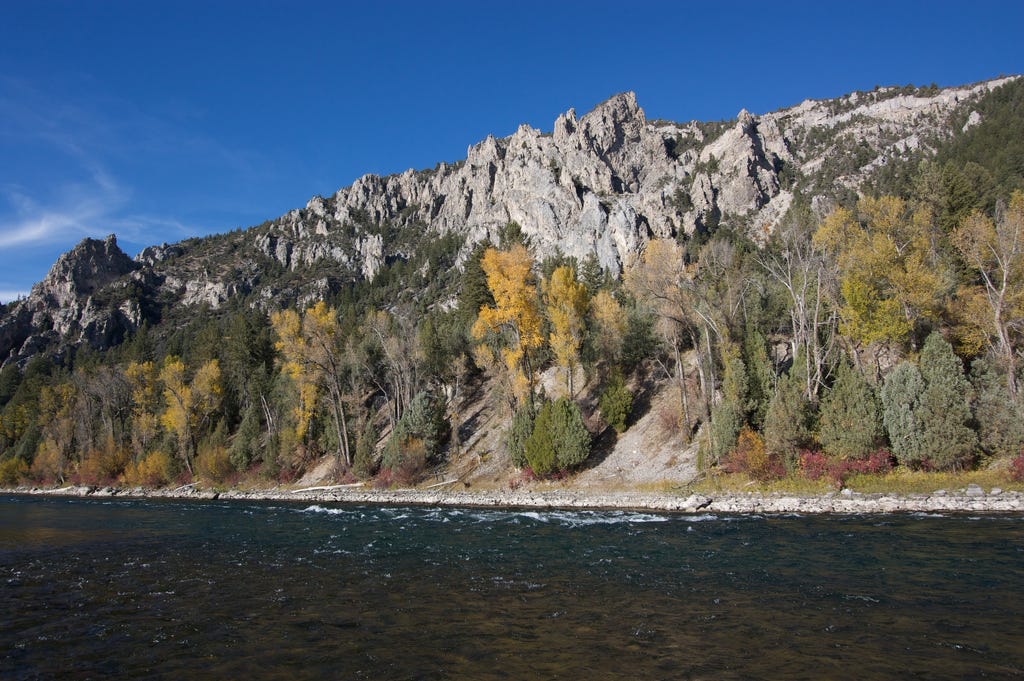
Encounters with stonefly adults are, in my opinions, legends as long as one remembers that legends often devolve into myths. I personally have not met the pteronarcys adult very favorably. In my second home, the Salmonflies hatch where the Colorado flows out of Gore Canyon, typically during the spring run off. There’s some fishing to be had for the brave of soul in the area around the Pump House or downstream. The Black Canyon of the Gunnison does cough some fishing up for those willing to take an overnight drift through the canyon. You hear about great hatches in Montana and such, but you never hear or read about them on a general basis. I suspect the rumors of fishable hatches far outweigh the reality. I do know that the big golden stones that hatch in the summer (both in the West and East) offer more by way of “oohing and aahing” at the size of the fly than they do at the fishing of the fly, or the taking thereof by the trout. The exception to all of this ignoring of stonefly adults by the trout seems to be to the winter stoneflies in the east and to a lesser extent the sallies (both yellow and lime).
The stonefly nymph on the other hand, is an entirely different story. Armies of guides out west earn their daily bread by hanging a rubber leg stonefly below a Thingamabobber and rowing merrily, merrily, merrily down the stream. Fall on the South Fork of the Snake in Idaho sees a bunch of folks fishing a Pat’s rubber leg at the end of the tippet and a small RS2 above. Seems the cutthroat and rainbows all go for the big stonefly and the browns key in on the RS2.
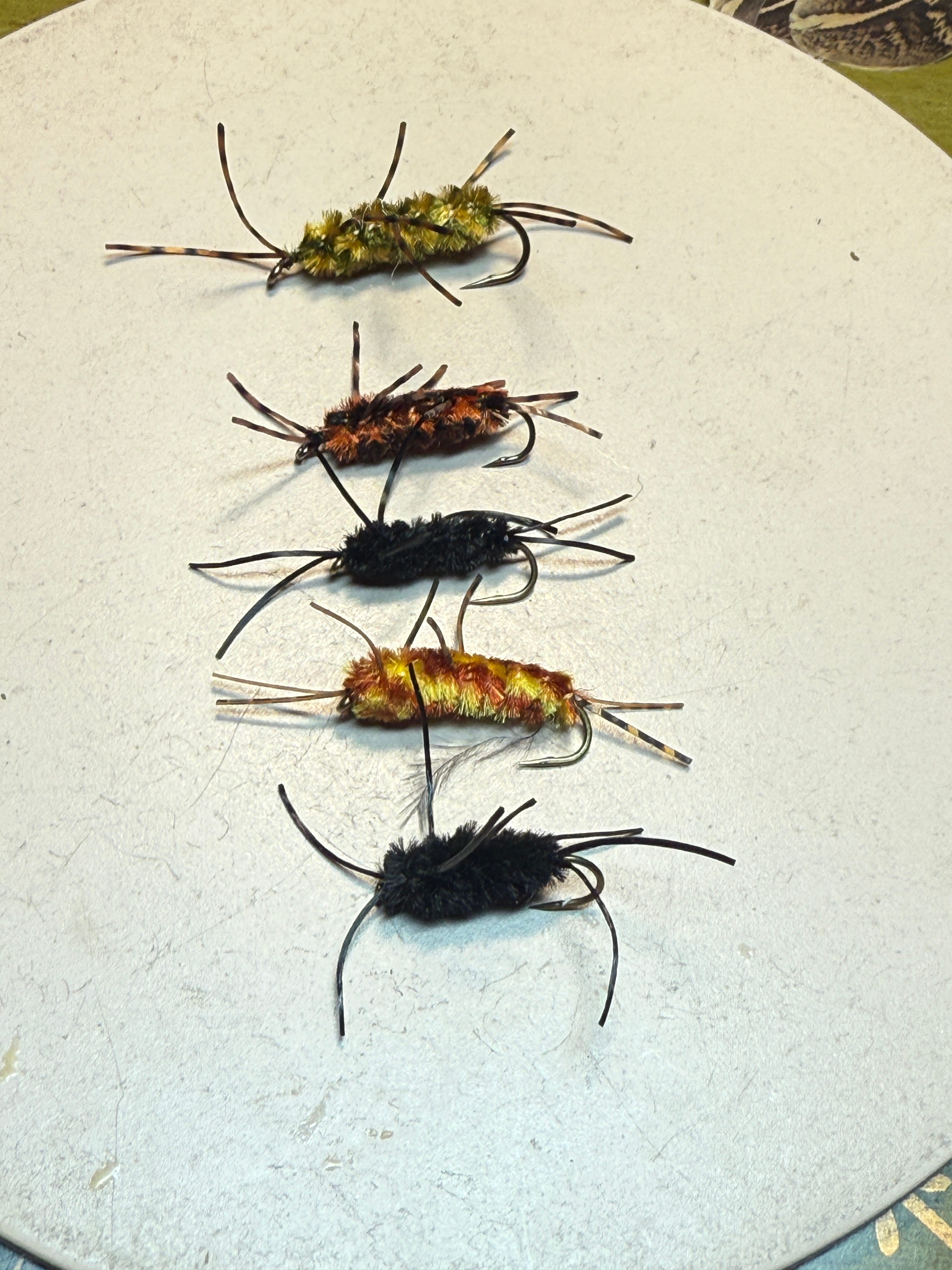
The rubberleg stonefly is the simplest and possibly most efective pattern out there. Drawing on the features of the old Bitch Creek and Gridle Bug style Pat Dorsey’s simple pattern with a chenille body and rubber legs is easy to tie (and you will lose a bunch) and very effective.
My buddy, and super guide Matt Murphy ties them down to a size 10 or 12 on a standard hook. They catch fish. If you do live in Pteronarcys territory I’d like introduce you to what’s been the most successful pattern for me. It’s an old one by Charlie Brooks, ranging back to his days on the Madison. Charlie tied it with crown feathers and yarn and ostrich herl for the gills. I just tie it with whatever I can find.
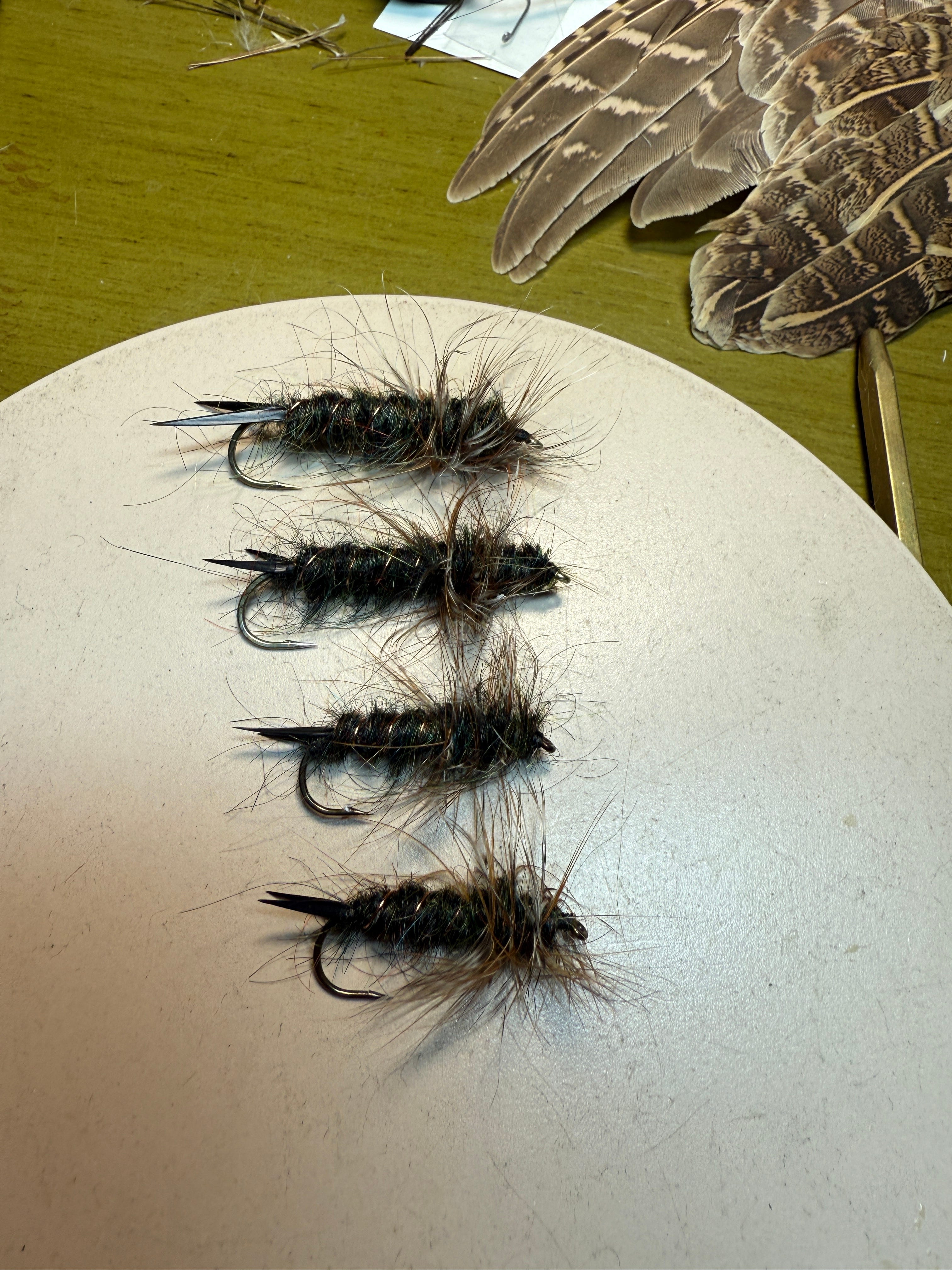
Brooks had an interesting style of fishing them using full sinking fly lines and such. I tried that as a young man over 40 years ago. It was hard brutal work and didn’t seem worth it when an upstream cast got the flies down fast and easily and the trout will try rip the rod out of your hand when they take one. I had a most interesting week fishing them druing the slow part of the day on the Bringhi, a medium sized river in the Kashmir Himalayas, a seeming lifetime ago.
When the rivers get smaller it starts becoming time to walk away from some of these monstrosities. Of course Matt ties his rubber legs down to a 10 or 12, but it always seems to me that a slightly different trick is often needed, especially when wading. You need a fly that will get down fast in the kinds of roily water stoneflies inhabit and stay down long enough to give you a good chance at presenting to a fish. Slimmer profiles with a beadhead do the job for me.
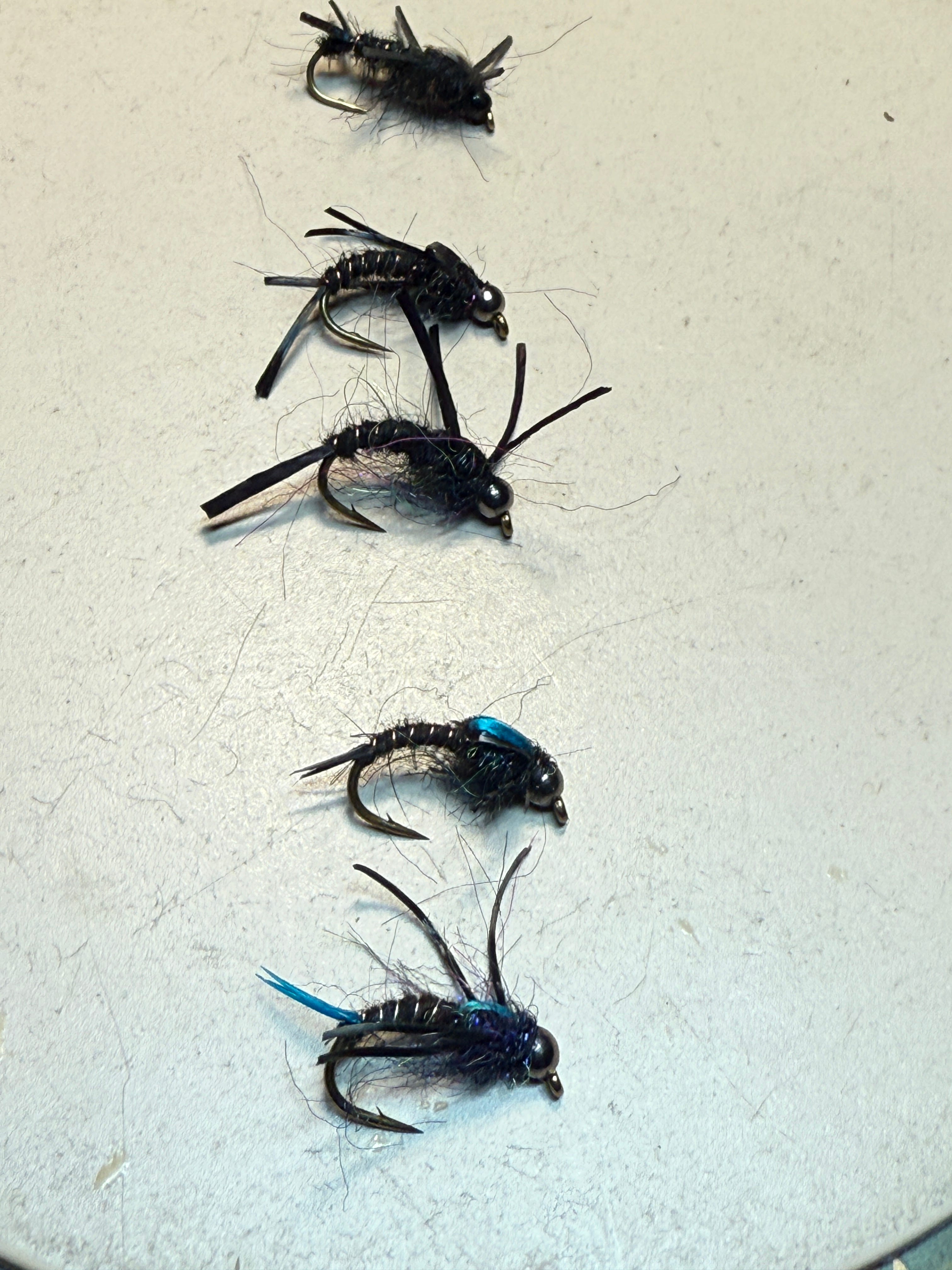
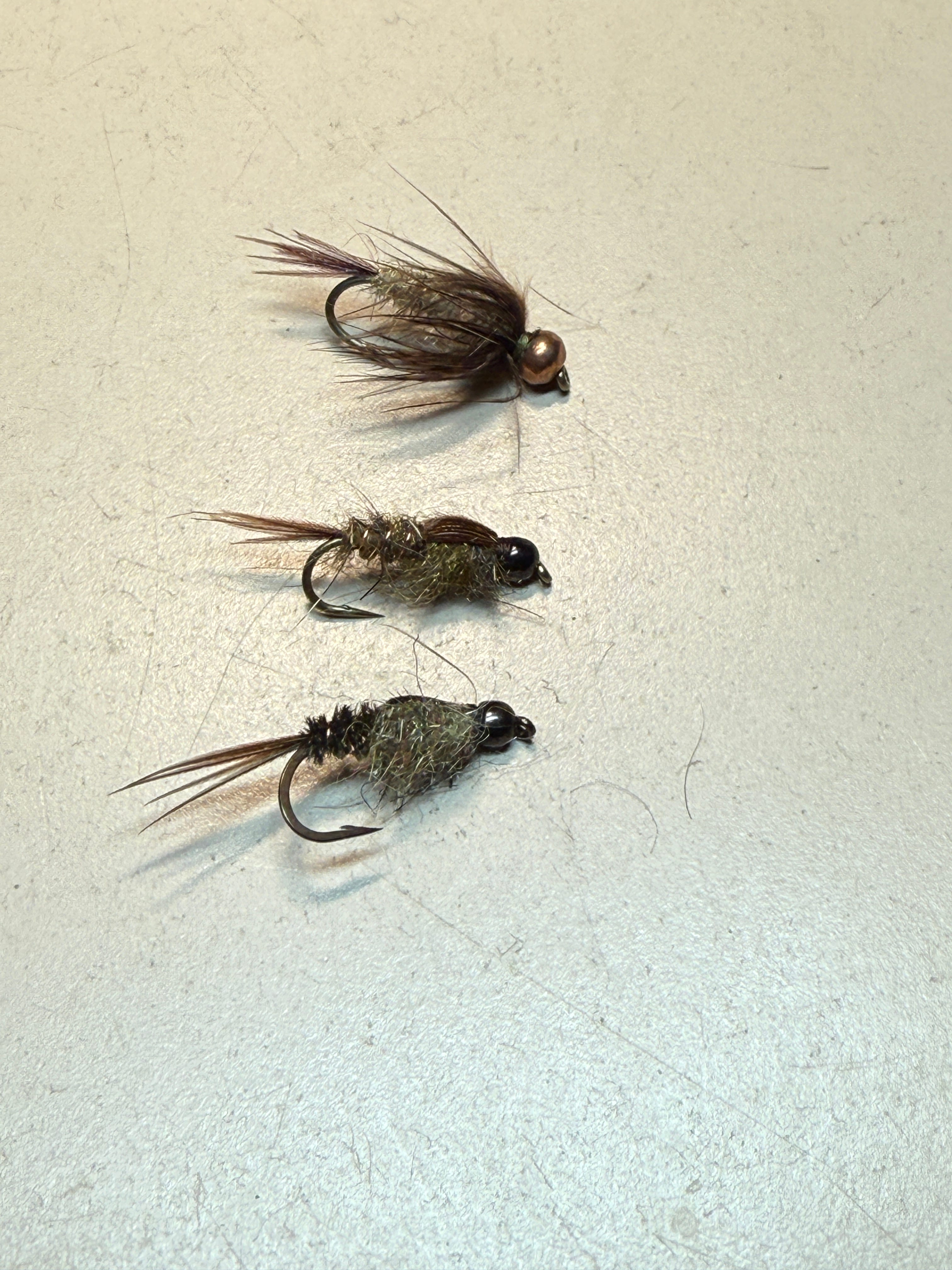
The flash of color on the bottom two helps. Actually the fly second up from the bottom is just a variant of Higa’s SOS nymph. The blue works in those deeper, darker regions better than the red. I just tie in a bit of kingfisher blue floss from my salmon and steelhead fly material.
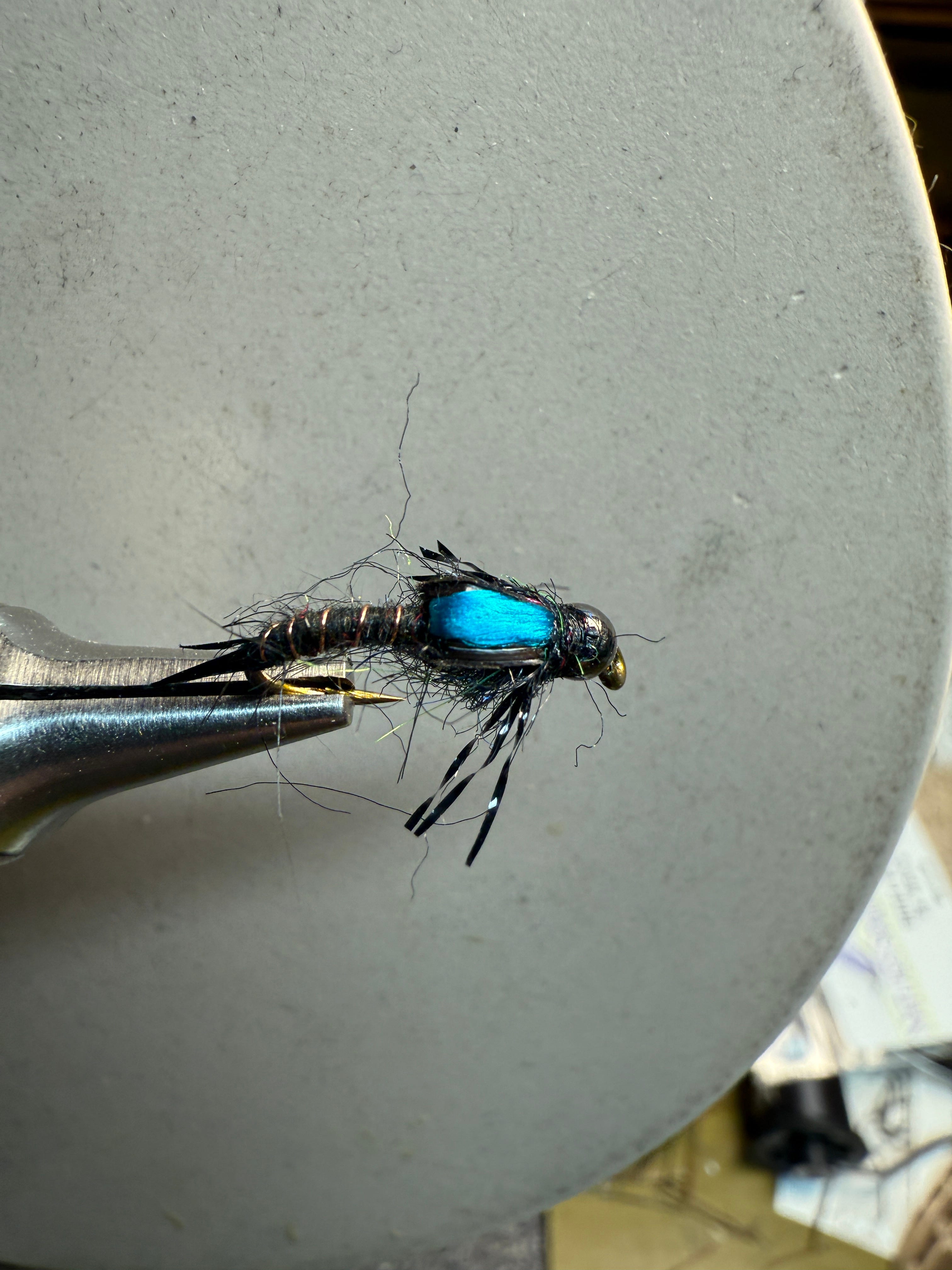
The Golden Stoneflies can be tied in many of the same pattersn. But there is a marked difference between their dorsal and ventral regions. The tops of their bodies are a darker speckled coloration while their lower halves are various shades of yellow. Normally I’d be the first to tell one not to bother with that. But I’ve seen numerous films of stoneflies being swept off the perch. They tend to rock and roll in the current flashing from the dark to the light, as they tumble off down the stream.
Many years ago I watched this old gentleman fishing live stonefly nymphs on the Delaware River. He called them hellgrammites, seined them out of the river and fished them using a fly rod. he had a tiny litlle piece of split shot on the leader and you could see the nymph drifting down the river its light underbelly twinkling away like an old heliograph. It has always seemed to me that the ability to present that light/dark contrast ought be something we aim for. The Pat’s rubber legs do it naturally with their speckled chenille. Other patterns need to strive for it.
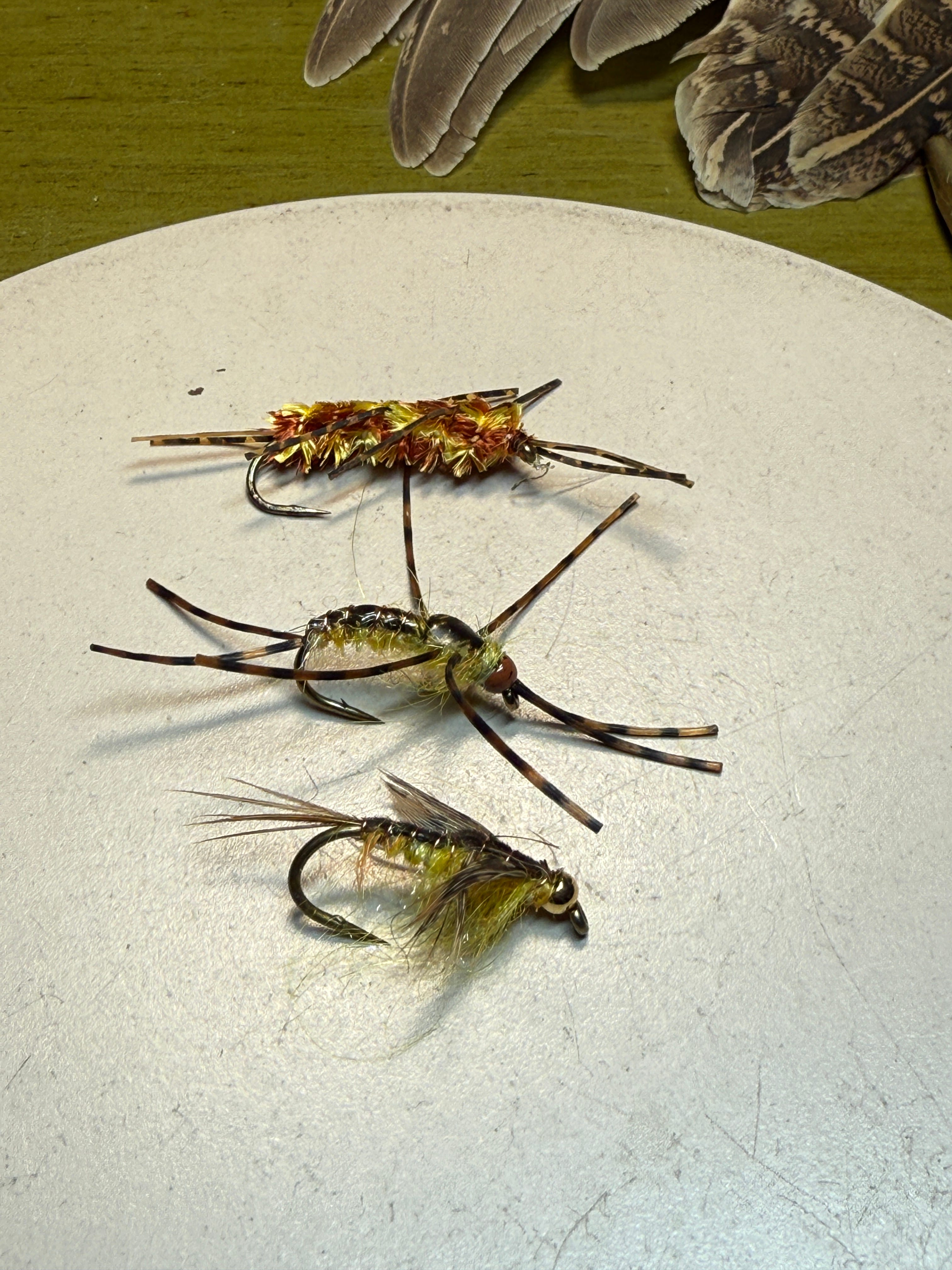
You could do it some sort of printed plastic material like the middle pattern or by folding over speckled feathers like the bottom pattern. I’ve found that long legged plastic backed ones work better in heavier water (bottom), while the one made of natural materials seem to do better in slightly easier waters (top) of this river.
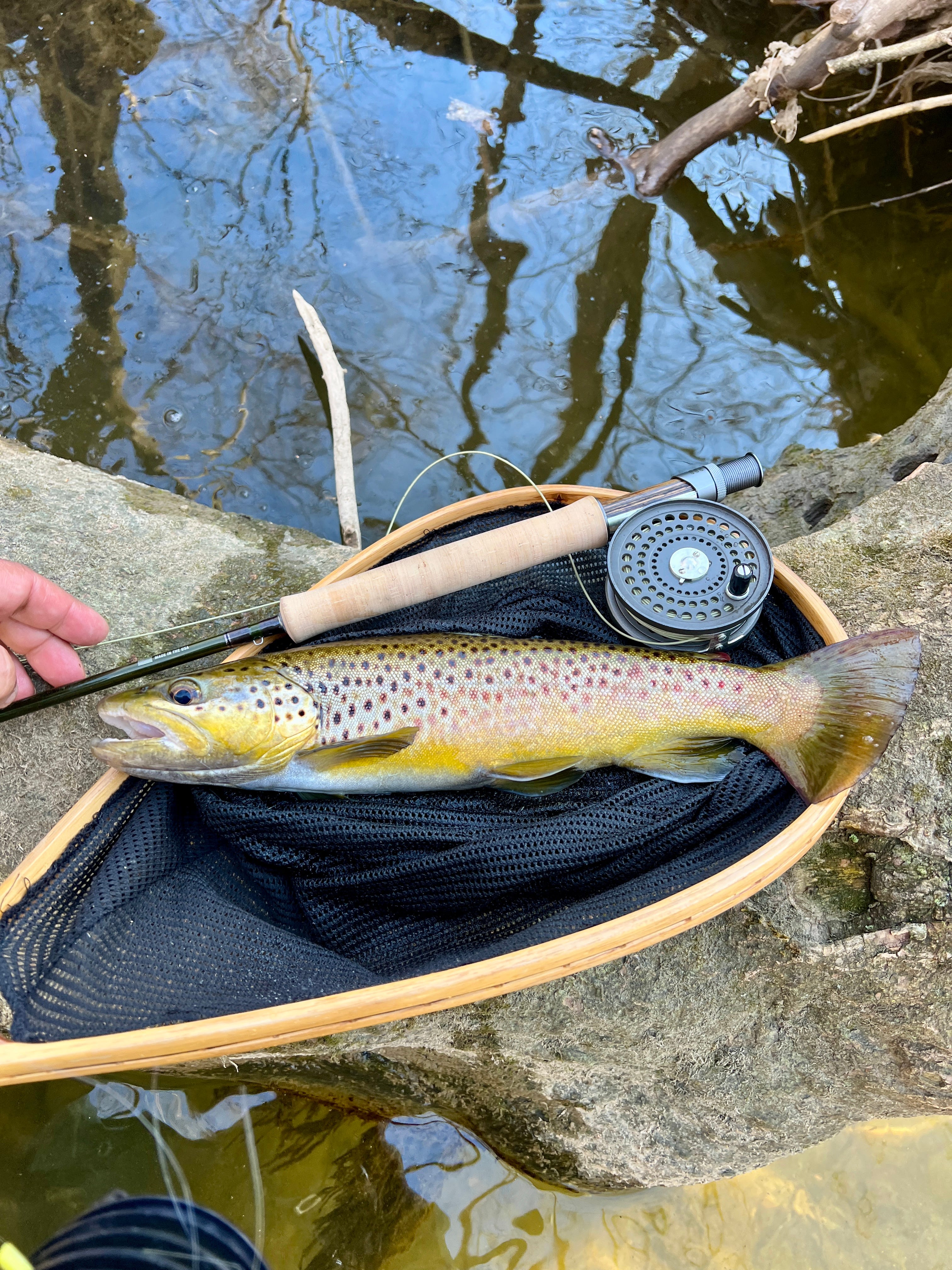
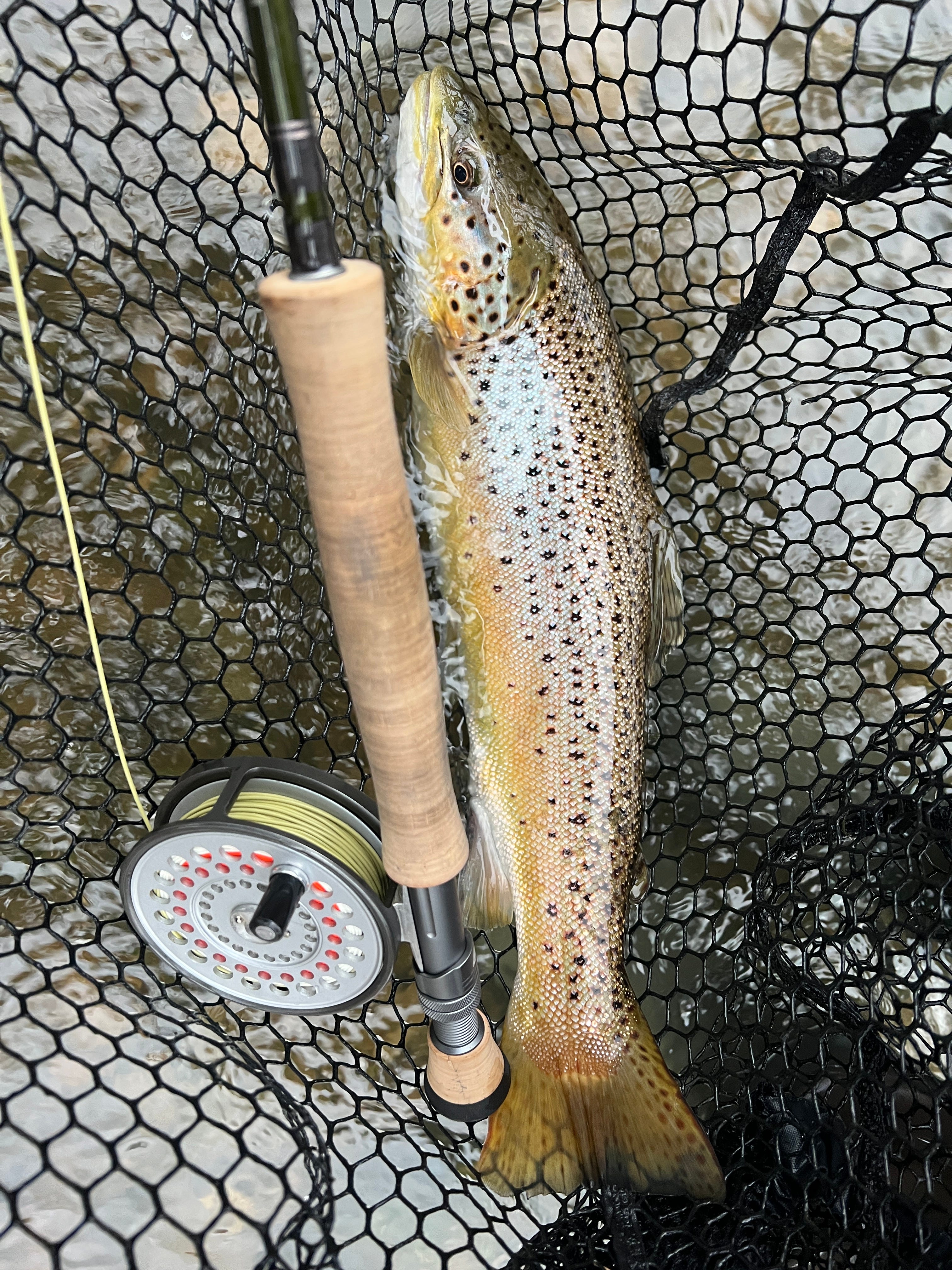
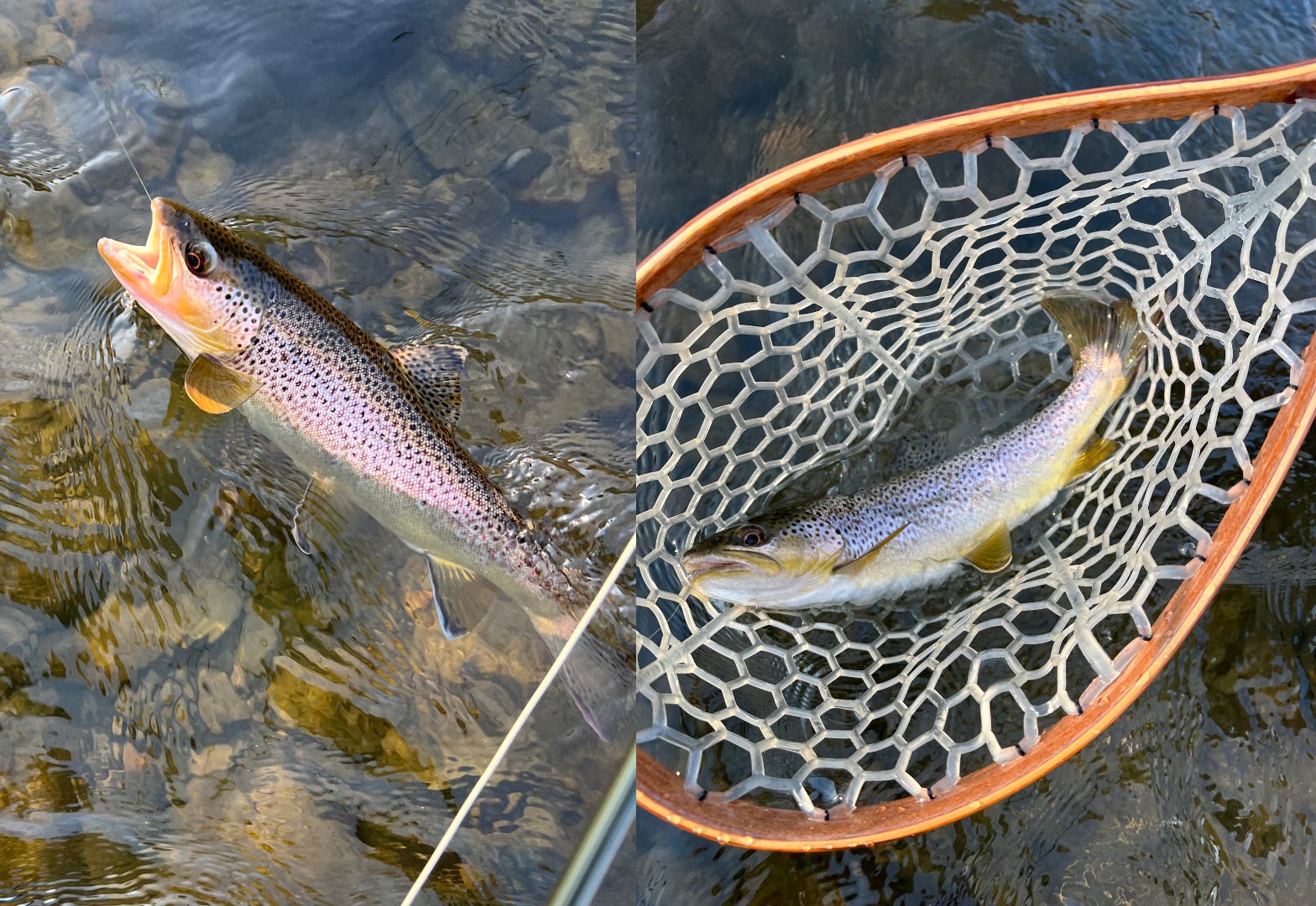
That does put up stonefly eaters like this beauty.
And that is not to say that some larger generic nymph won’t work, especially in waters that have stoneflies and bigger mayflies. I just don’t think trout are picky enough to care, unless they’re keyed in on a hatch.
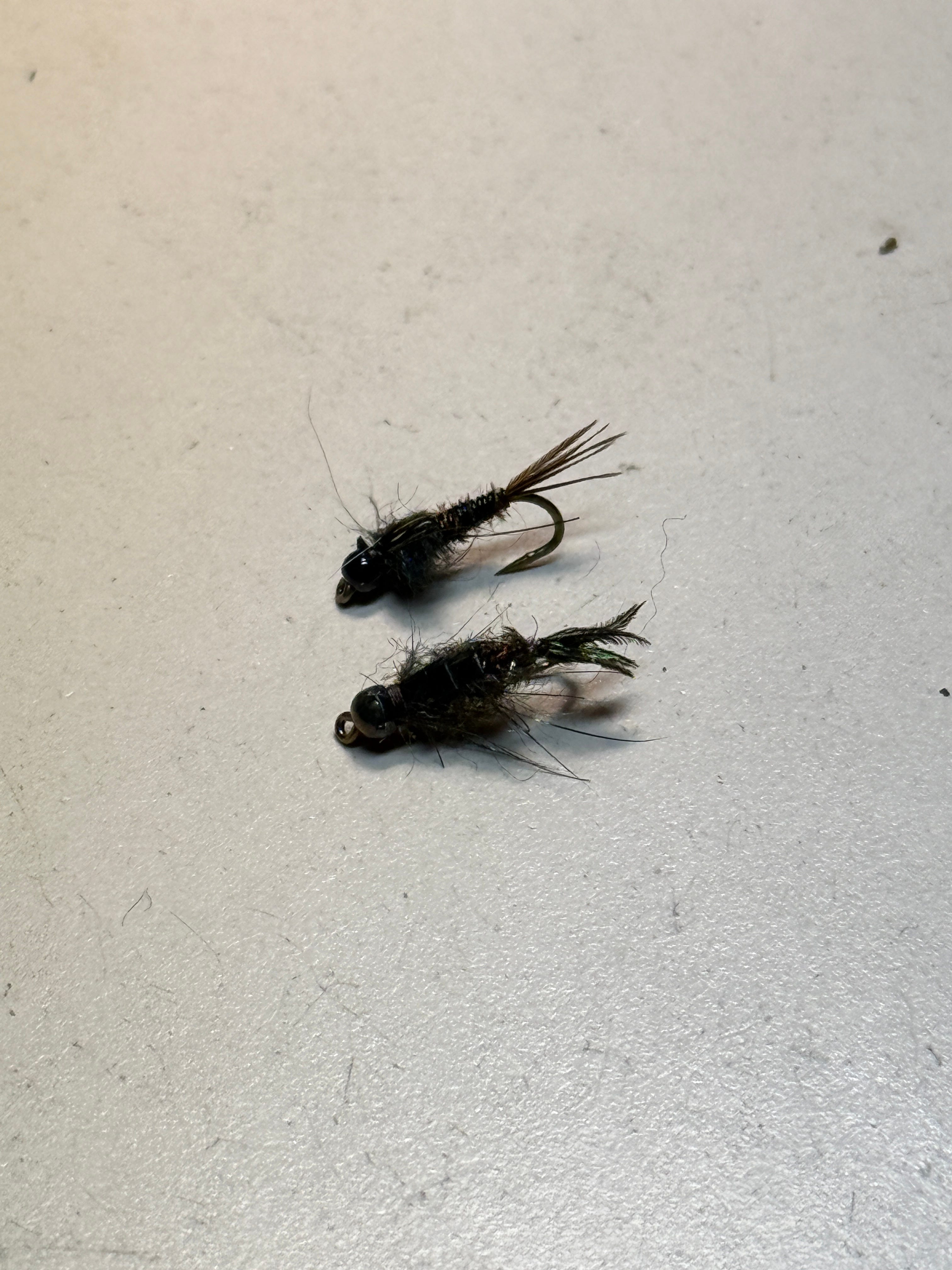
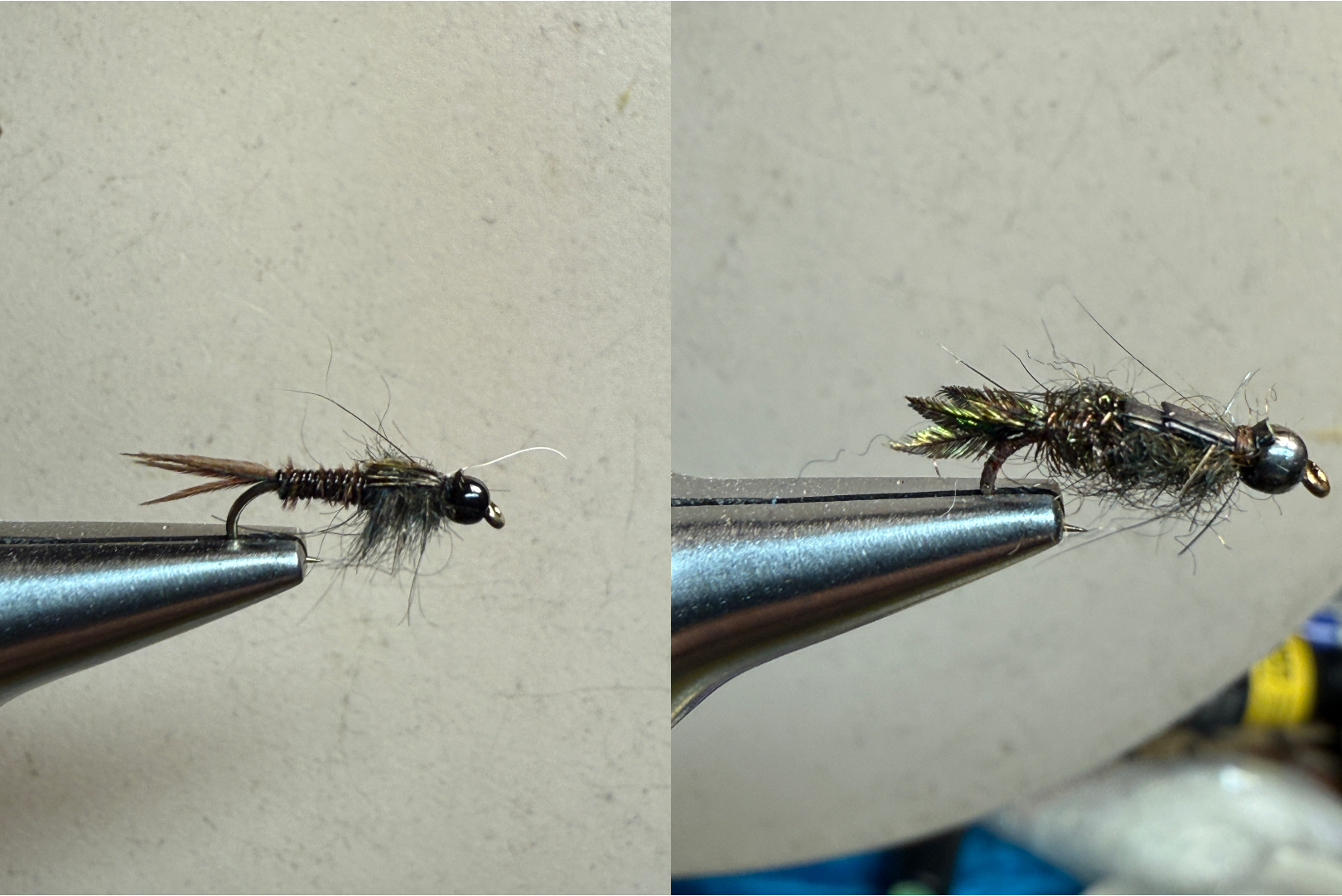
This then brings us to the last of the bunch, the itty bitty little winter stoneflies. These little beasties hatch when most everything is quiet and dormant on the streams. And they seem to be on the water a lot more than their bigger cousins. I have watched and watched and still can’t figure out exactly such numbers of them end up on the water as they do. The boffins all tell you they hatch by crawling out, but you see then fluttering down the stream and then taking to the air. Maybe water lapping on the rocks and twigs washes them in, or they’re small enough to get blown in, or maybe that’s just their behavior, but they do light up the whole stream in the late winter and early spring. And it’s not just on the surface. A small dark nymph does wonders on the rivers and streams these flies inhabit. It doesn’t have to be fancy. Just suggestive enough. And it doesn’t hurt to gently twicth it a bit while fishing.
It was 1983 or 1984 (I can’t exactly remember) and we had thrown our boat down the side of the bank behind the Bard Parker factory parking lot into what we used to call the BP Pool. We were going to be drifting down to either Buckingham or Lordville depending on how we made progress. This was in the days before things like shuttle services and such, so we had left a car at one pull out and a dirt bike at the other. There’s a big island as you drift out of the BP and at the bottom of the island there are a cluster of smaller islands. It was a windy day, as is its wont on days I fish the Delaware, and as we came down the straight stretch I could see things moving around above the smaller islands and as we drifted down we could see these big splashy rises. We pulled over and tried to figure out what was what and my buddy Bruce decided to sneak down the river and see what was happening. He was back in a minute, huffing, puffing and yelling out all sorts of mothers and sons about how they were eating stoneflies. Of course we didnt have any. But I did have a box of Letort Hoppers. I found out that day that a Letort Hopper makes and excellent Golden Stonefly pattern.
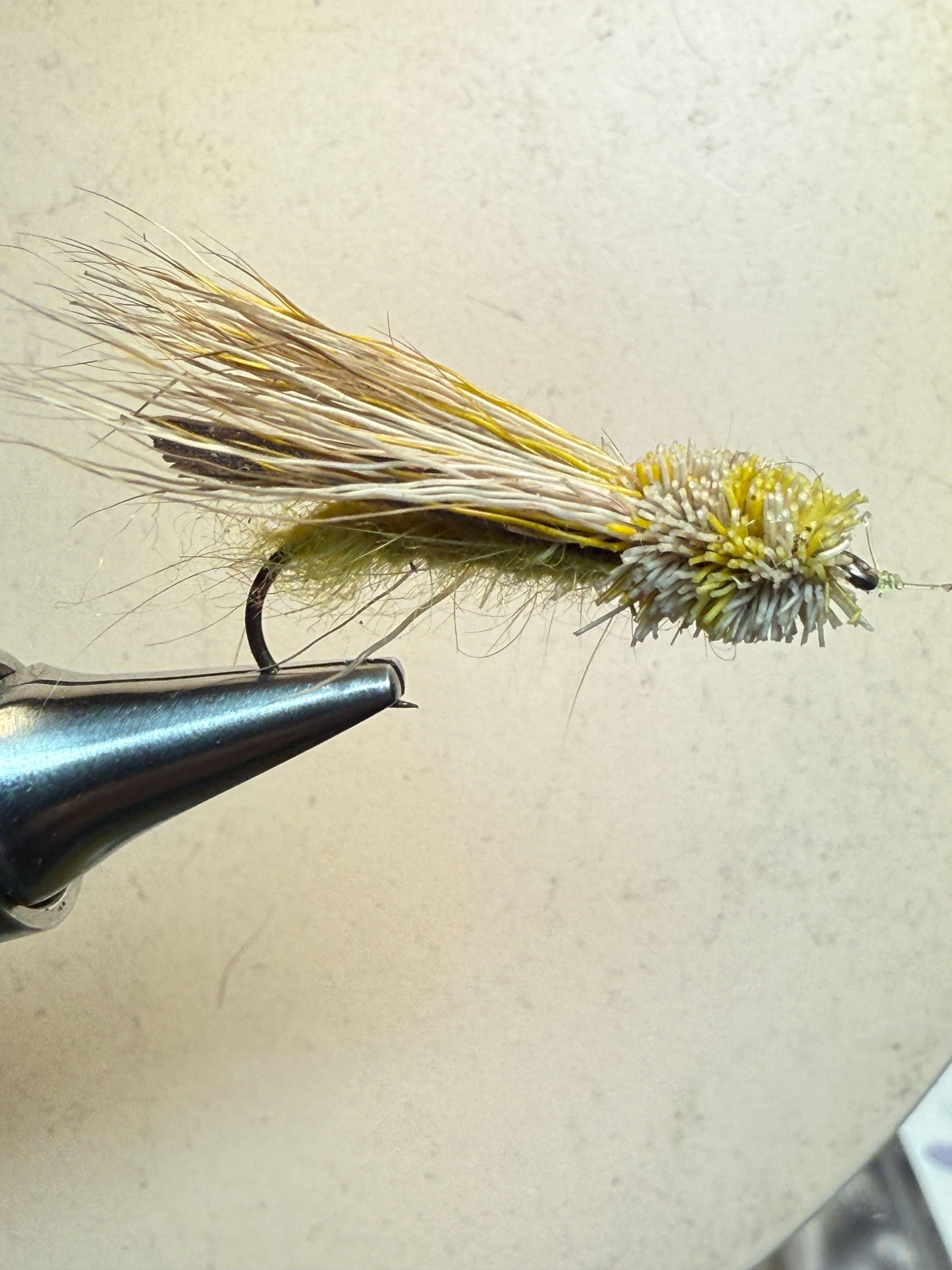
Especially skittered across the surface. Those Big D ‘bows were all over our Letort Hoppers. Much line and backing was pulled off reels and a whole lot of fun was had. Wish I could tell you of other such days, but alas that’s the only time I’ve ever been into fish hogging those big stones on the surface.
But it’s a whole different story with the smaller, winter ones. When I first started grad school at the University of Maryland during the Carter Administration Big Hunting Creek outside Thurmont, MD was known for its winter stonefly hatches.
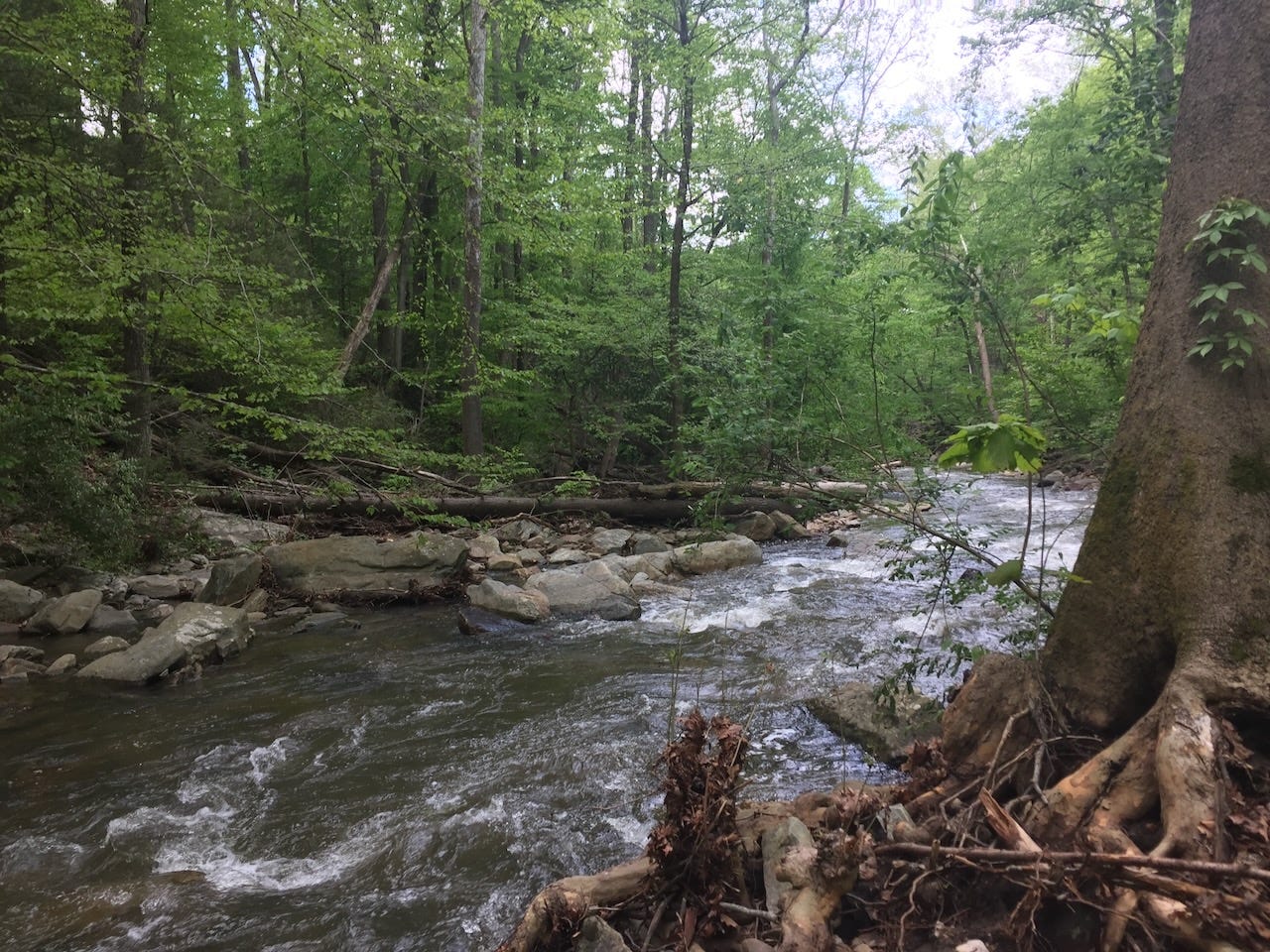
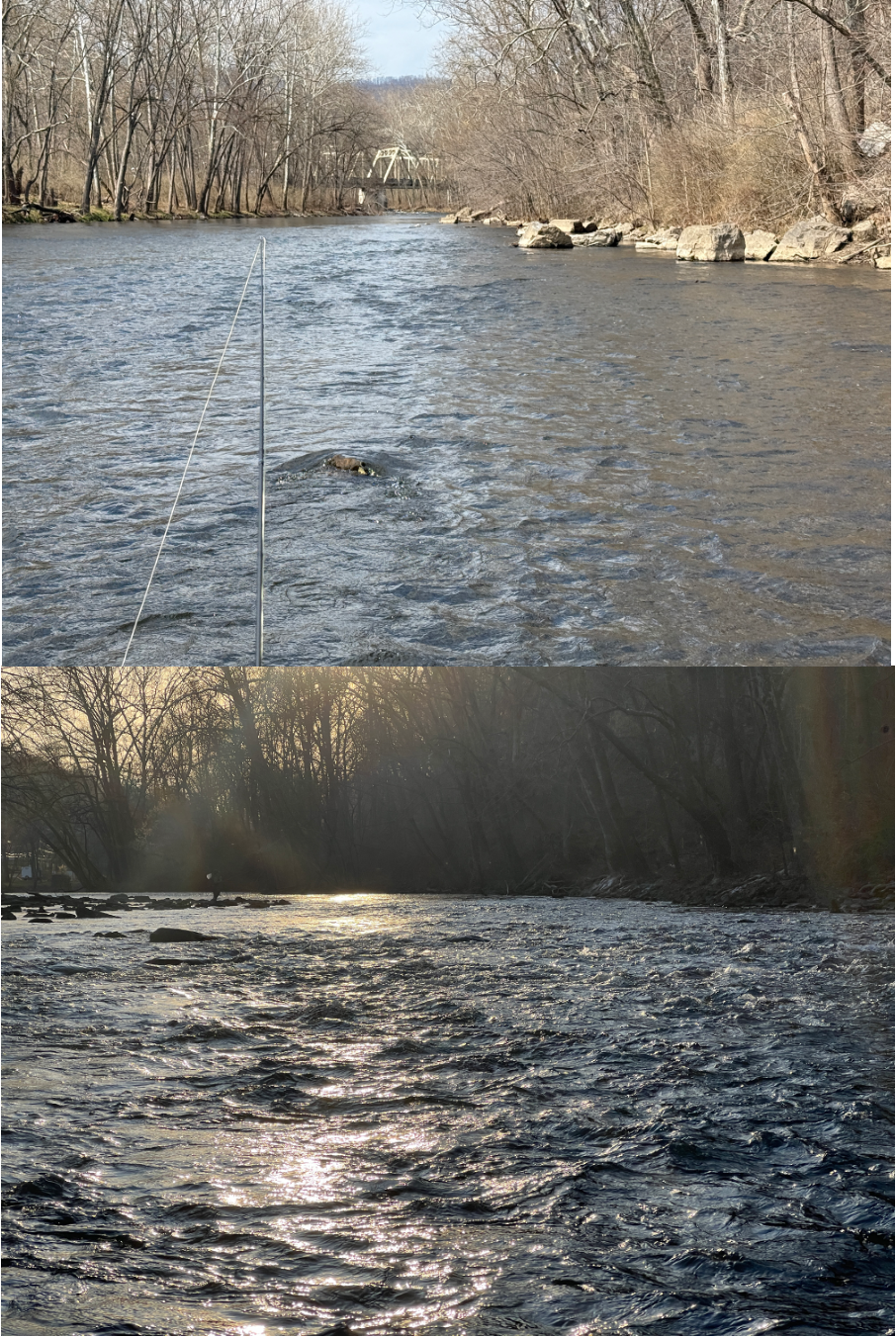
I haven’t fished Hunting Creek in years (it having become completely trashed decades ago), but I still remember it fondly for those hatches. But those hatches abound all up and down the Eastern United States. Cold late winter and spring days bring those bugs out and tranquil, cold scenes like these, in stream small and big burst alive with fish rising in the riffles. or even in the slicks just downstream.
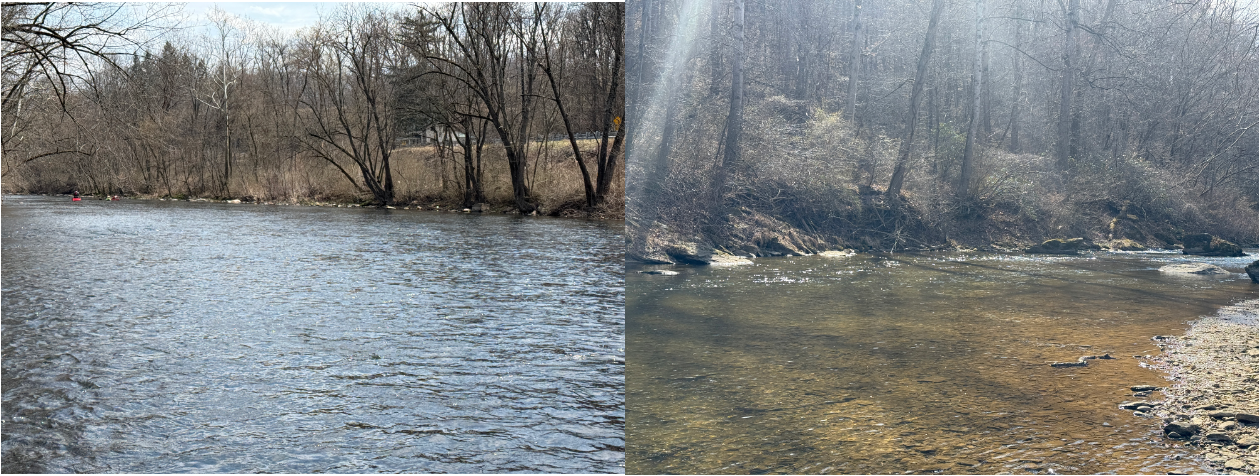
And the fish come out to play. After months of dredging bottom it’s wonderful to be able to cast dry flies larger than a nit out to rising fish again. The fish have the silvery sheen of winter fish, but they’re ready to play.
My favorite pattern for this is a simple two material tie with a dubbed body and grizzly hackle doing the rest. The wing is just the folded back part of the lower end of the hackle.
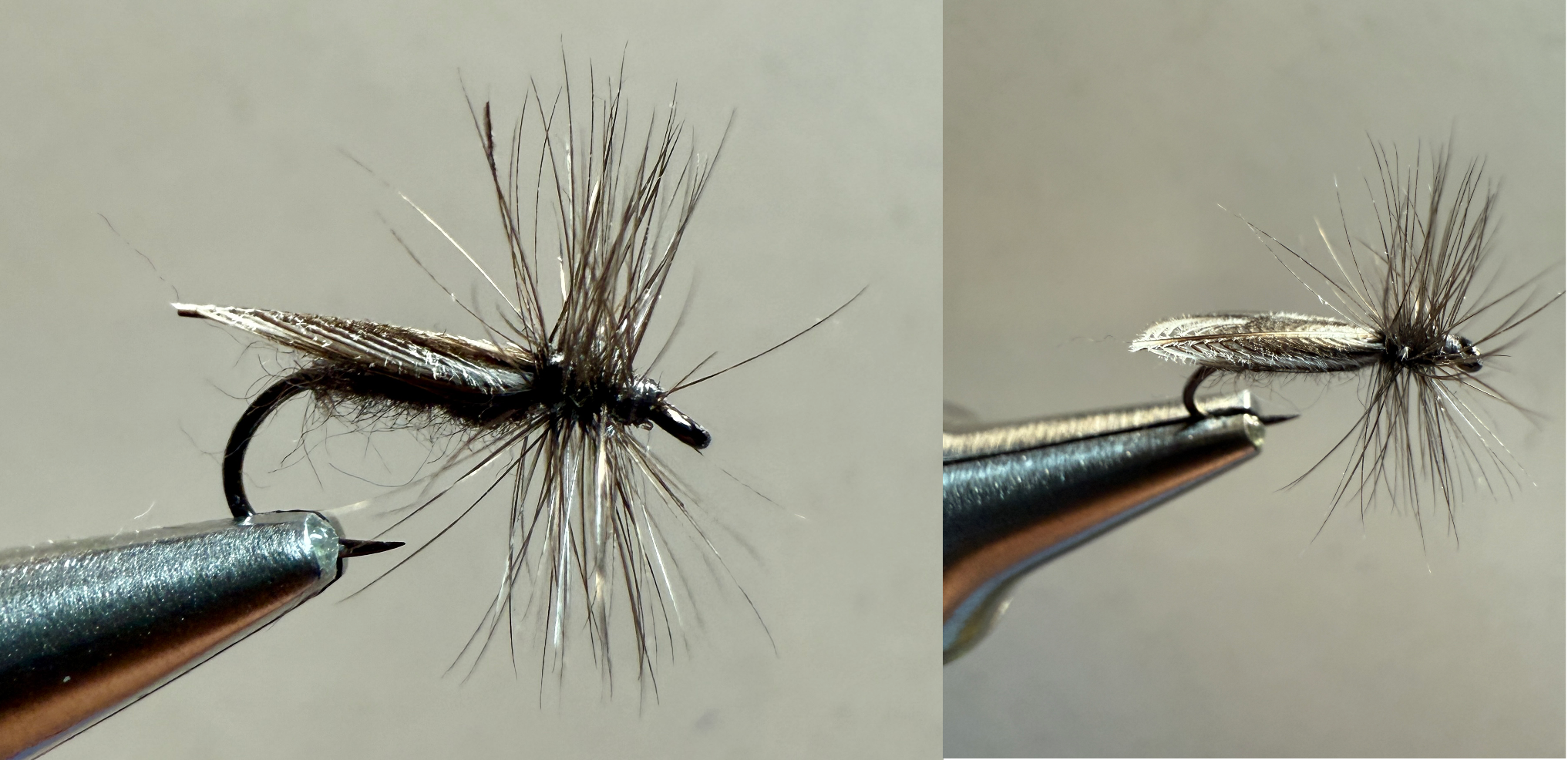
I tie a few with a bunch of sparkle yarn as the wing. If the sun is just right and the wings of the naturals are glinting it helps.
The last of the categories of stoneflies are the Sallies in yellow and lime. Old timers will swear that the sallies hatch on the water surface like mayflies and caddis. Of course they don’t. But like the winter stones they do end up on the water in substantial numbers, some to lay eggs, and the other for who knows what purpose.
Early July, if the run off cooperates is the best time of the year on the best trout river in my world. The PMDs hatch and are done with before I can ever get my butt to the water. But the later parts of the morning and early afternoon see tons of yellow sallies fluttering around the thinner water sections of the Roaring Fork. Flat, slightly riffly sections like this
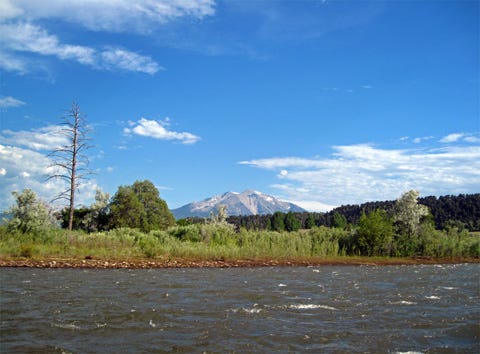
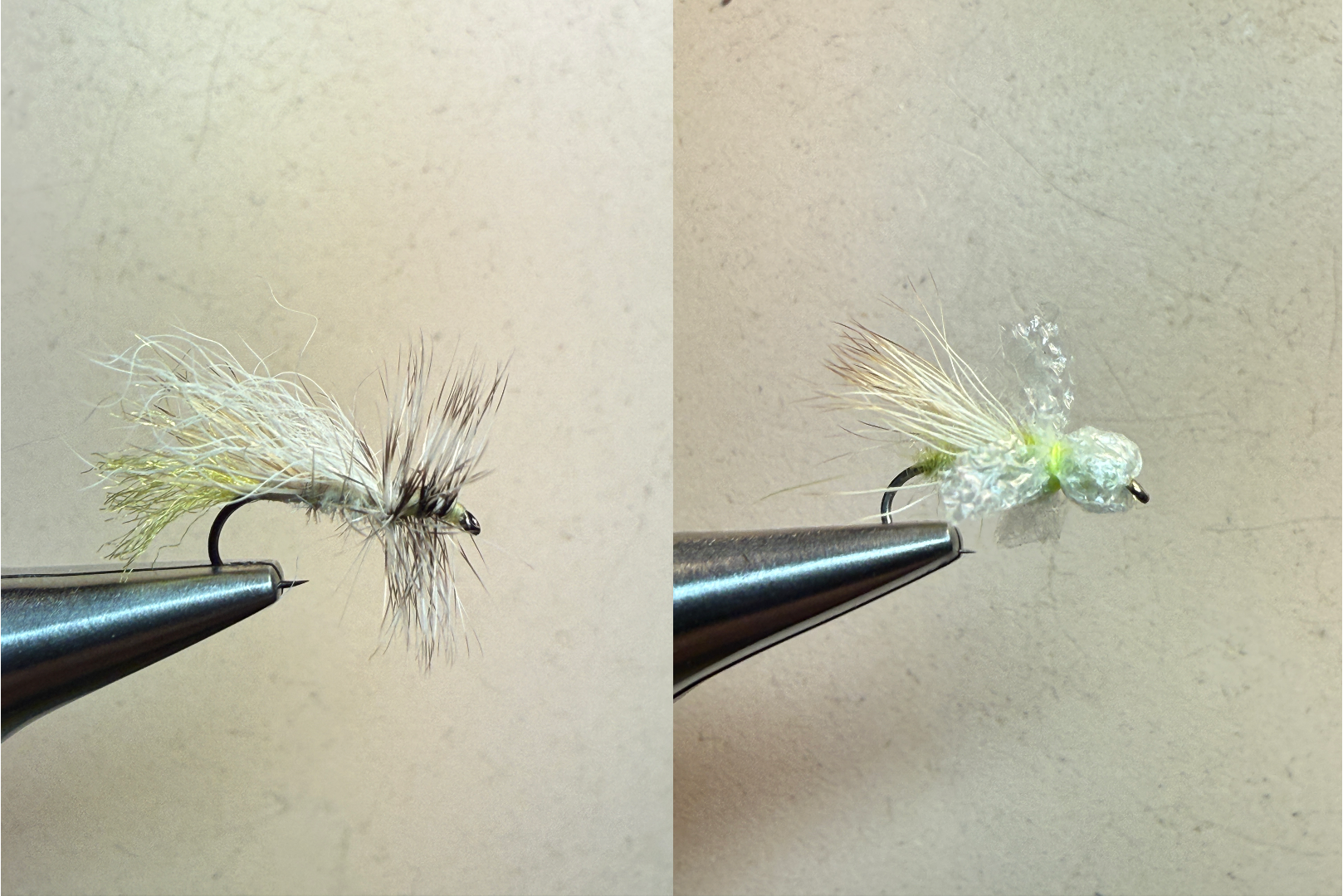
abound with them, and they create quite the commotion drfting downstream, enticing all sorts of trout up to the surface. I fish a brace of Gary LaFontaine patterns for these fish - the venerable Double Wing and the Airhead.
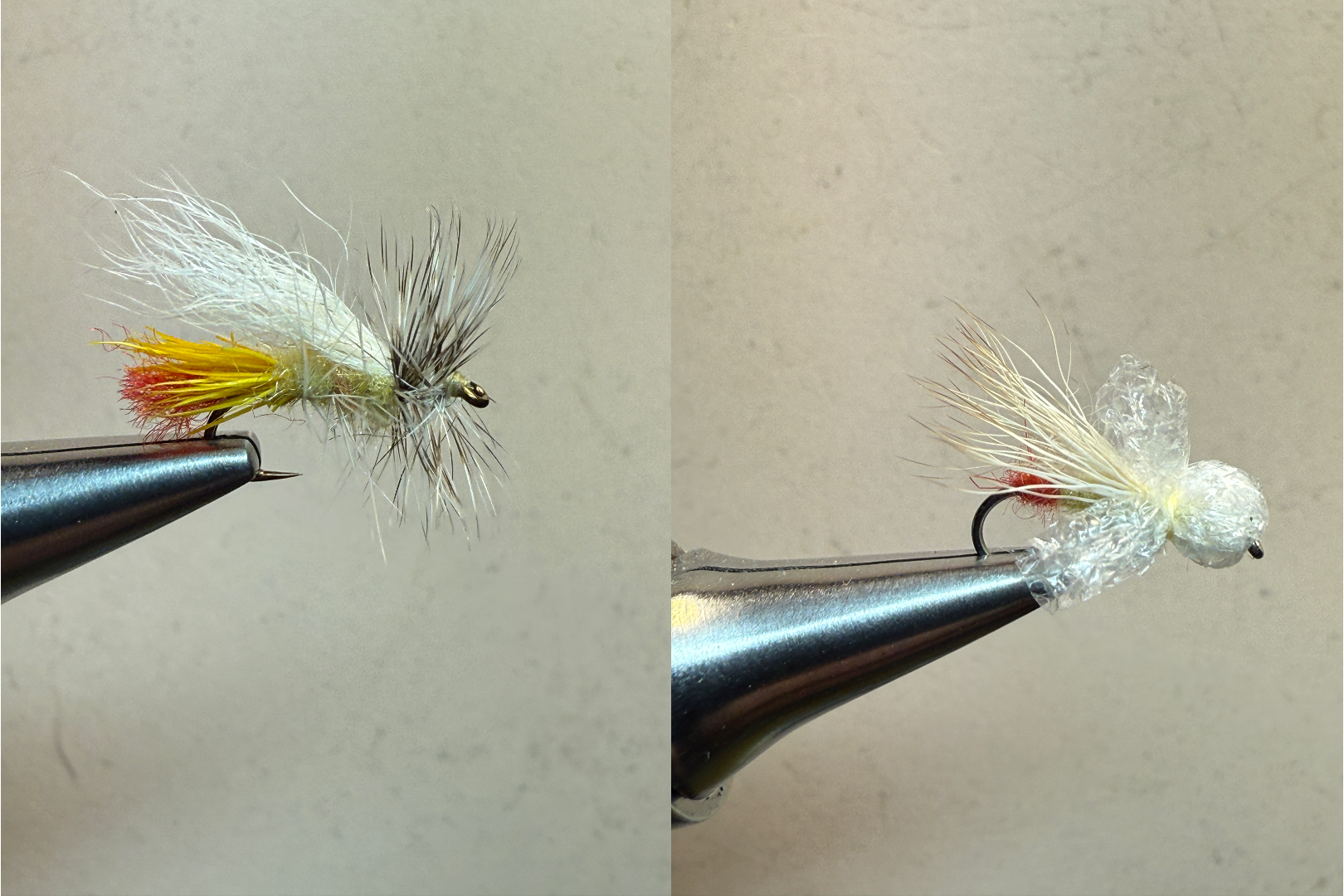
Some people swear that you need a touch of red on the tail ends of these flies. So I tied a few. Can’t seem to think of a time I’ve ever fished them, but her they are, all the same.
They may not have the charm o the mayfly, the allure of the caddis or the infuriatingly challenging nastiness of a midge, but they are trout fodder. And because they are that, they’re of interest to me. And sometimes they do provide a lot of fun. And here’s a nice picture of a fish.