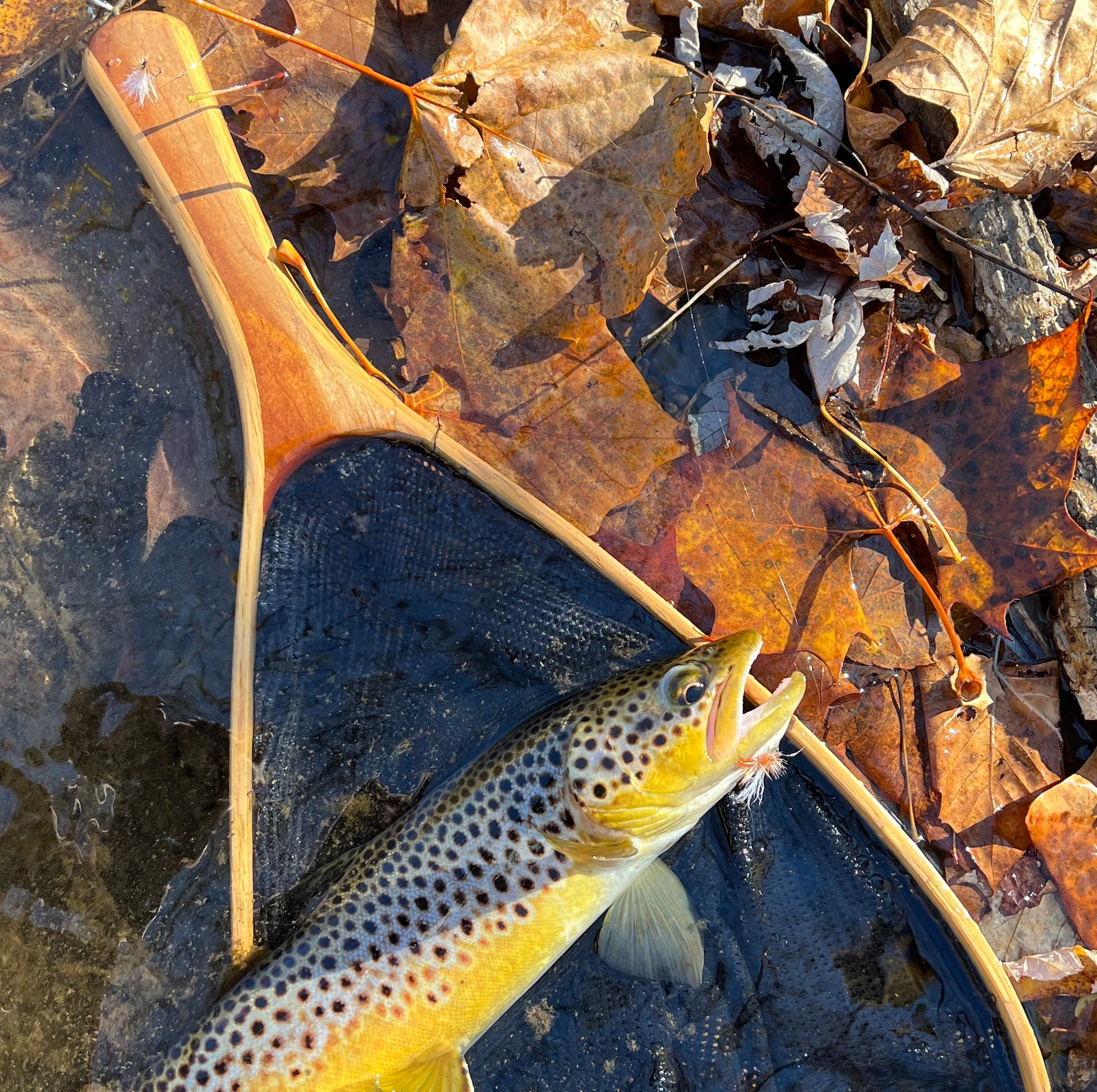
Fishing Two Dry Flies
Once in a while you get shown the light, in the strangest of places if you look at it right

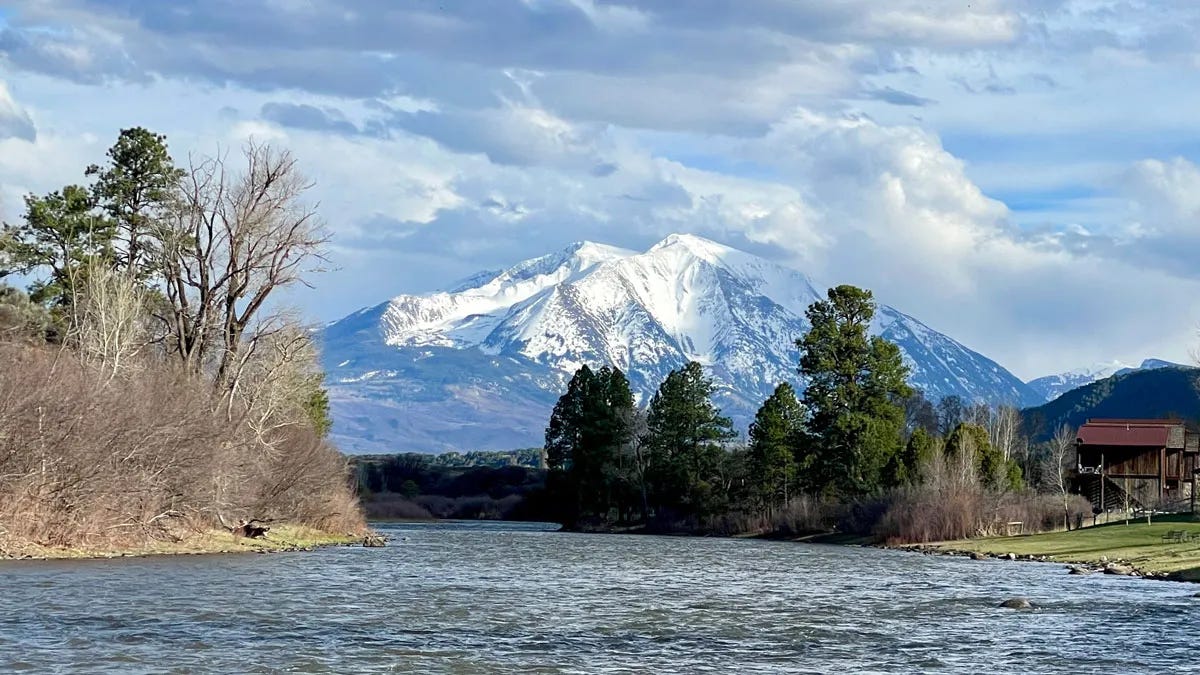
Once the the Roaring Fork River flows past its confluence with the Frying Pan it enters a gently sloping valley with the odd steep section, with mighty Mt Sopris as its background. By the late summer the river is a mere memory of its summer glory, the roaring bit being better defined as a gentle murmur.
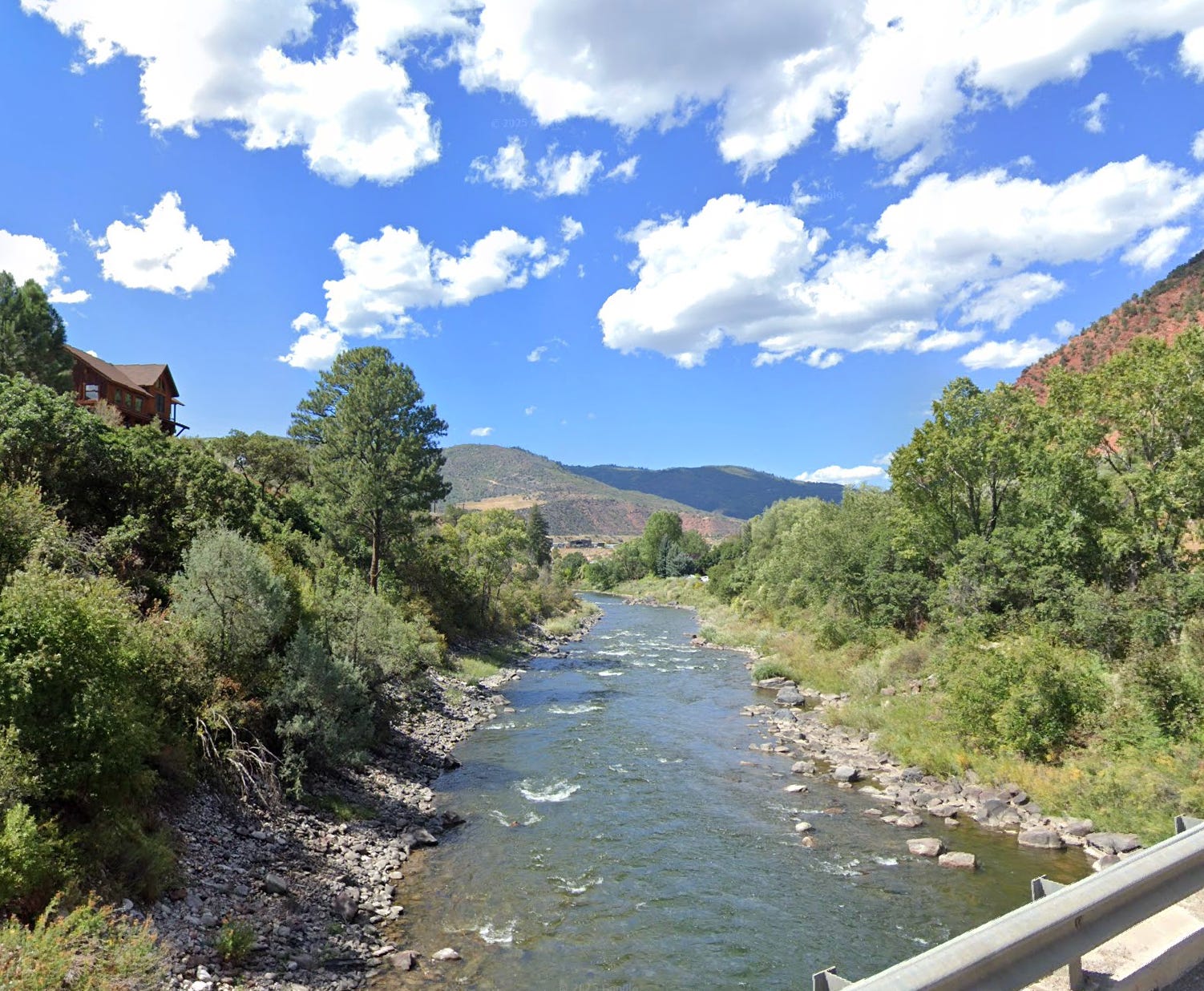
By the fall the tourists are gone, the flotilla of drift boats is in hibernation and water flows have settled into their annual nadir. It takes a courageous soul to take a drift boat down the river (you could take a raft down it easily but I believe rubber duckies are best suited for kids’ bath tubs. An adult must have some standards), but if you know your way you can, especially down the lower section putting in at the Westbank ramp. This is the time of year when the itty bitty little bugs hatch with banker’s hours.
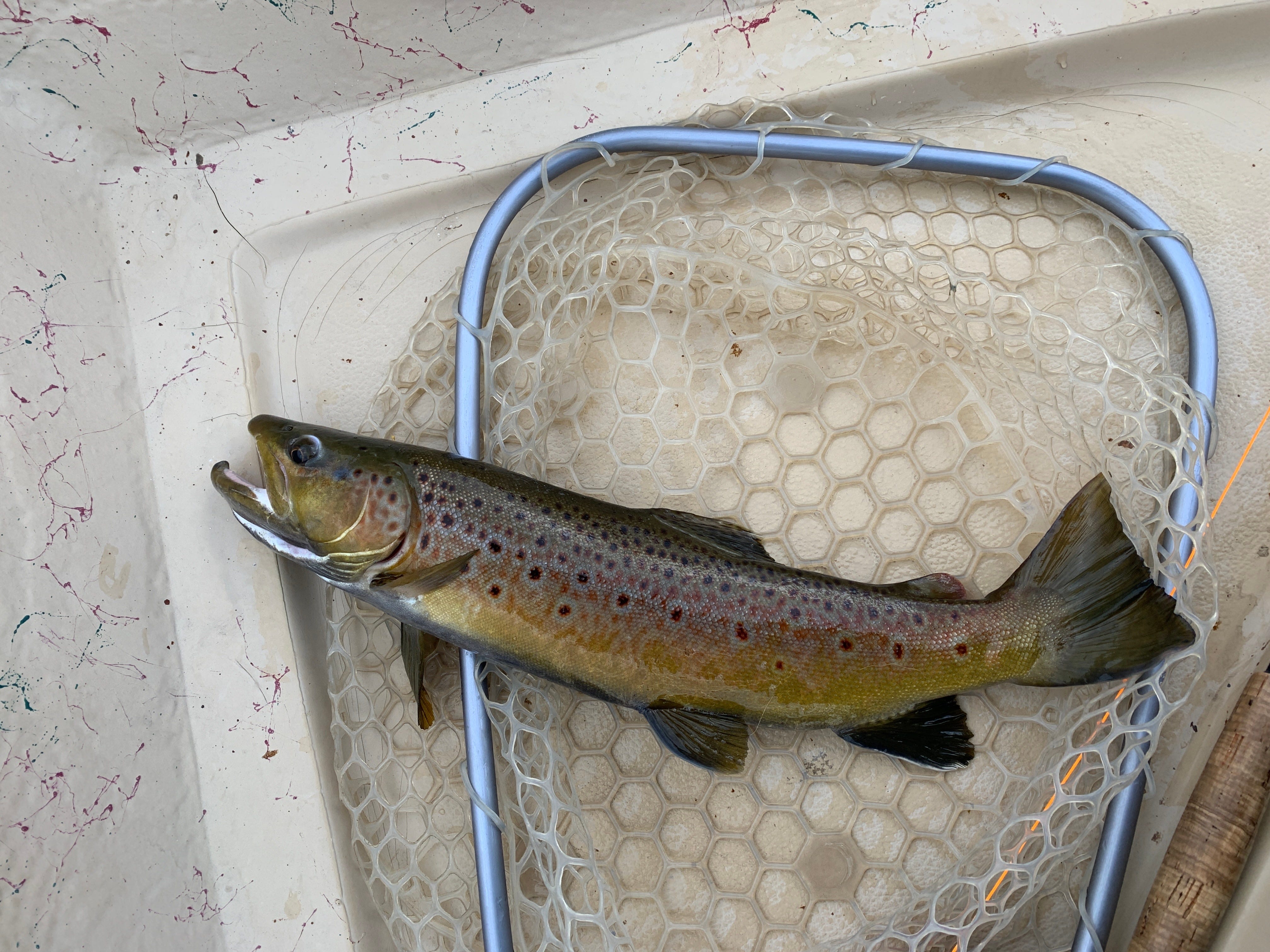
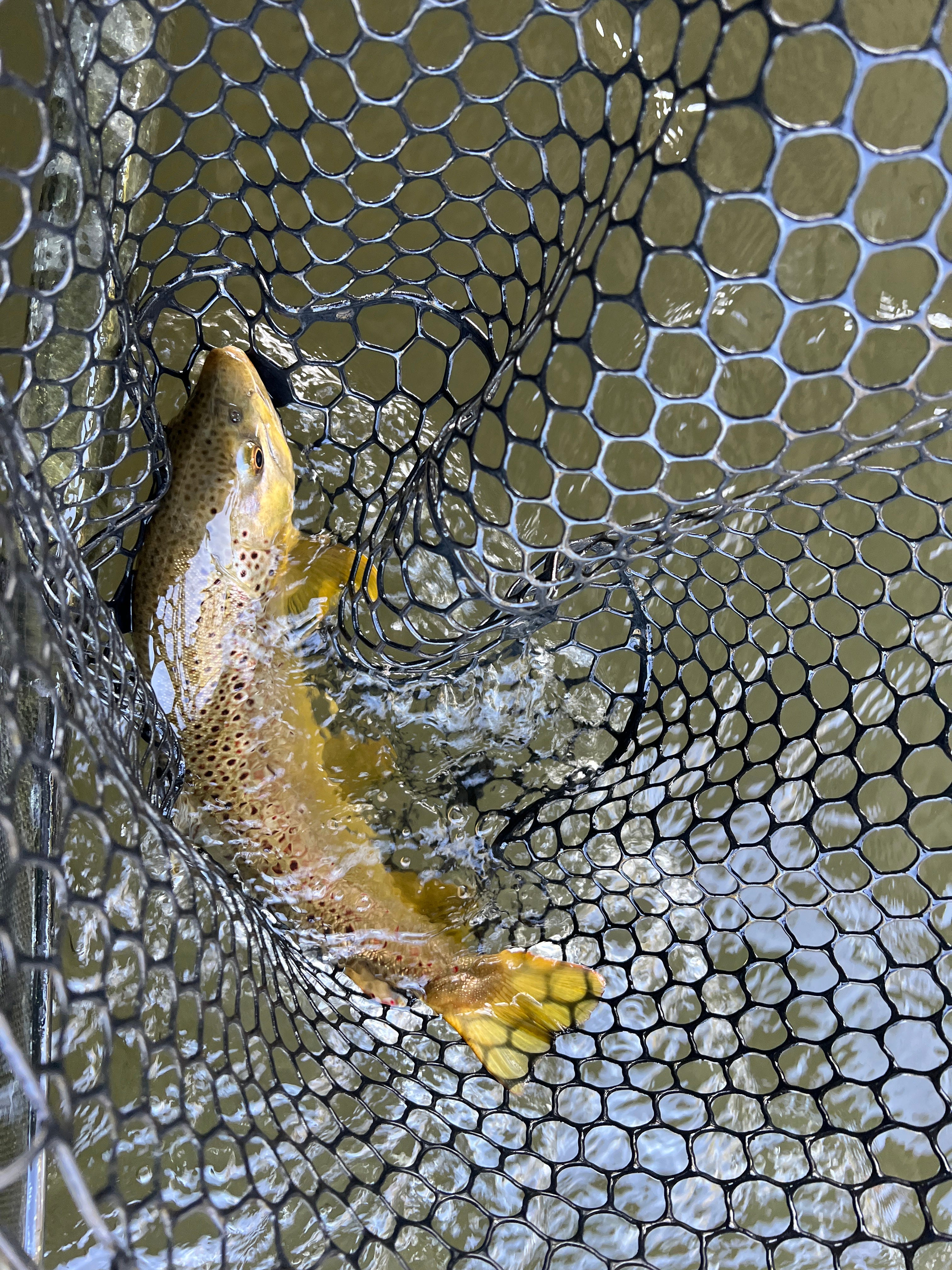
Get to the river at the right time and the softer seams will be full of rising fish. Initially a mix of browns and ‘bows, then just the bows as the browns get distracted with their amorous activities, but they do return after the spawn like this one with a kype taken in late October one year.
These mornings see a mixed hatch of small Blue Winged Olives and a dark olive-gray midge, both with bodies that measure about 4-5mm (or about a size 20 for a standard dry fly hook). Given the approach, or lack thereof, possible in the low clear water, the angle of the fall sun and its glare, and the size of the bugs it’s not really possible to determine what those fish are eating in the seams. But it’s got to be one of the two.
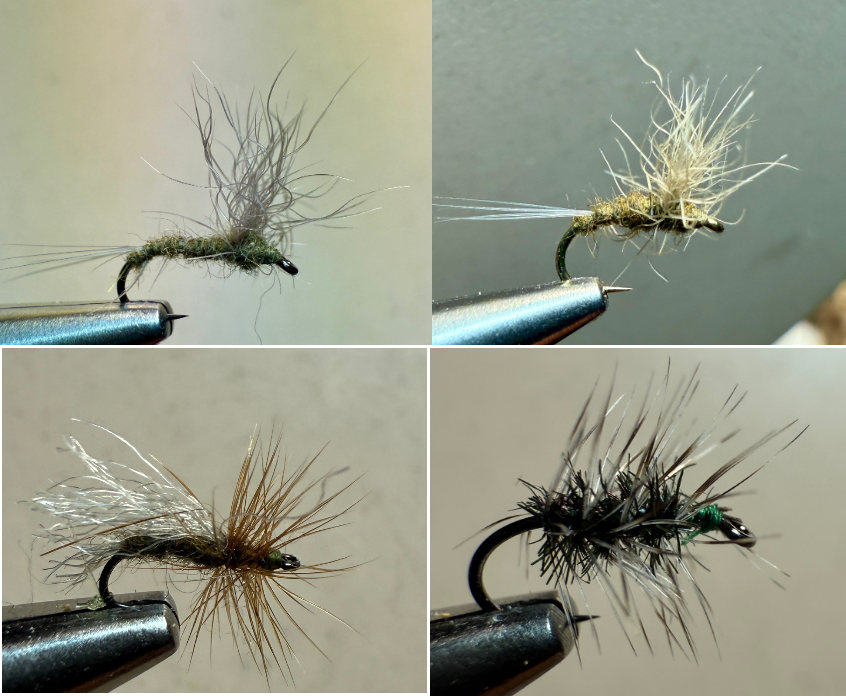
There is a simple answer - present them both. It sounds weird. It sounds outré. With all this talk of drag free drifts and the difficulty of achieving them with small flies, here’s this crazy guy asking you to throw two of them onto your leader. But it isn’t, as a whole horde of Rocky Mountain anglers know. We do it all day, every day. Pick a fly from the top row and one from the bottom. Put them about 2 ft apart on 5.5X or 6X tippet and you’ve got yourself an answer.
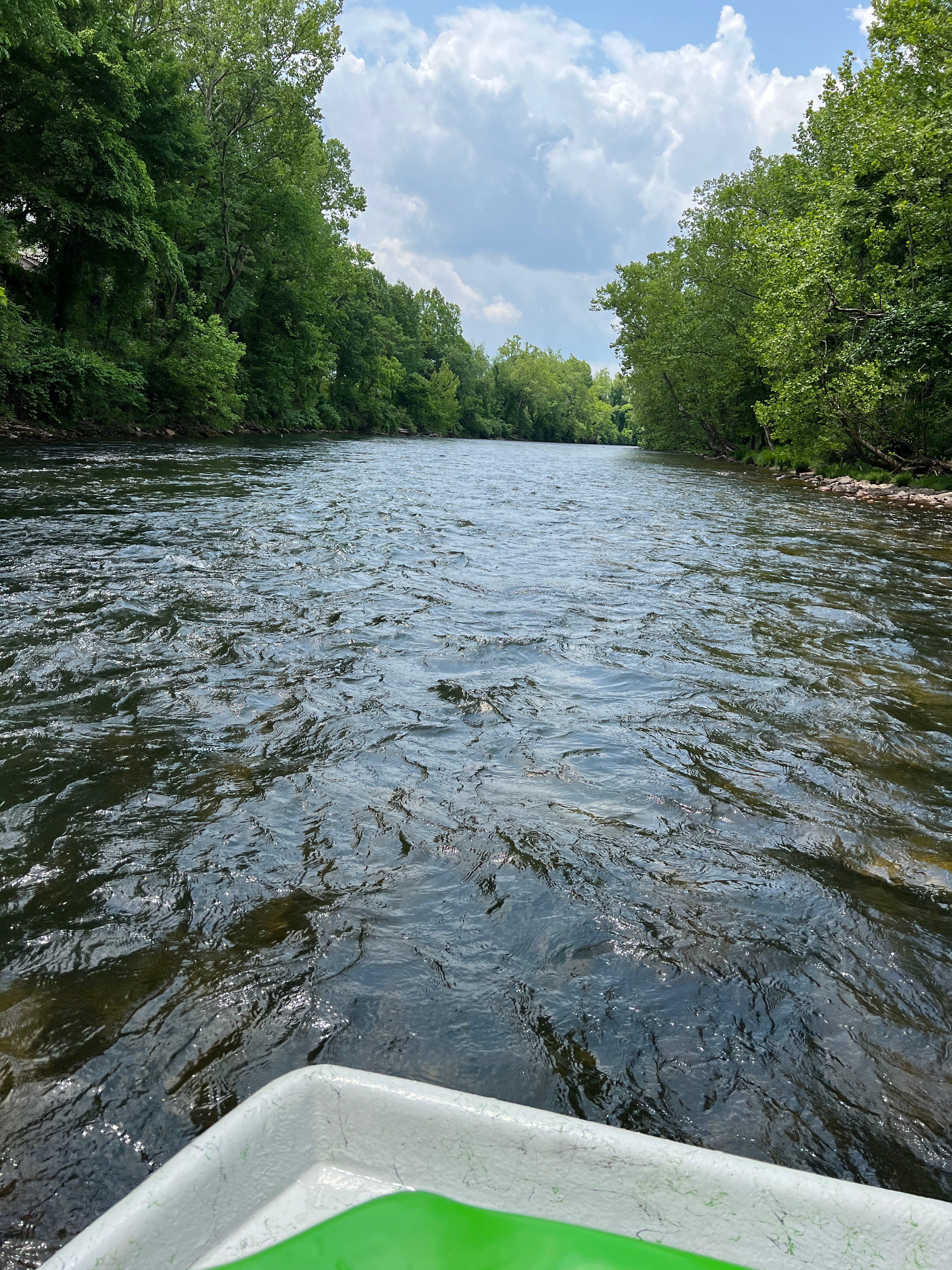
This type of situation arises time and again where mixed insect activity means one fish is feeding on one thing and the other on something else. The Watauga River in Eastern Tennessee in May and June is a dry fly fisherman’s paradise.
Ephemerella Invaria and Beatis Vagans (or a Sulphur and a BWO) hatch during the late morning and early afternoon hours. The Sulphurs start their hatching first and the BWOs start a little bit later. There is a period of about and hour and a half or so when the two hatch simultaneously (yes the Watauga hatches last a very long time). The lower part of the Watauga holds a mix of wild browns
and rainbows
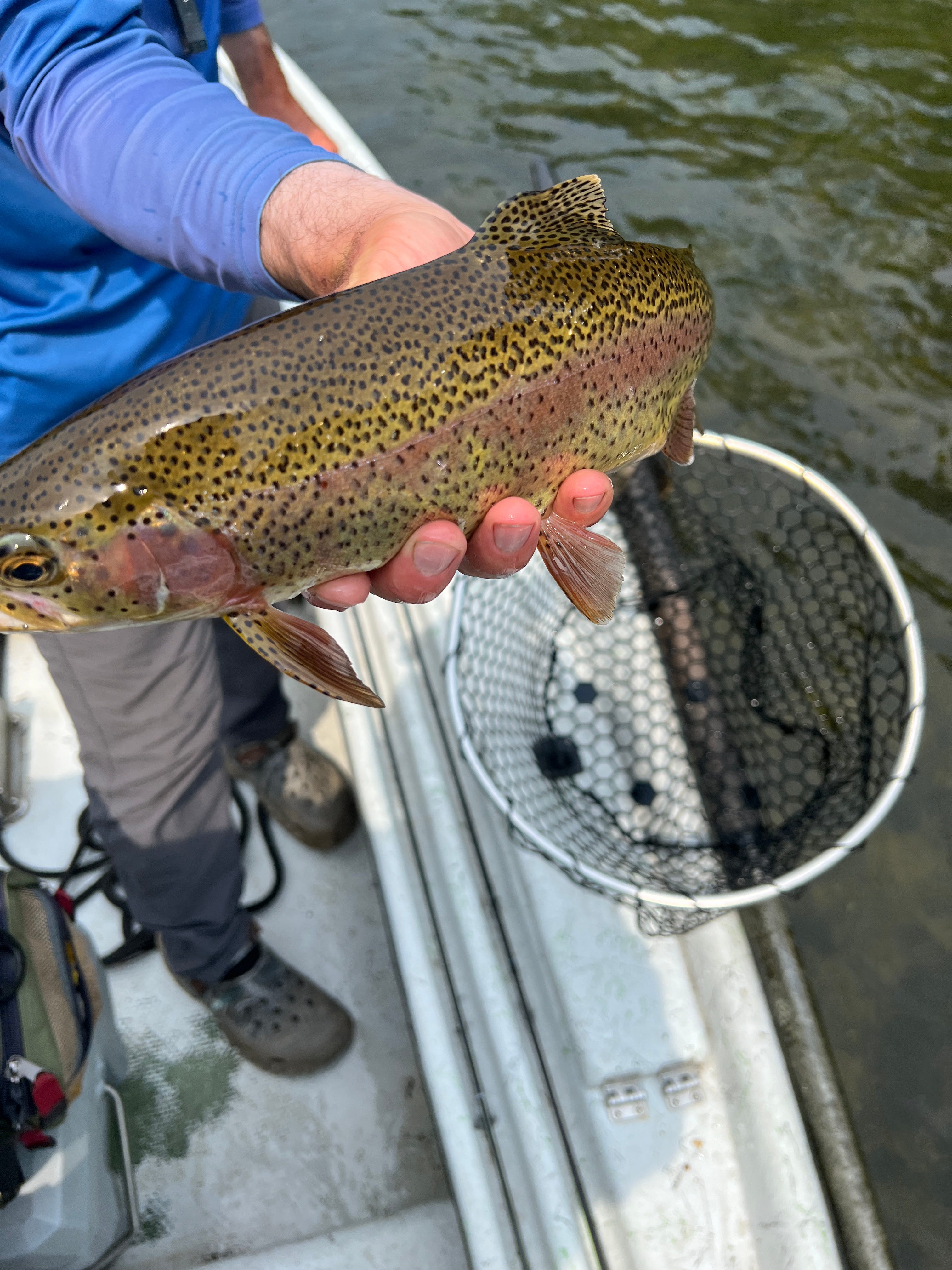
and these fish rise with abandon. But, for some reason way beyond my ken the trout seem to key in on one or the other. Or may be only one type of bug drifts past a certain fish. you can throw the wrong fly to the wrong fish all day long and not get a take. Much simpler to just tie one of each onto your leader
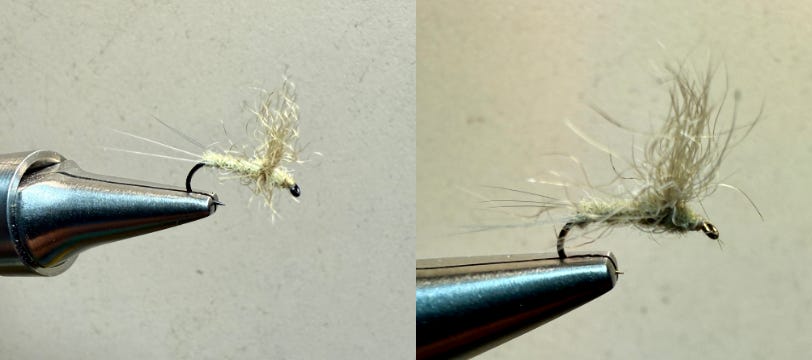
and go to town. This sort of mixed bag of bugs on the water happens all the time - ants and beetles being blown off trees, spent caddis and mayfly spinners on the water in the evenings and so on. Instead of trying to figure out which one each fish is more likely to take, it is just easier to offer up both. And we do.
We often do the same with attractors. I’ve talked about this in another article, but my buddy Frank and I, who’ve been fishing together for 40 some years, often fish small streams with just a single rod. We’ll often fish these with a brace of attractors - a Double Wing and a Caddis or two Double wings in different colors.
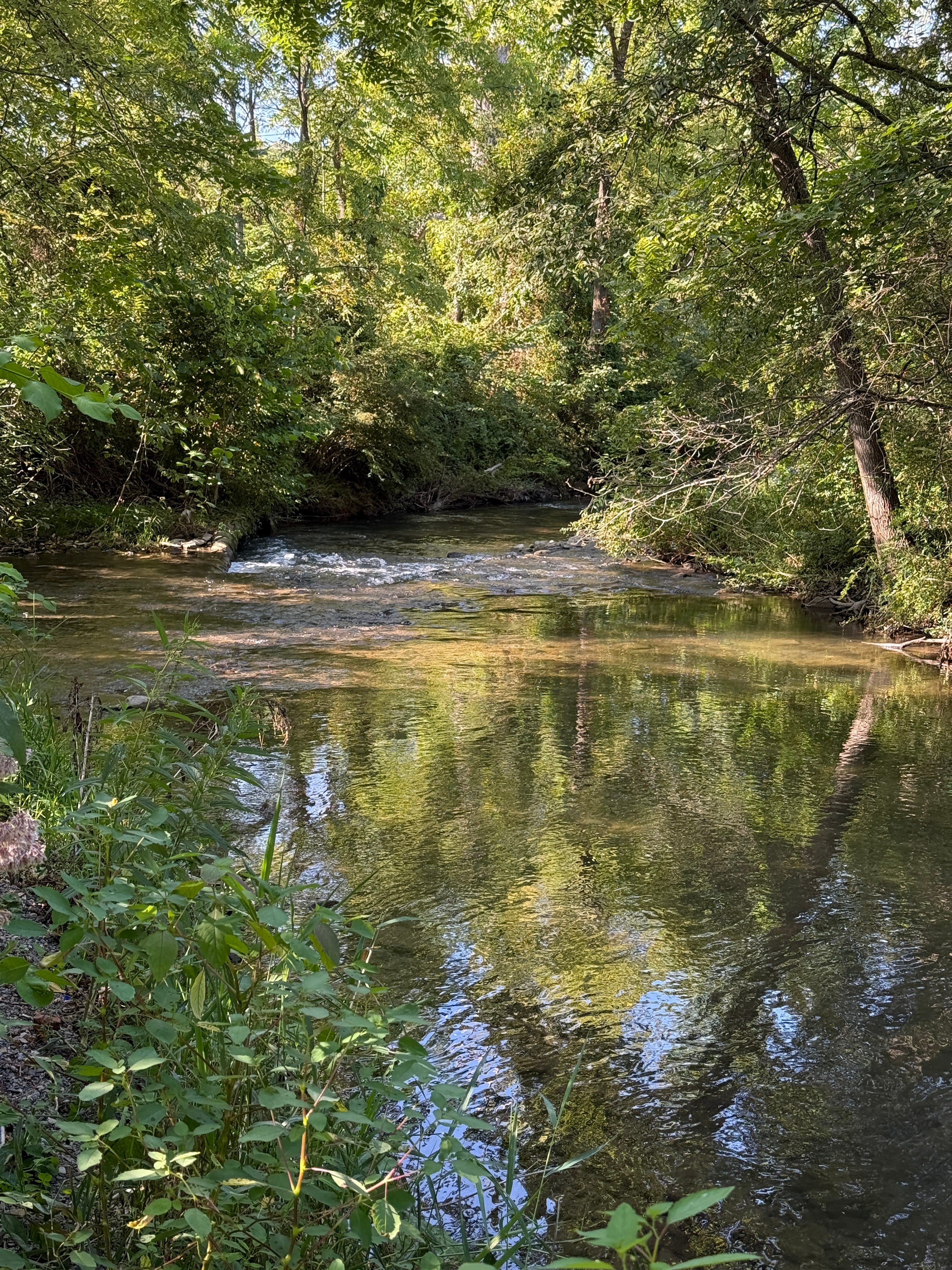
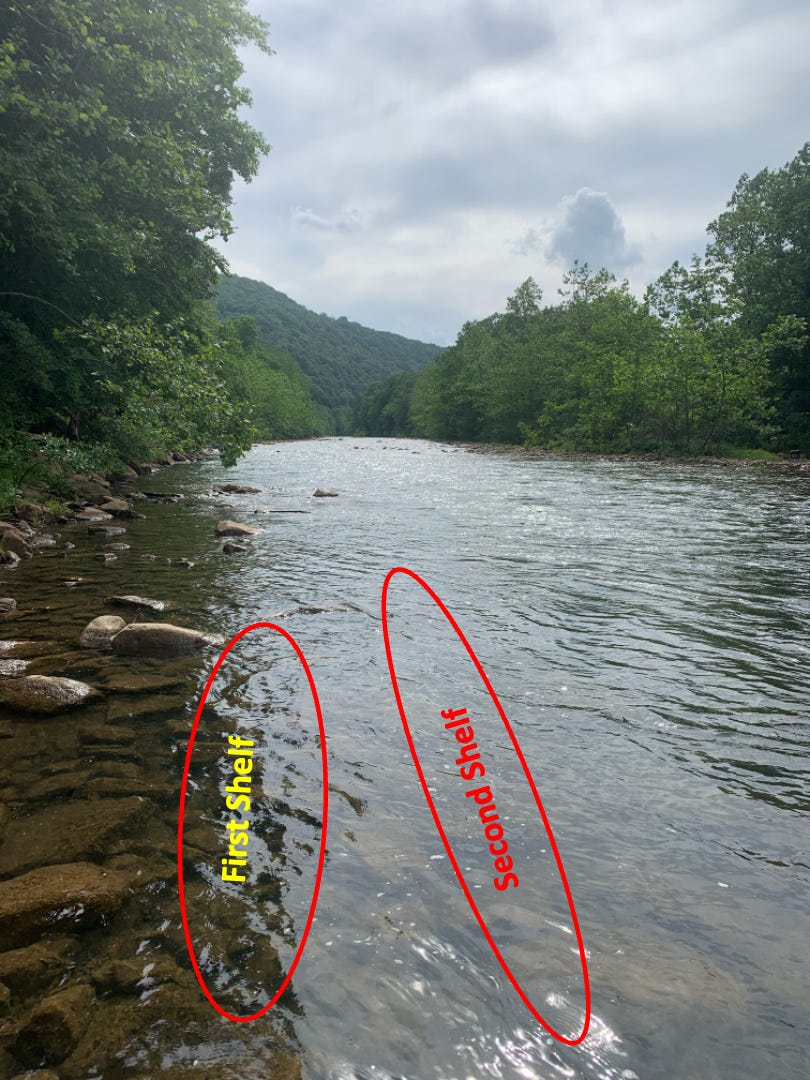
There are two other situations where I find a double dry fly rig indispensable. One of the great environmental success stories is the North Branch of the Potomac River in Western Maryland. This is the same river that some miles downstream meets up with the Shenandoah at Harper’s Ferry and then flows through Washington DC. Forty five years ago the river was a biological desert, devastated by acid mine drainage from the coal mines in West Virginia and Western Maryland. The state of Maryland starting reclaiming the river in the early 80s. They installed limestone banks and dosers to reduce the acid drainage, took steps to mitigate the acid at the source, engaged local coal companies and took other steps to clean up the pollutants. In the mean time in order to add nutrients to the river the installed trout pens at the outflow of Jennings Randolp reservoir and worked with the Army Corp of Engineers to manage flows from the big dam at that forms the reservoir. About 8-9 miles down from the reservoir the river gets another slug of cold water from the Savage River. In time the river has become a trout fishing bonanza with about 40 miles of catch and release trout fishing. It also supports a population of wild Browns, Rainbows, Brook Trout and as a result of some Cutthroat stockings a bunch of Cutbows. But the upper part of the river is mainly a wild Rainbow fishery. As you drift down the river you will notice that the banks are characterized by a shelf, a small drop off, another shelf and then the slope down to the main channel.
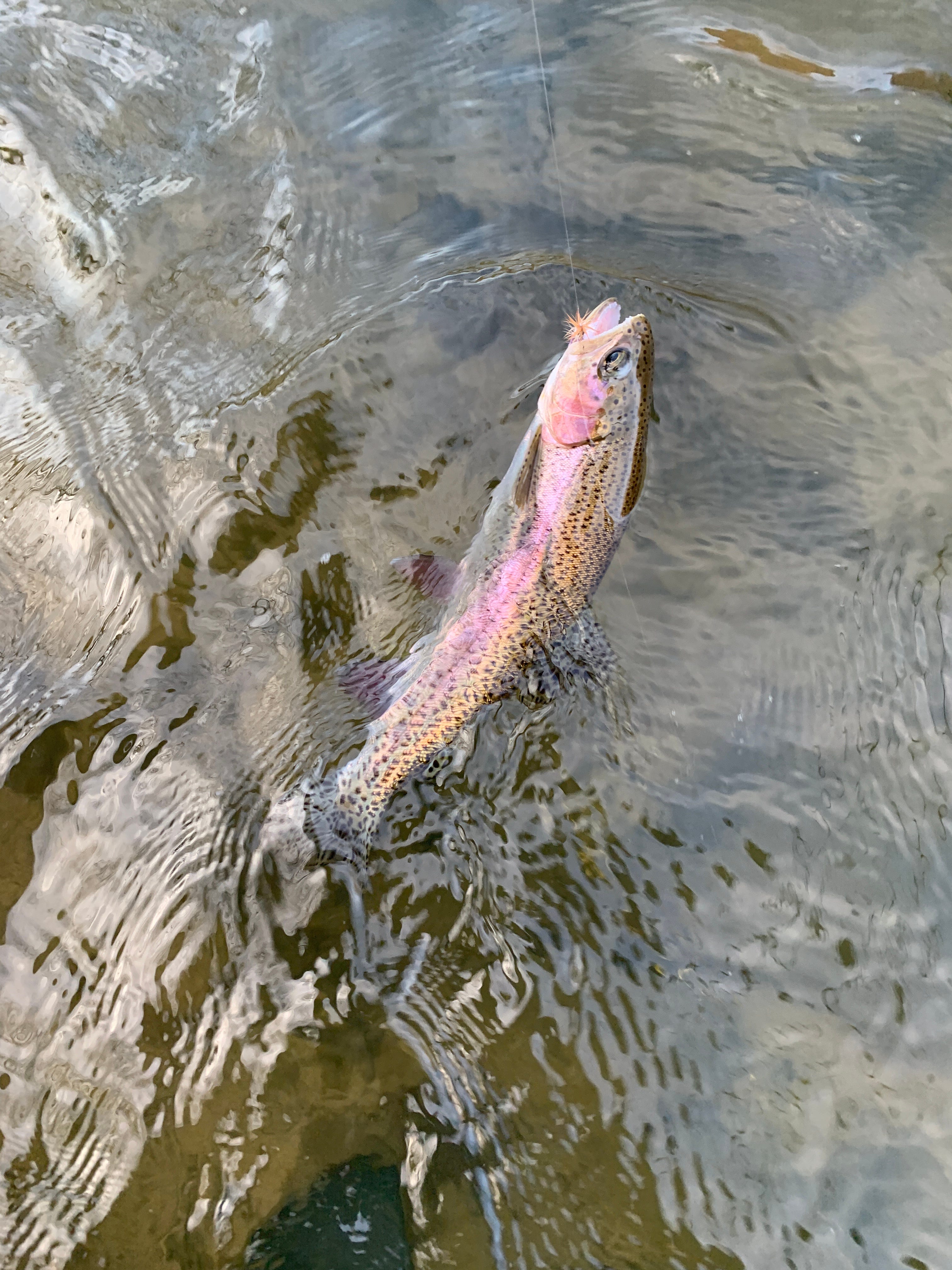
and here’s a Potomac Rainbow with a Double Wing in its mouth. They are pretty as a picture.
The same sort of thing is common on the best trout river in my world - The Roaring Fork in Colorado
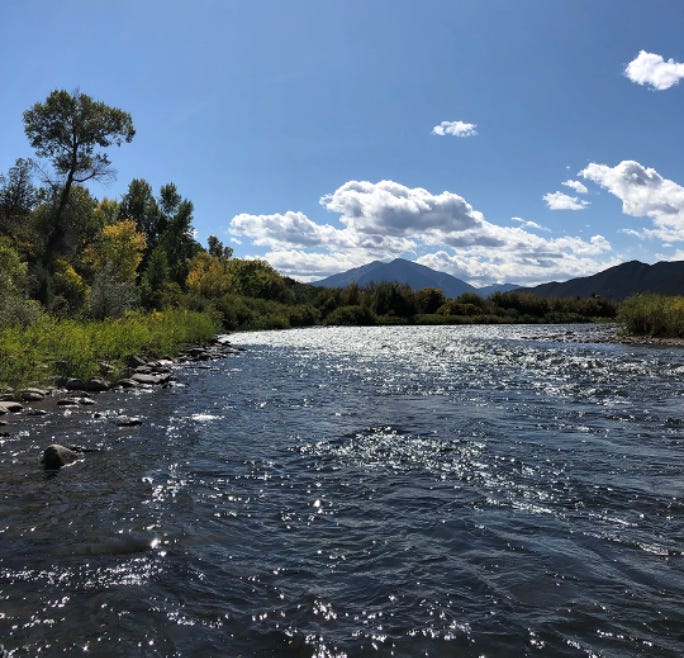
The problem here is that sometimes the fish are on one shelf and at other times on the other. Trying to fish each shelf individually is a chore and often futile, especially if you’re in a drift boat since one (at least that holds for me) inevitably hits the wrong shelf at the wrong time. But a leader with two dries allows one to fish both shelves simultaneously. It takes a little bit of practice, especially since the water close to shor is normally slower. But if you cast don to the shore and lay the inshore fly downstream of the 2nd shelf fly it all works out.
The South Holston in Eastern Tennessee is a fantastic though odd ball fishery. It flows between two lakes, South Holston at the upstream side and Boone Lake at the downstream end. It has a “Sulphur” hatch that starts in May or June and runs through October. Of course this “Sulphur” hatch consists of a whole host of yellow mayflies ranging from the Ephemerella Invaria to the Leucrocuta hebe. The South Holston is a hydroelectric river marked by a very well defined channel. The river doesn’t widen when the power station at the dam is generating power. It just gets deeper. And the Sulphurs always hatch after the water goes up. There are two launch ramps below the dam, one on each side of the river. An hour or so before the water release starts the guides line up at the ramps and pull out into the stream to await the release. It’s a most hideous sight. But wait for a bit and this armada rows its way gently down the stream.
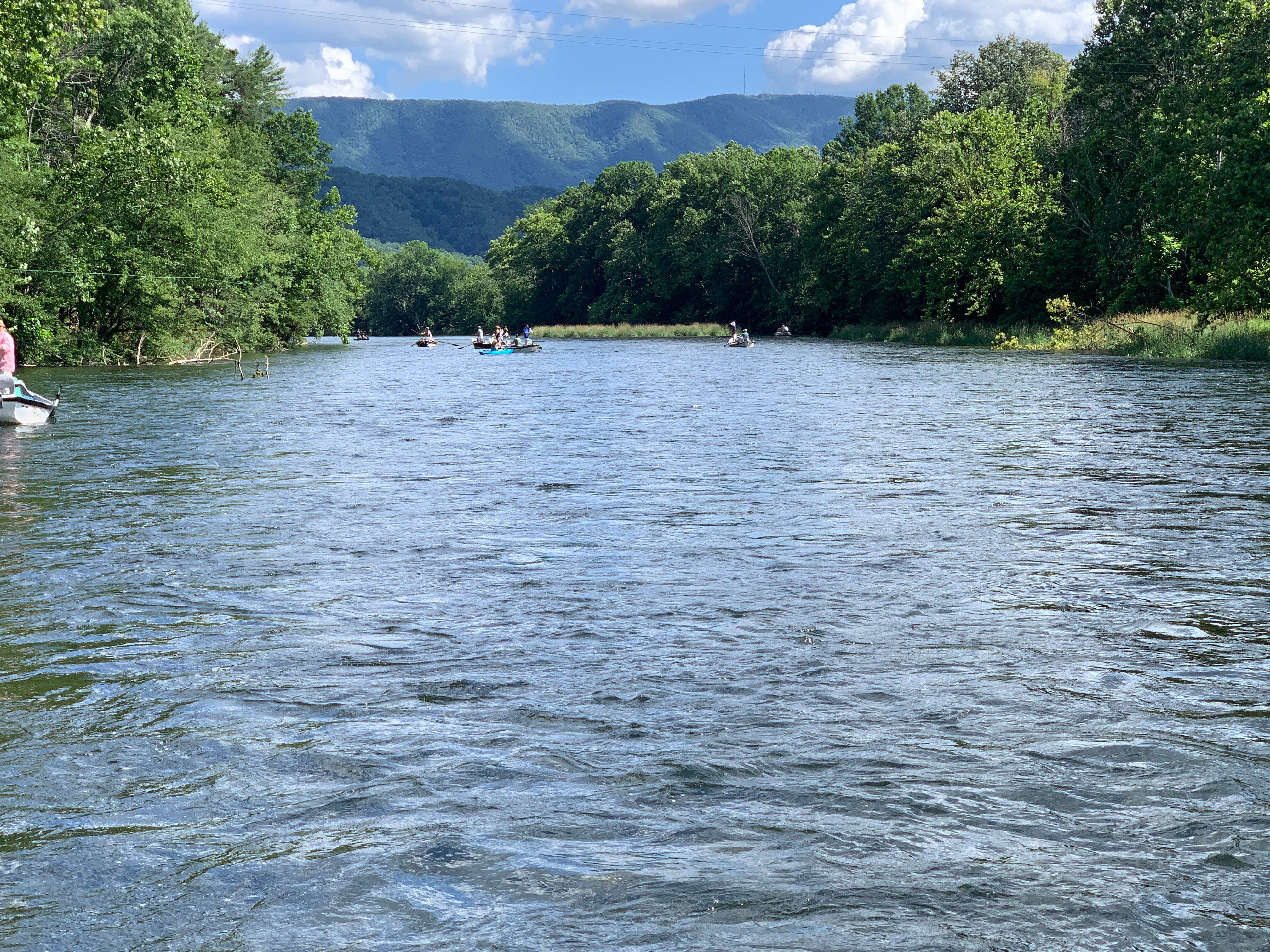
If you have a guide who knows what’s what (and I fish with one of the best in the world, my friend Matt Murphy), or if you’re on your own you will sit back upstream anchored up where the current will let you and wait for this circus to vanish round the bend, as we were doing when this picture was taken. Now I have these big flats all to myself - the others have to get on downstream so they can get off the river. Then it’s my turn. Flats such as this have water that ranges from 4-10 feet in depth and the fish rise up from those depths to take your fly. But they’re doing so assisted by the current and all you see is the riseform. The water is crystal clear, but the depth often make it impossible to see down to where the fish are holding.
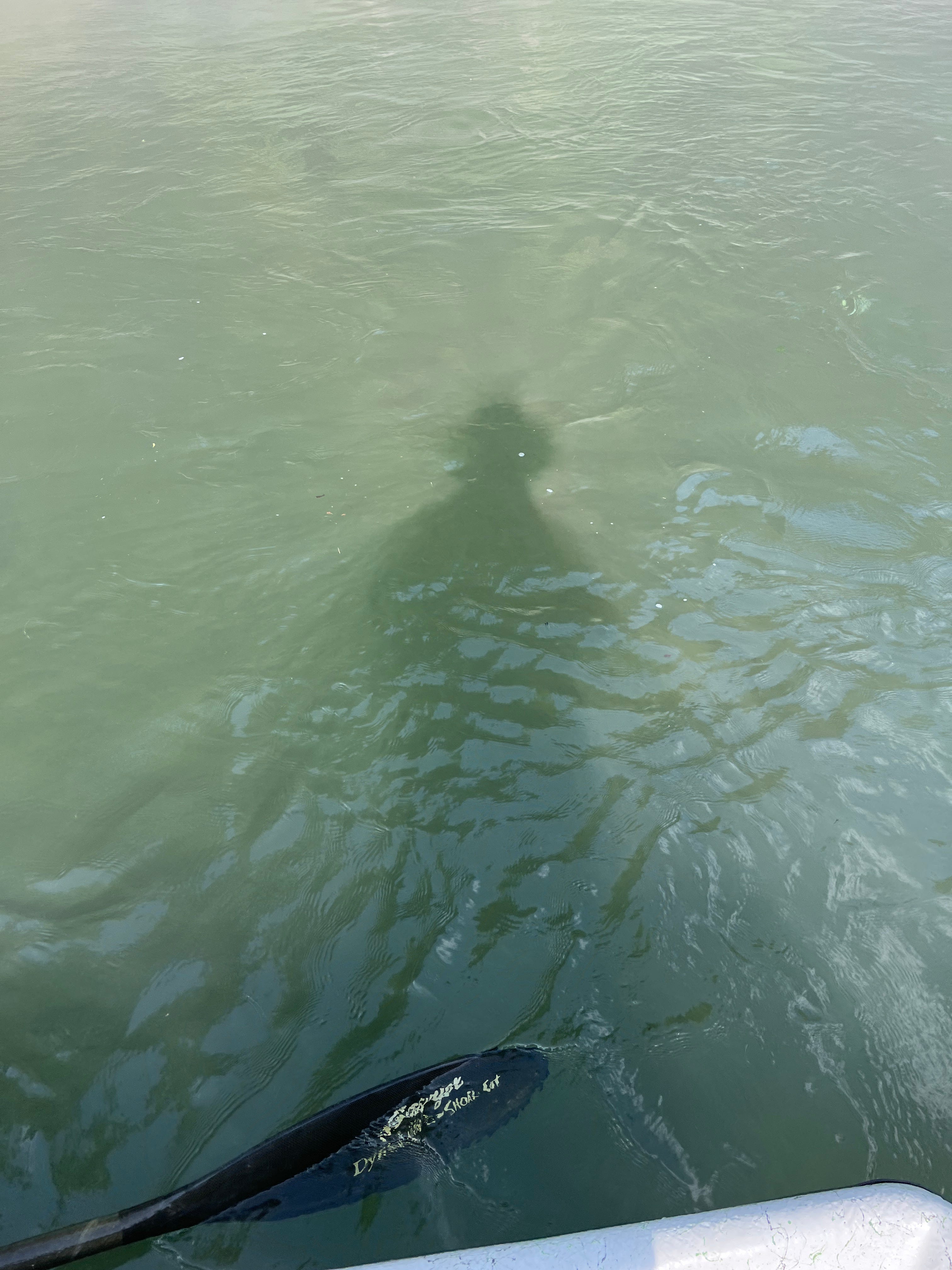
At a depth of merely 3 ft a trout has a picture window that is about 4 feet in radius or 8 ft wide. A fly anywhere in there is fair game. The problem though is that the fish will tend to rise to one side or another from their holding spot depending on the flow. And you need to present the fly at the spot where they can make the right decision - yet you can’t see the fish. A two fly rig doubles your chances of getting the fly to the correct spot. And that increases the chances of a nice colorful South Holston Brown, like the one Matt’s holding up here.
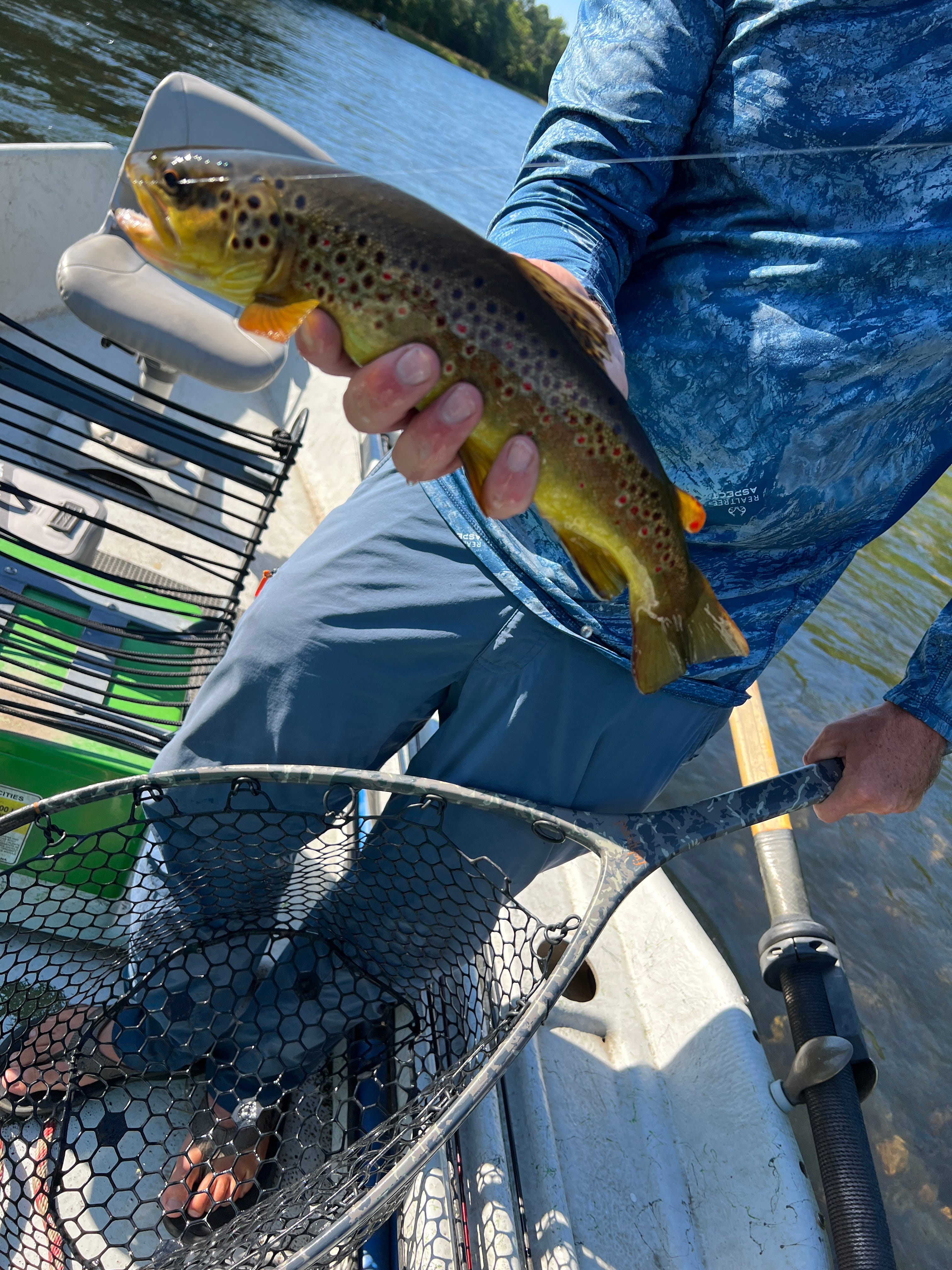
It doesn’t matter if you’re fishing out West or in the East, fishing a big stream or a small run, there is always a place for fishing two dry flies. In fact I don’t think I’ve fished one dry on my leader in over 20 some years. The fish don’t mind, and it seems to make life easier.
See if you can spot the two dries used here.