Ephemerella Invaria
The true American super hatch

Pale Morning Dun, Pale Evening Dun, Sulphur, Large Sulphur, Light Hendrickson, Red Quill Spinner, Lady Beaverkill, Light Maryatt, the size 14 Sulphur, the Melon PMD, the Yellow Green Sulphur, all names I have heard applied to a single member of the ephemerellidae - the ubiquitous Ephemerella Invaria.
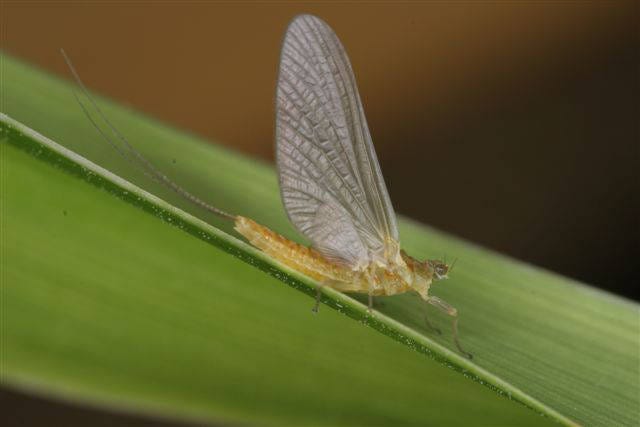
Some time ago, when I was a young man, we used to have two species of the larger yellow mayflies that hatched in the spring. There were the E. Invaria and E. Rotunda. There was also an ongoing argument about whether or not smaller sulphur that appeared a little later in the day was just a smaller version of one of these or an Ephemerella Dorothea. The folks who professed to know a lot more than I could ever hope to know exclaimed, loudly, that the E. Dorothea was a rare thing and all these yellow bugs were one or other of the Invaria/Rotunda crew.
Now the biologists tell us that the Invaria and Rotunda are the same beast, the Dorothea is in fact reasonably common and one of the Western PMDs (the one they called the E. Infrequens is actually a subspecies of the Dorothea.
Latin not withstanding, suffice it to say that there is a yellowish mayfly that hatches in the spring and possibly early summer all across the East and Midwest that makes up the most prolific hatch and spinner fall I have ever witnessed.
This video may look like it’s been through some AI mill, but in fact the E. Invaria were so thick that they were swarming all over the camera. This is a tiny creek Frank and I often fish that holds some huge trout. This video, typical of Invaria activity on this stream gives an idea of the abundance of bugs in the water.
Here’s another one of a larger stream with the spinners collecting over the riffles getting ready to do their version of the horizontal boogie. This one has the added benefit of showing Frank give a vivid demonstration of how the other shore always looks like it’s the better one. So you wade across, and then the shore you were originally on looks better, so you wade back, and so on and so forth.
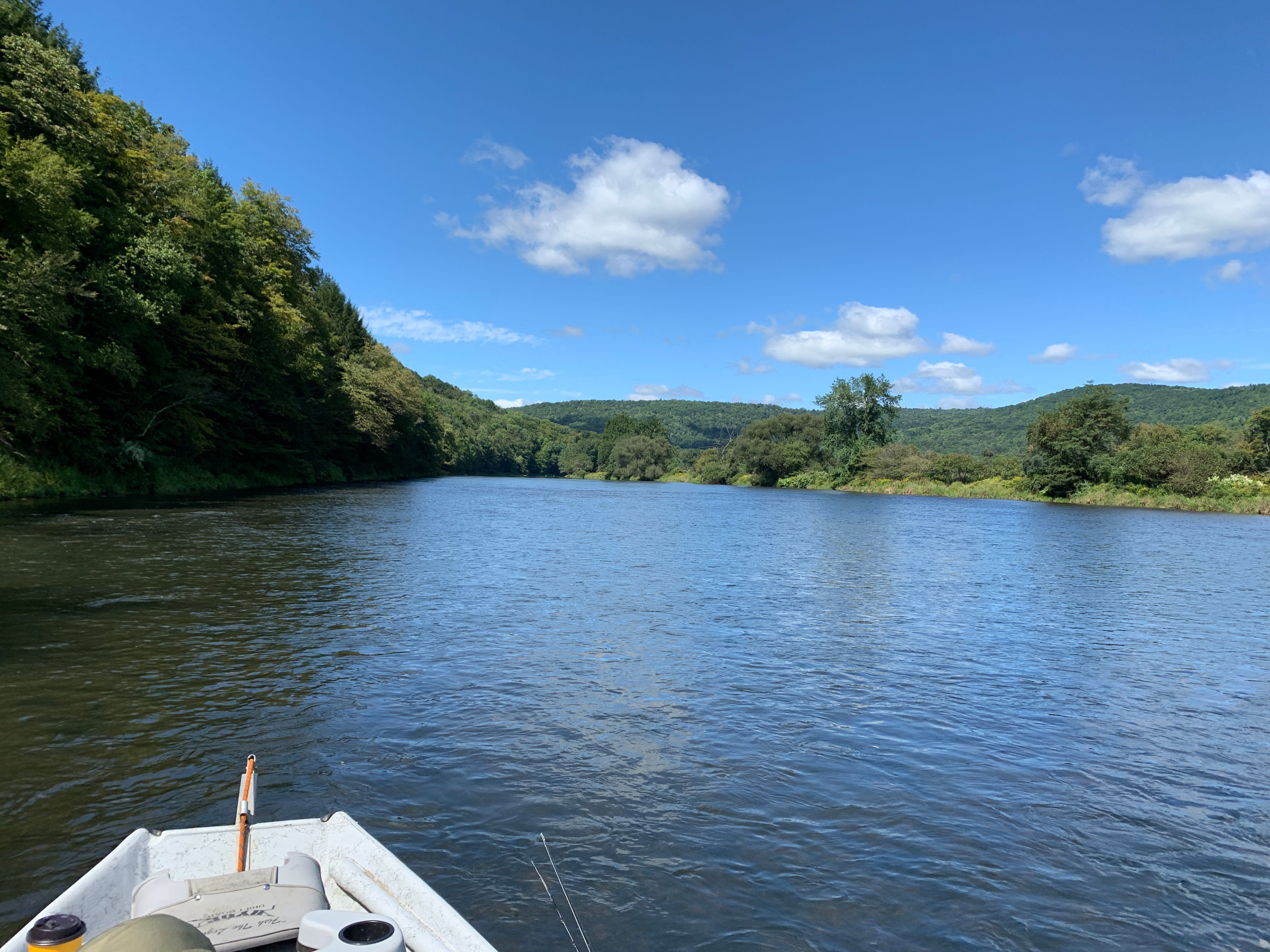
A lifetime ago, back when I was in grad school, there were 2 boats and a very few guides on the Delaware River. I would run trips when school allowed. Today, of course the Delaware is a bit like Grand Central Station during a particularly busy period. The Delaware system would, and probably still does, provide 3 fishable Invaria hatches during the course of the day. The East Branch had a hatch during the morning hours, it’s smaller water making it suitable for wade fishing.
The West Branch would start showing hatches as soon as the water hit 55 degrees, which during the spring happens in early to mid afternoon.
And from the Bard Parker pool on downwards it was an evening phenomenon.
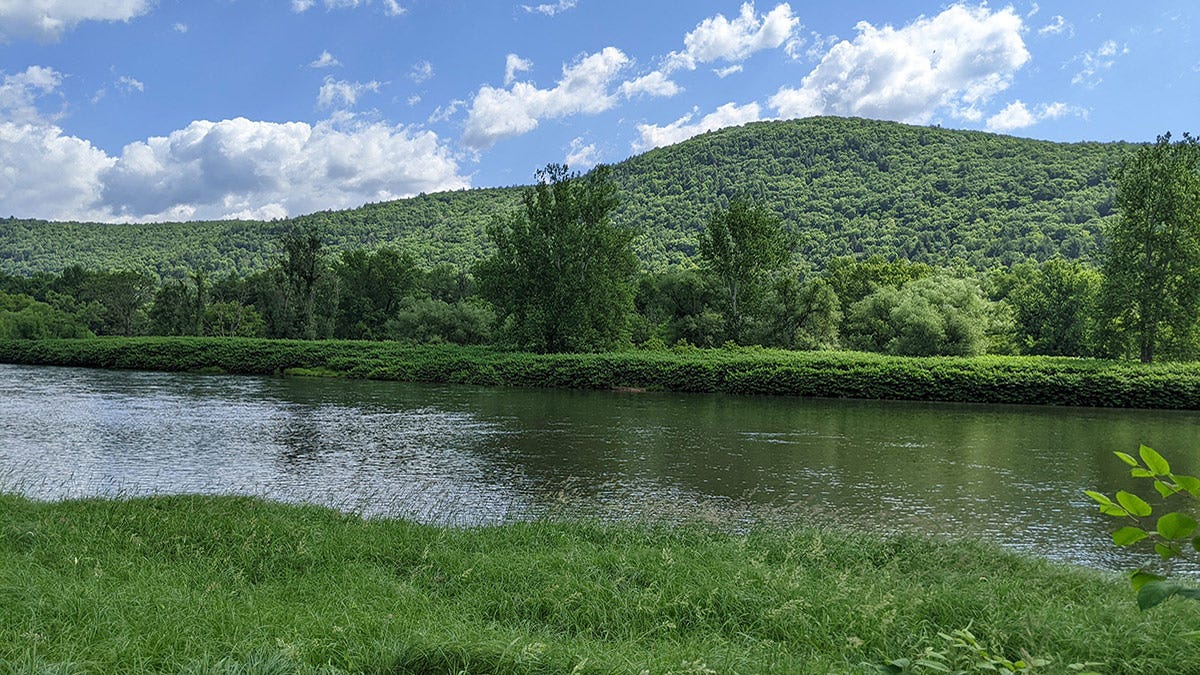
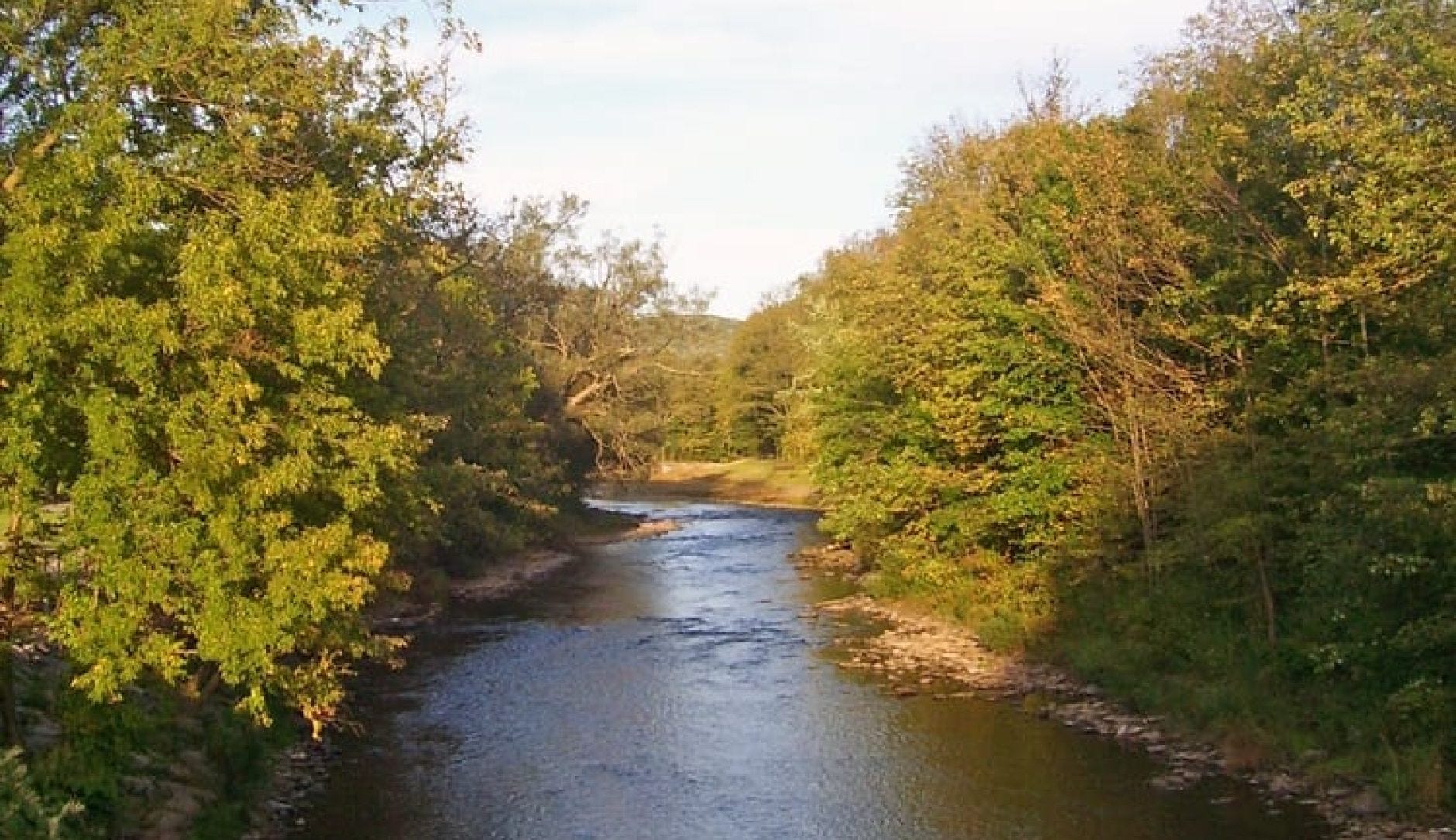
Smaller waters show the hatches at all sorts of times of the day. This little stream, with it’s share of larger fish shows it’s Invarias during the early afternoon
when the light is strong, and every detail clearly visible.
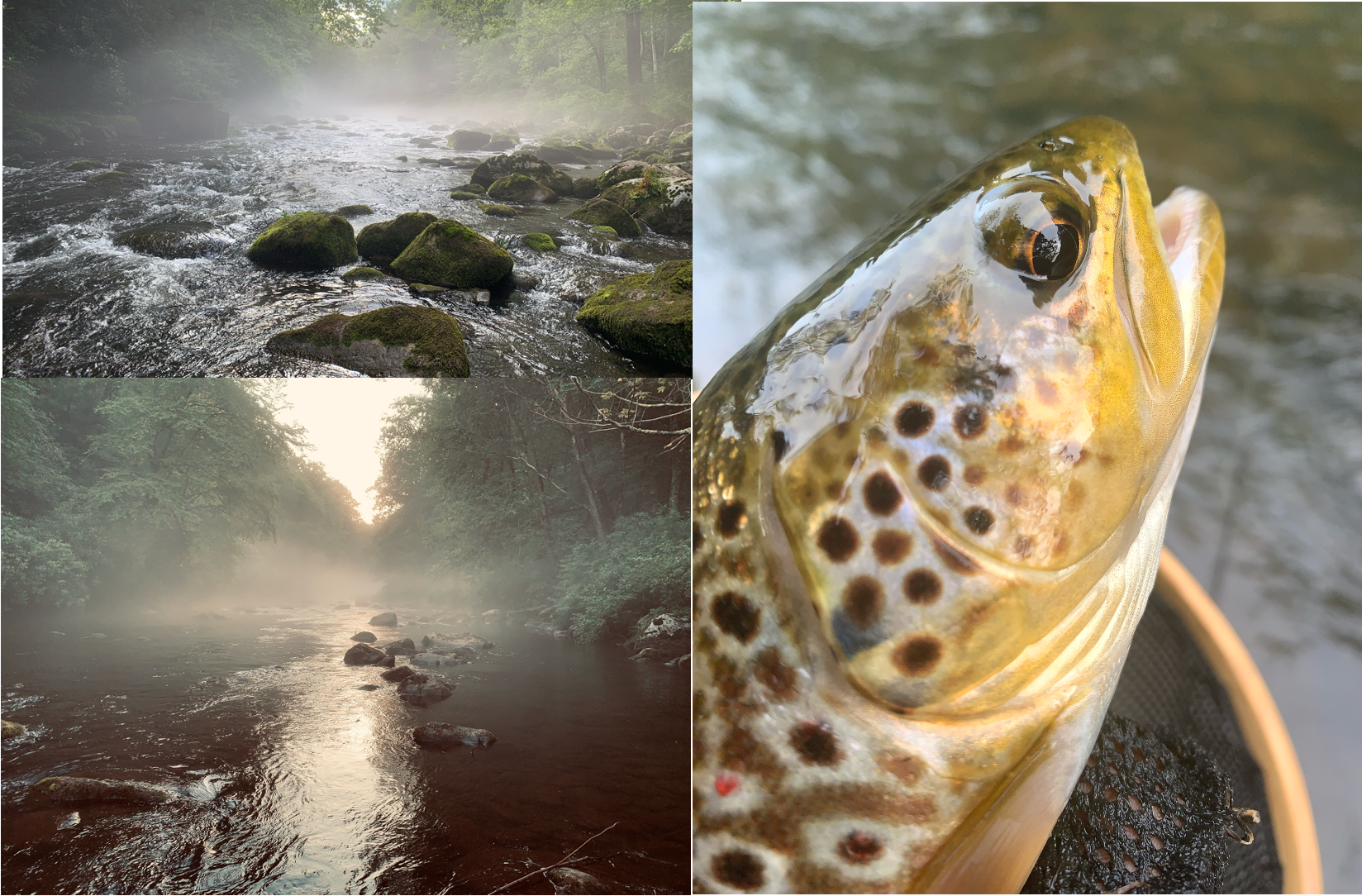
And this one, about an hour’s drive away has it’s bugs hatch as the sun goes down and the river mist comes crawling down.
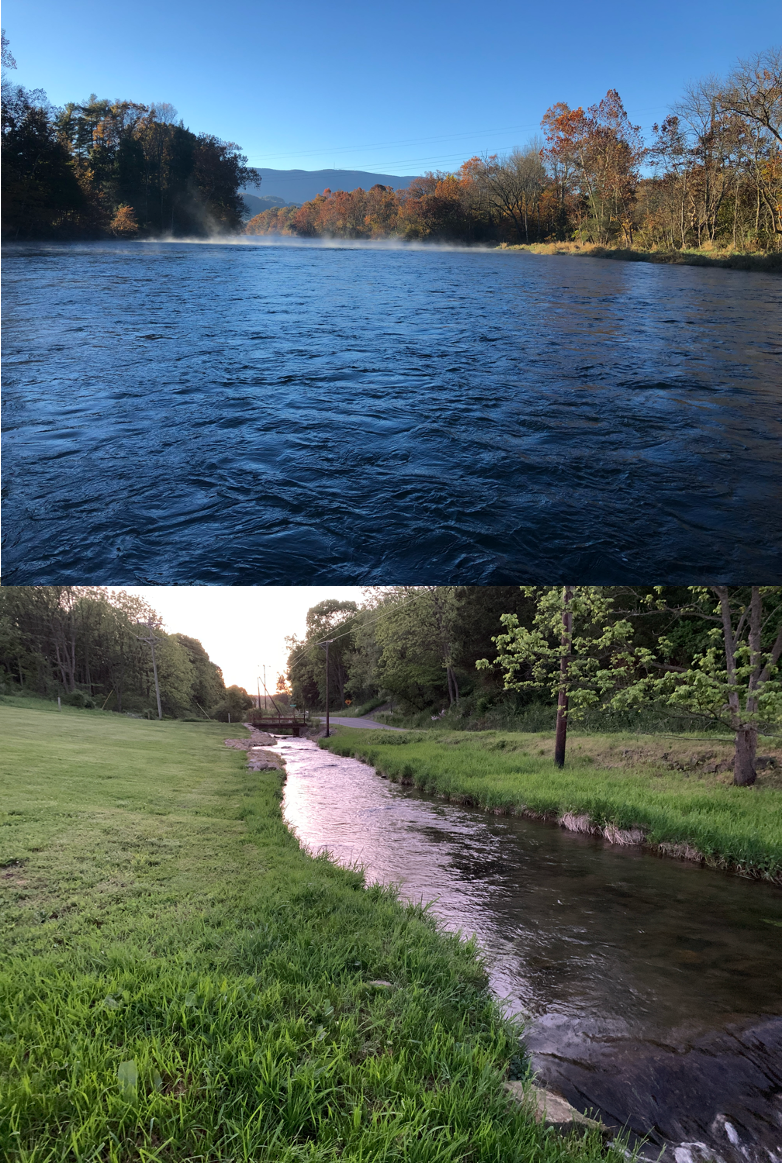
And they provide nice, fishable hatches from big rivers ranging from big brawling ones that need boats to fish well, or little rivulets you can jump across if need be.
Hatches start as early as late March down in the very southern reaches of the Invaria habitat and last well into July and August on some waters. The duns almost always hatch in abundance, and the spinner falls are beautifully languid, and the fish always come out to play. With the added benefit that one can often catch at least two hatches and one spinner fall every day.
The Ephemerella Invaria belongs to the crawler type of mayfly. It has a slender, cylindrical nymph, the type most nymph patterns are aimed to represent. They can range in color from a dark brown to a lighter tannish brown. A shedding instar can be very light tan.
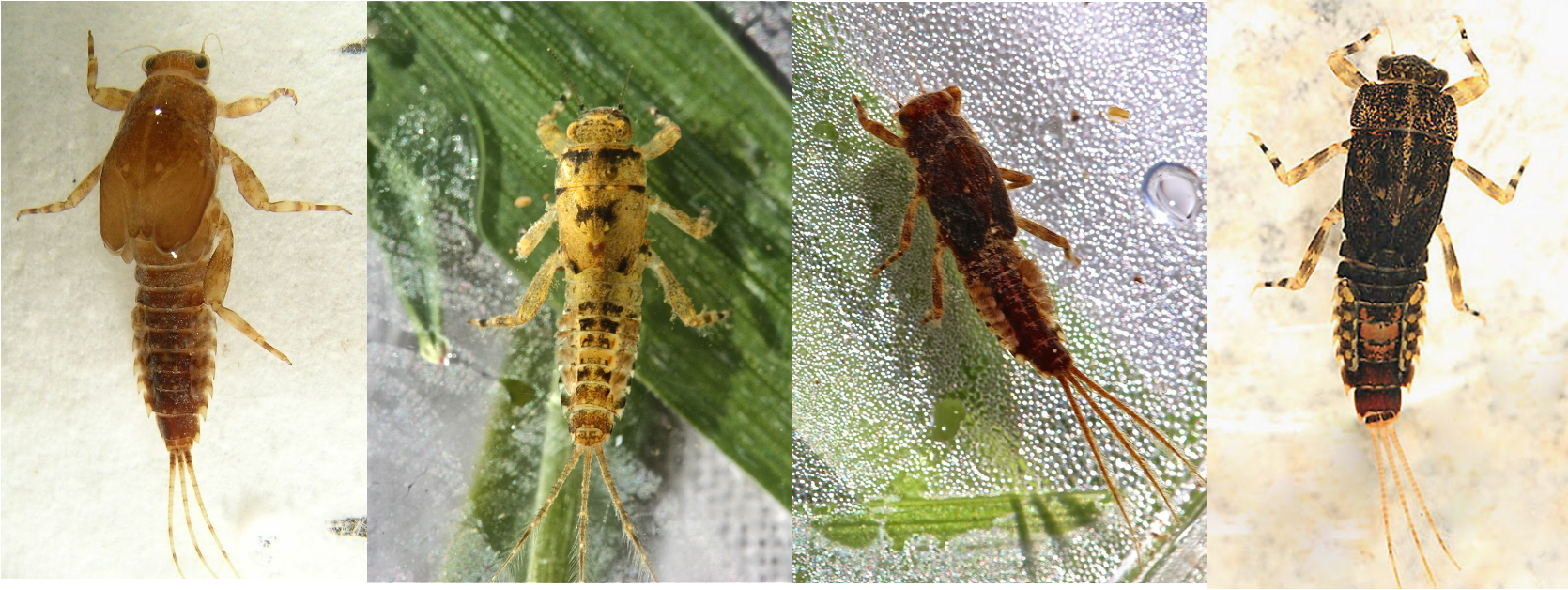
The nymphs live in moderately fast to fast-ish water and show a fair amount of drift when hatching. Some of that drifitng is just generally downstream at depth, some on the rise to the surface and some on the surface as they hatch. On streams with prolific hatches on can often see a fair number of nymphs drifting along in the film. In cases where I know a hatch is about to occur I will fish a nymph, and I’ll always let if kick up at the end of the drift and rise slowly to the surface.
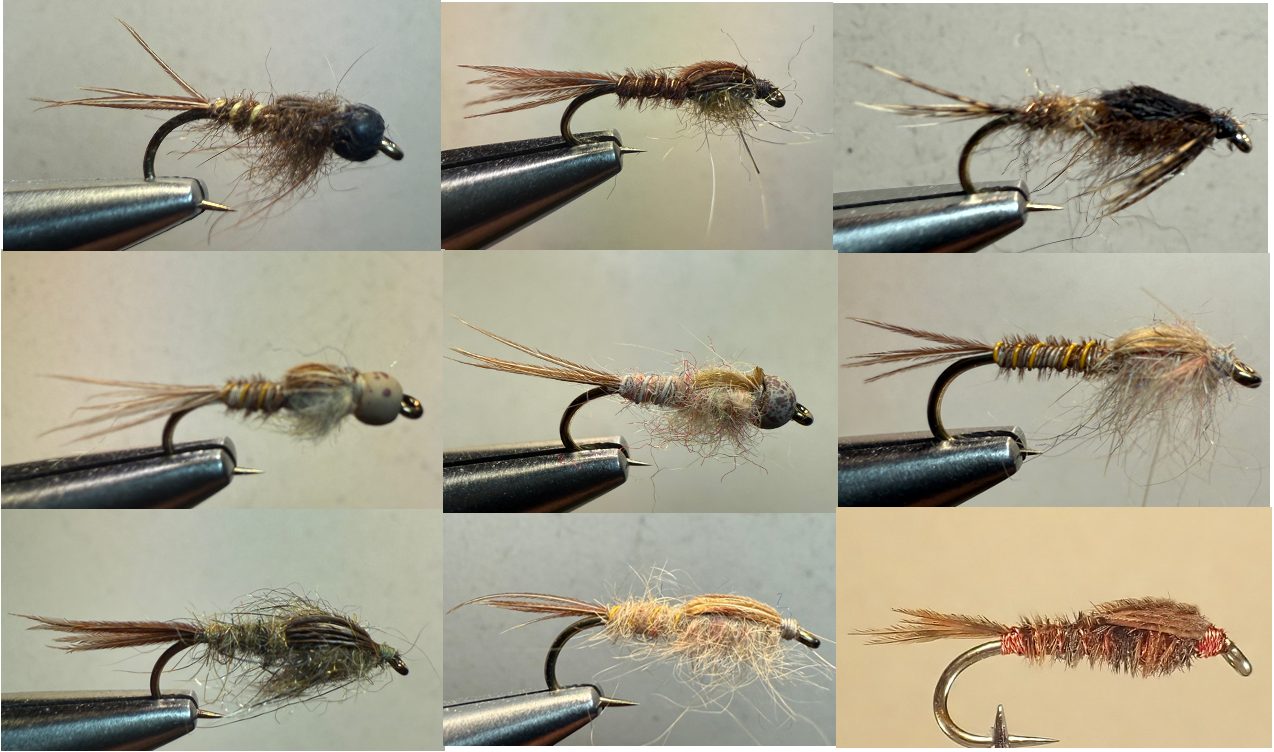
I tie nymph patterns in a very wide range of colors, mainly because I fish a very wide swath of area. But I’m not sure how much the exact shade matters, as long as it’s reasonably close to the local naturals. If you’re fishing during the period of nymph movement just prior to the actual hatch, I suppose you would like to present something close to the natural, though I’m not sure I’d be willing to swear to that. My Invaria nymph patterns range from a simple Pheasant tail tied a la Frank Sawyer, to an extremely light tan nymph and everything in between. I tie them with and without bead heads, and fish them both with great success.
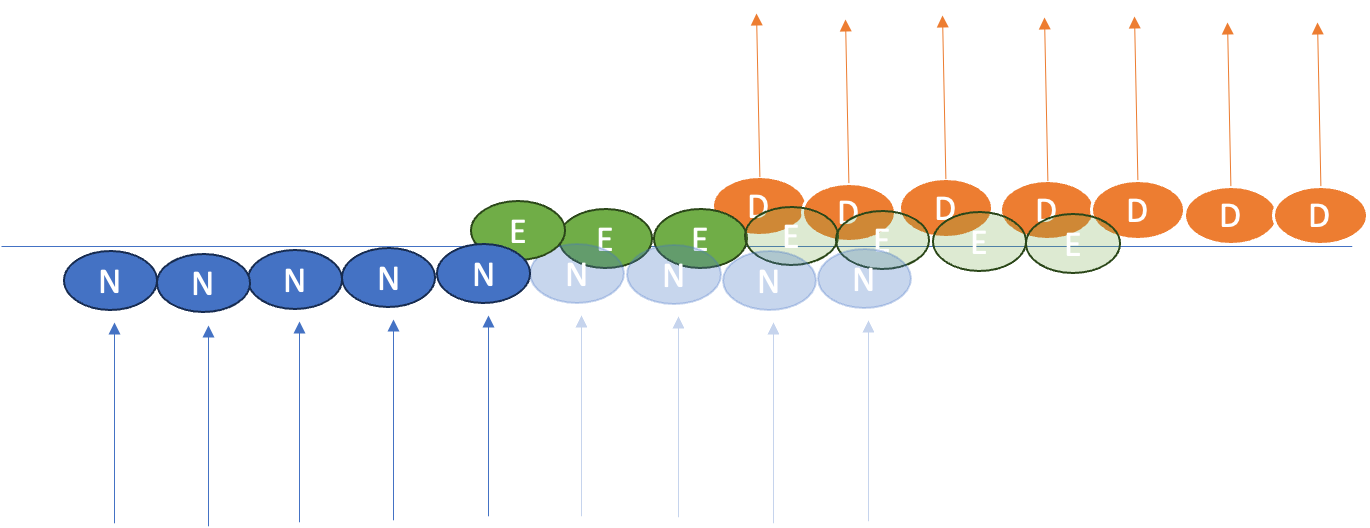
Once I start seeing fish on the surface my tactics become somewhat one tracked. I’m a simple engineer. I don’t know from anthropomorphic trout determining which phase of the hatching bug is least likely to fly away and when. I also don’t understand the mystery of trout seeing emergers and not fully hatched duns. If a dun must drift 100 ft to escape its nymphal shuck, then unless that bug and every other bug got to a trout’s position within a 100 ft of hitting the surface, that trout must see some fully grown duns. In fact in any hatch, if we assume the hatching is evenly spaced above the trout, is has to see equal numbers of bugs at various stages of the hatch. So unless the trout is right at the head of hatching territory or right at the tail, it’s going to see a mix of all of them. But what do I know?
It’s so much easier to see a dun, see what it’s doing, see the fish take it and so that’s what I fish - all the time. I don’t have to rely on all sorts of skills I don’t have, or have the time to learn.
When I was a young man, I needed good luck,
I'm a little bit older now and I know my stuff
So, during the hatch, I just go ahead and fish a dun. The fish never seem to care. In my grad school days, armed with a copy of Hatches II I was all gung-ho fishing a comparadun for this and a variety of hatches. I soon learned that, while indestructible in the long term, a comparadun is only good for one or two fish before it becomes a sodden mess that can only be kept afloat with copious amounts of false casting. The kind that makes me wonder if the angler is angling for trout or owls. We’ve all seen those instances where you say to yourself, upon watching someone, “Jeez put the darned line on the water,” while the guy continues for another 23 false casts. That person’s probably fishing a comparadun.
I’ve talked a bunch about my favored patterns in a past piece on Dry Flies, and for the sake of brevity, here’s a link.

And I tie them in quantity. Mainly because I fish the Invaria hatches for about 5 months in the year and the same patterns do just fine for PMDs out west and some other yellow mayflies adding another 2-3 months to their period of use.
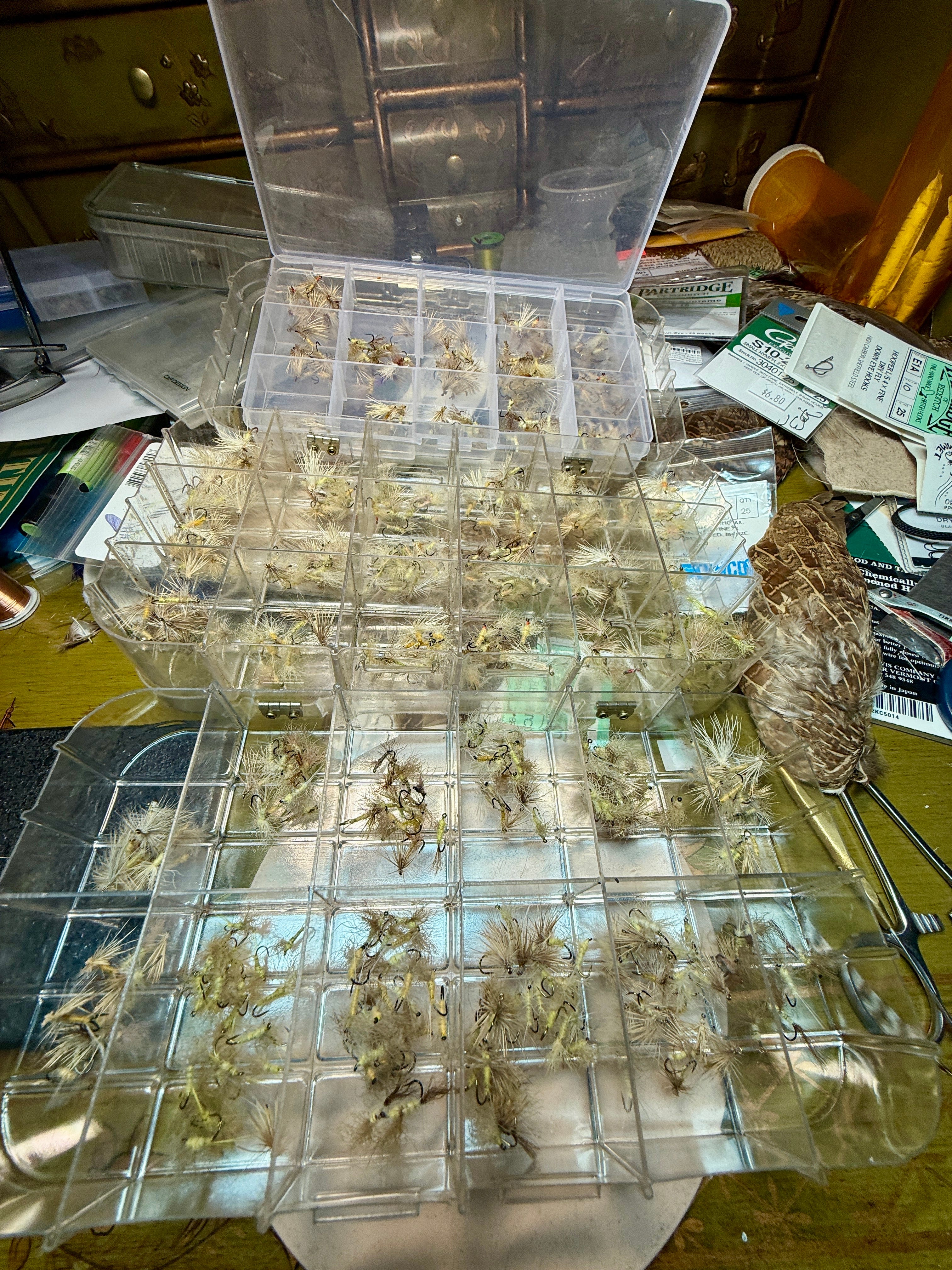
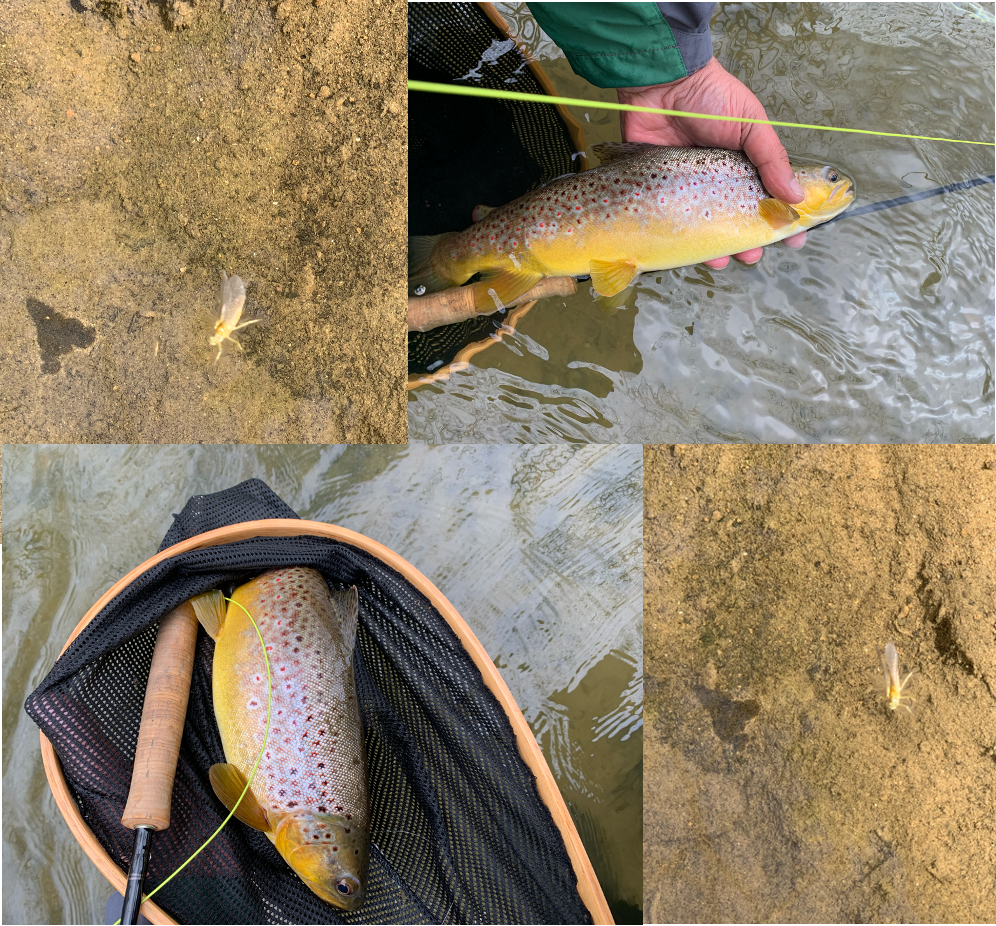
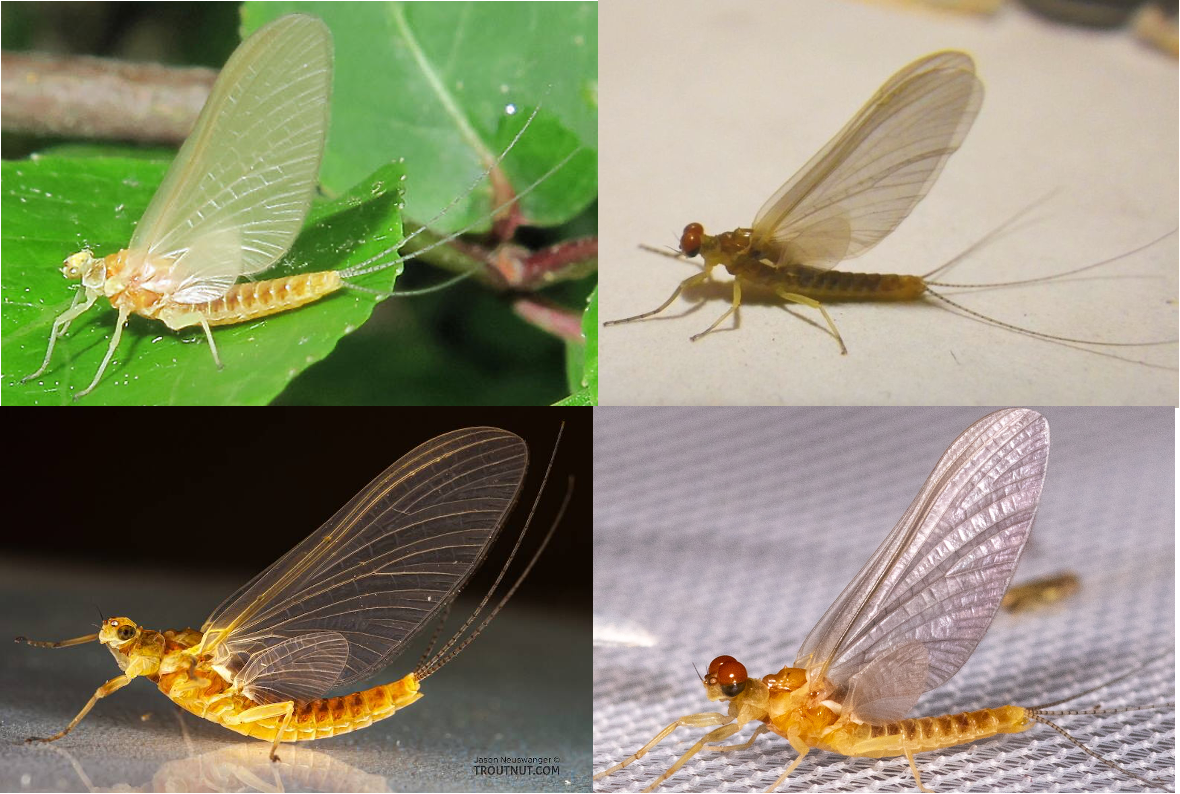
There are two points of note about the E. Invaria duns. The first is the size. Even though there is a wide variation in size, most Invaria duns are much larger than people give them credit. In their book, Htaches II, Caucci and Nastasi estimate a size range of 7.5 - 10.5 mm for this species. Other authors estimate a similar size, except most call out a larger minimum size. But overall it seems somewhere between 9-10.5 mm is an appropriate size for the dun’s body. On a Tiemco TMC 100 this would be somewhere between a #10 and #14. The TMC 102Y, on of my favorites would be a 13 with a marginal, late season #15. The same sort of size would apply for hooks from other manufacturers. Later in the season as the flies get smaller I may switch to #14-15.
The second is the coloration. When viewed flying they range through a whole gamut of yellows, mustards, greenish yellows, ochres, and such. They do the same thing when seen from underneath, which is what the fish see. It is interesting to note that on some waters the duns can be an extremely pale yellow. Also, the females can show an orange or green egg mass. I’m not sure how much the detailed color matters but I have noticed a definite difference in the trout's prefernce for the correct tone - i.e. they like a light fly if the naturals are lighter in color and a darker one if the naturals are dark.
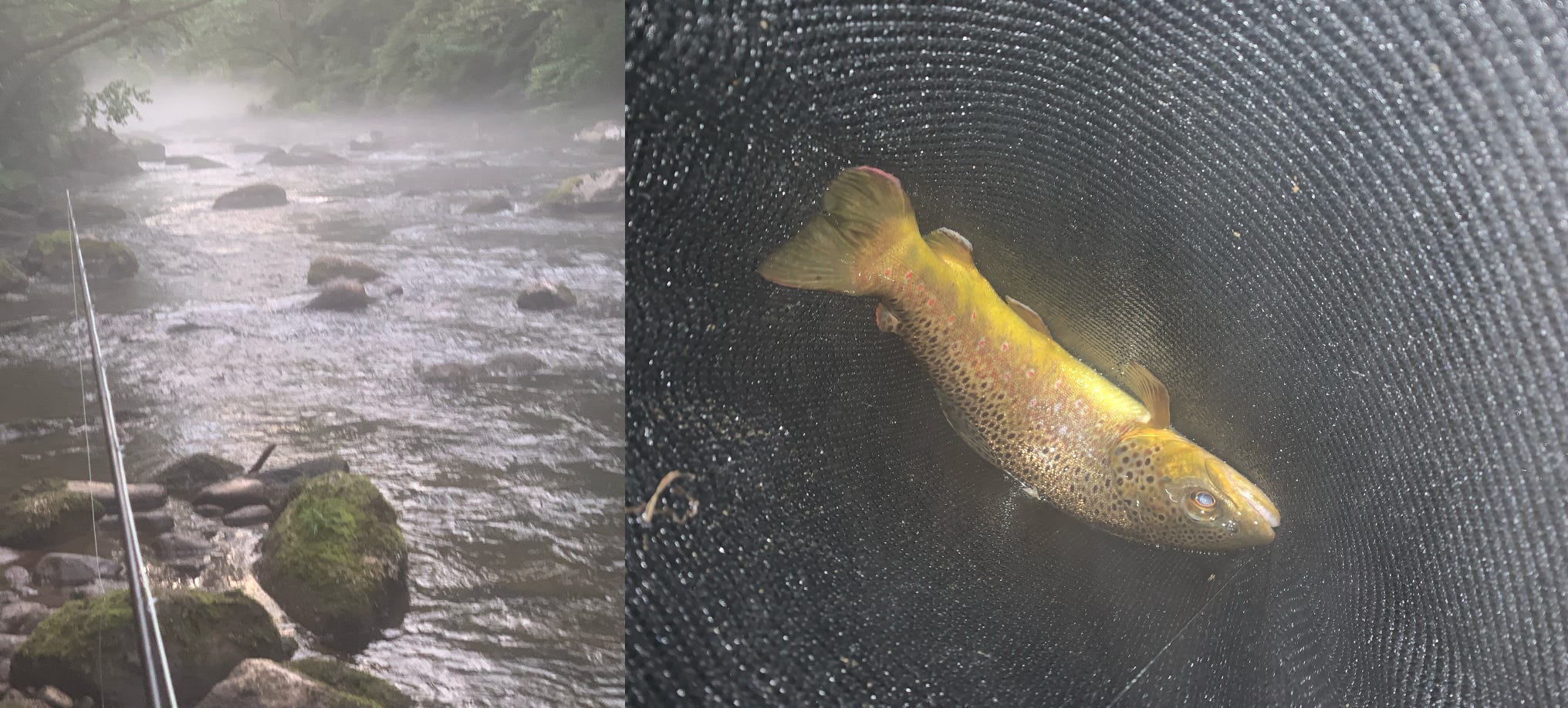
Of course conditions like this, when this trout was taken make color of less importance and size/silohouette the more likely criteria.
Waters that remain cold into the summer often have enshrouding river mist at the time of the Invaria hatch and spinnerfall, especially since their native habitat is a part of the country marked by high humidity in the summer. We see this on streams big and small.
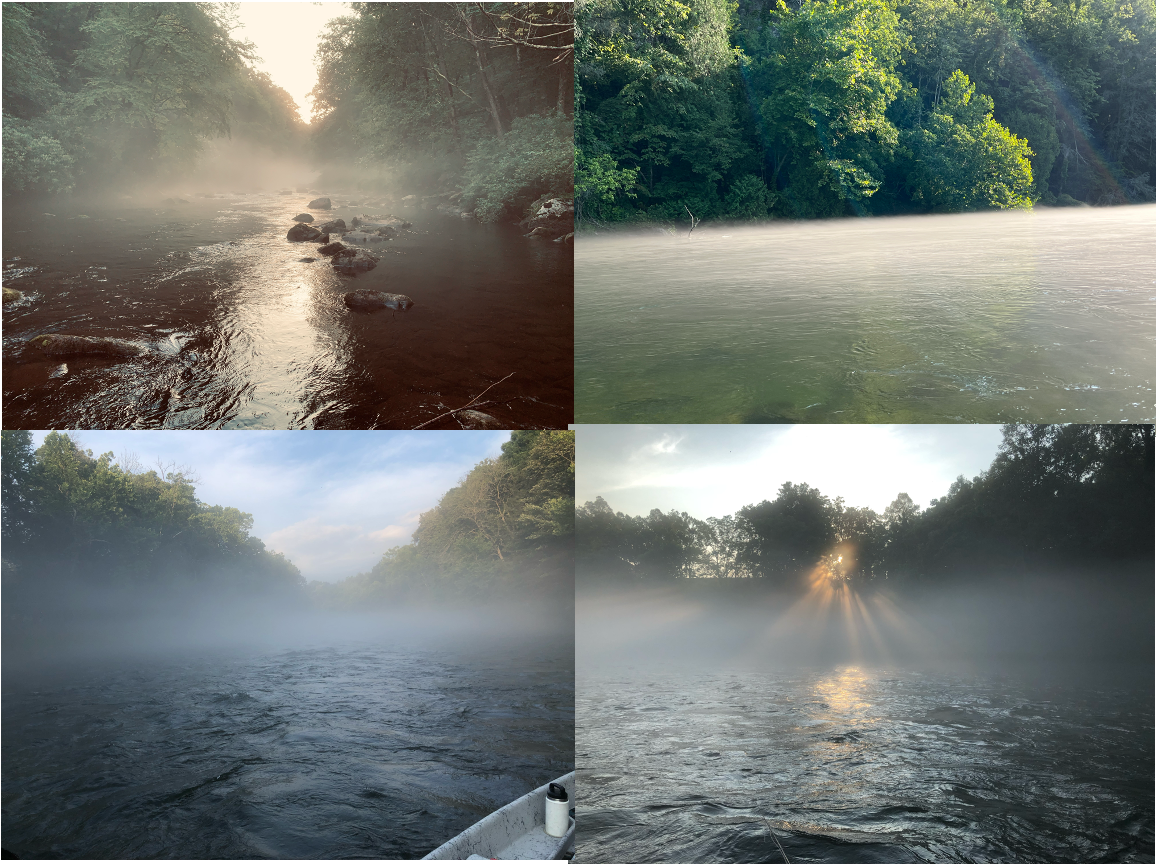
It makes for some interesting fishing.
On streams small and big, as the shadows lengthen “and the night comes so quiet and it's close on the heels of the day” the Invaria spinners collect at the riffles and begin their rising and falling mating dance. The ritual begins with the spinners coming out from the trees where they have spent the last day or so.
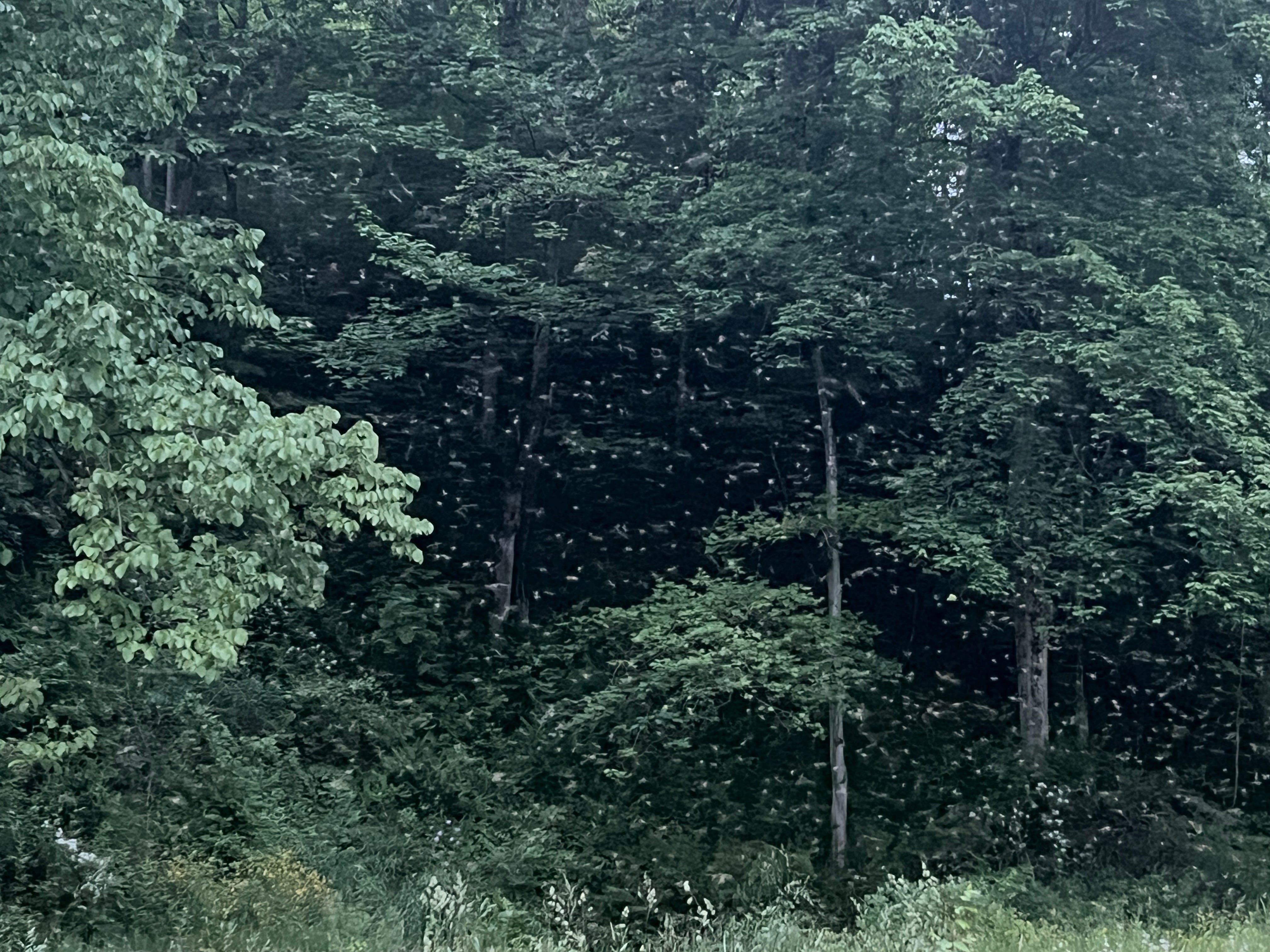
The swarms then start migrating upstream until they reach the riffles. They then begin a pulsating dance.
Eventually falling to the water and drifting down to become an easy meal for the waiting trout. Invaria spinner falls provide great fishing. Just as in the case of the duns the spinners can vary substantially in color.
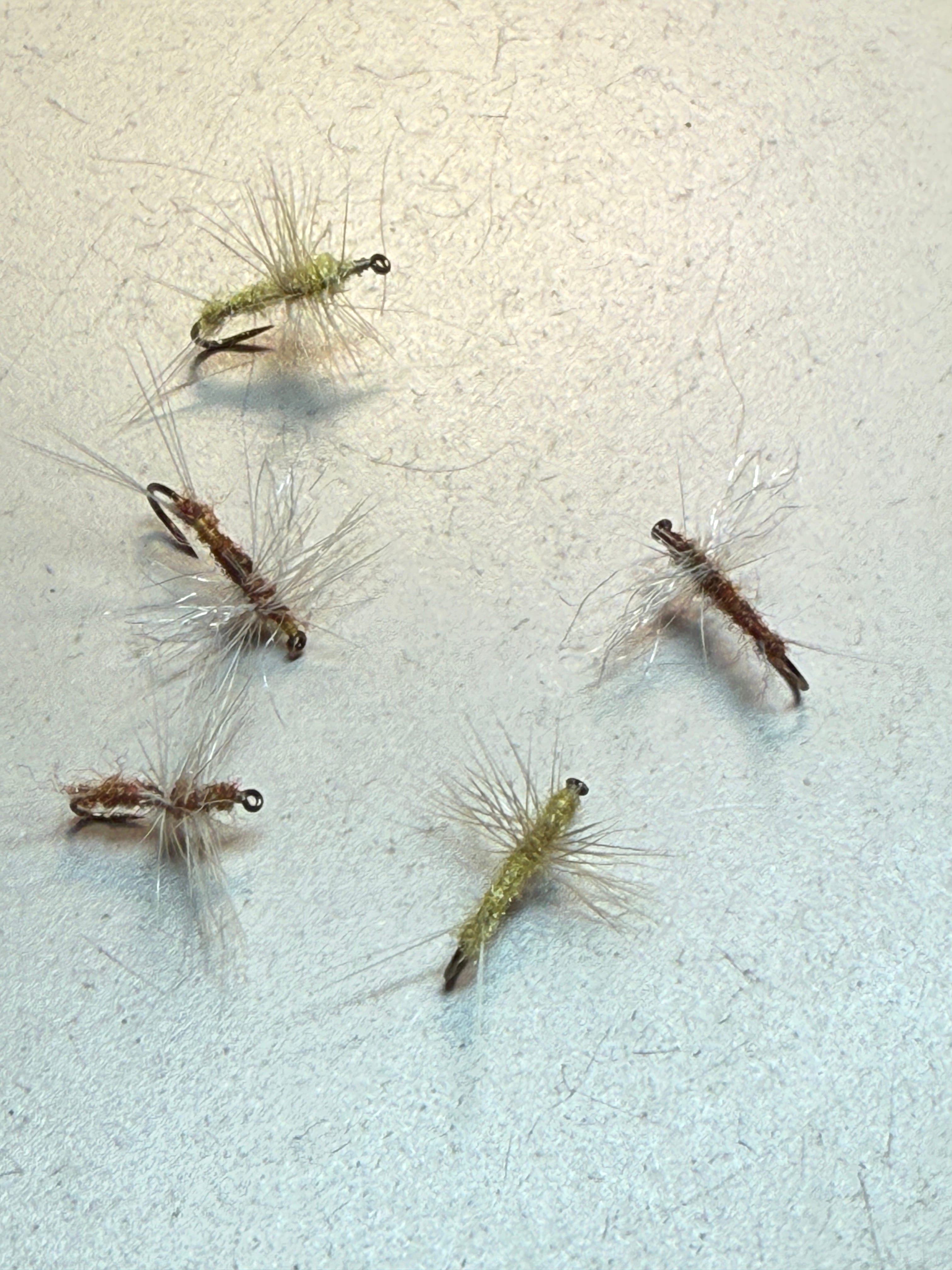
I like to tie my spinners extremely sparse. You should too. I would also recommend Goddard and Clarke’s book “The Trout and the Fly” for an excellent treatise on spinner pattern design and deployment.
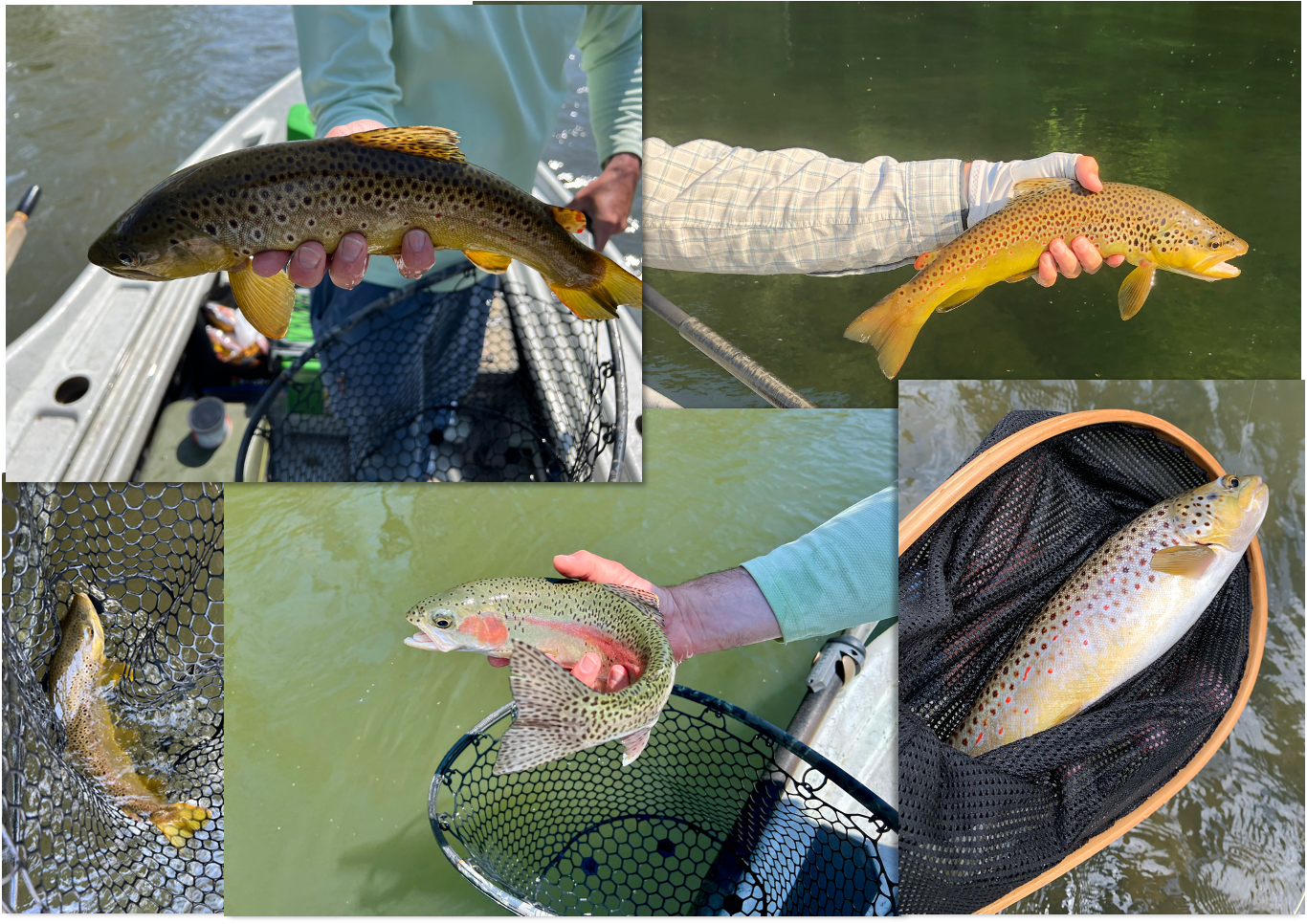
Midmorning Invaria hatch, fish are rising up like birds.
This is one of the fish
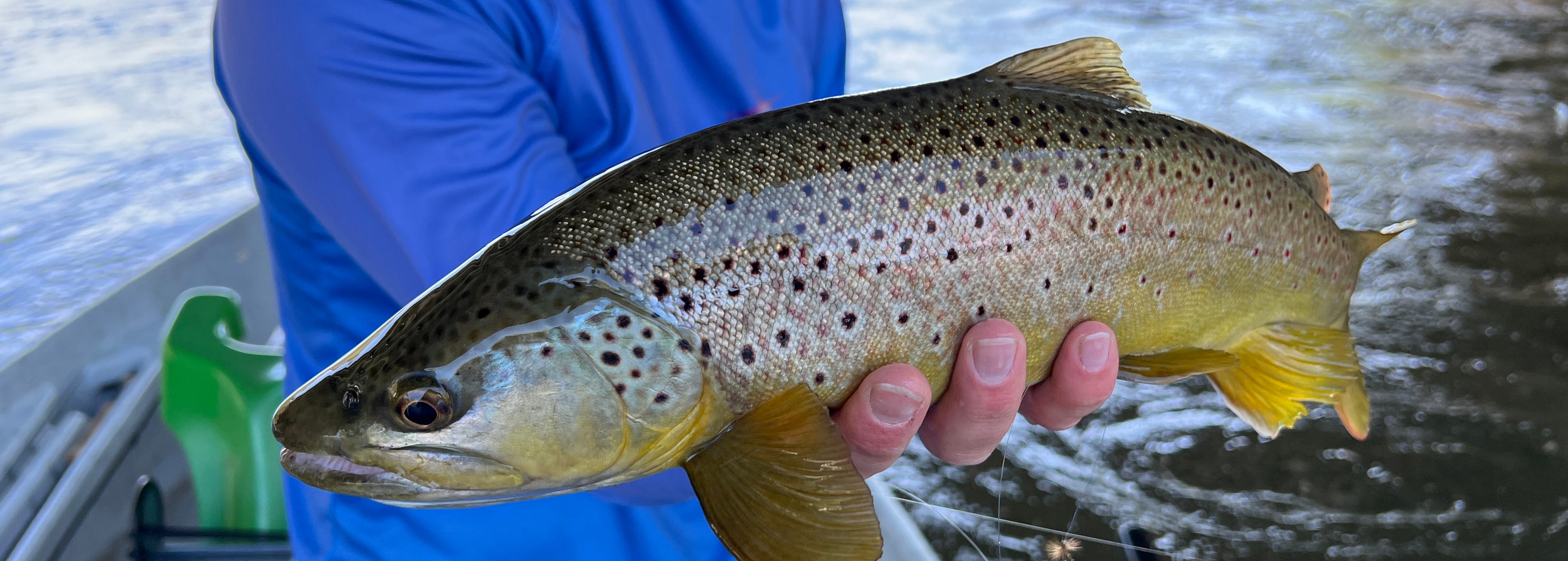
And some more