
A Trout Coming to the Surface
A trout's view of the surface and the rise - Part 2 of N

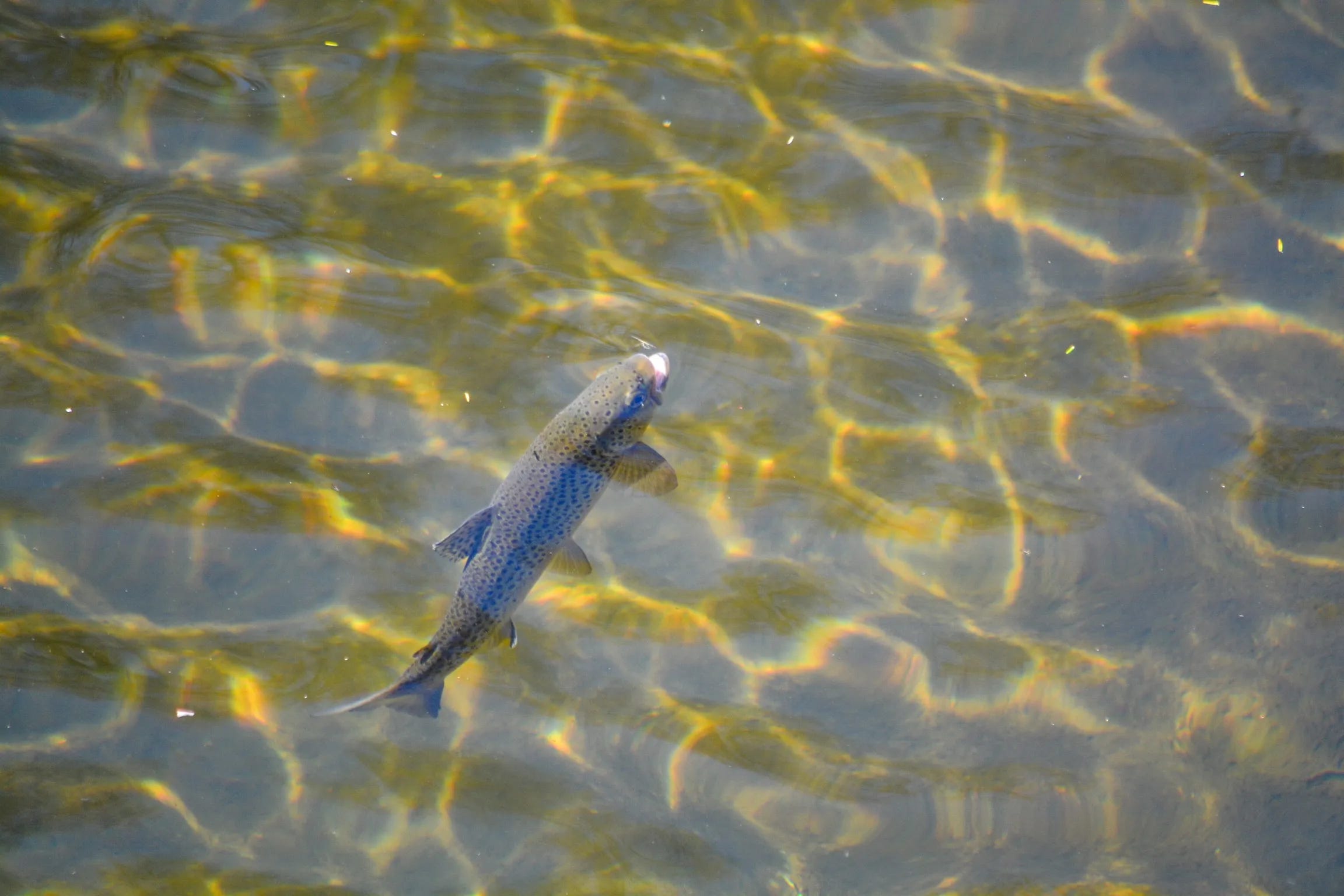
Rising trout. A sight that tickles the fancy of many an angler, I know I’m one. Casting a fly to one, having it take one’s fly and hooking it is the absolute essence of fly fishing, at least for me. That is why we call it fly fishing. We don’t call it sculpin fishing, or black nosed dace fishing, or God forbid aquatic annelid fishing. We call it fly fishing, and the most visual form of it is a fish taking a fly on the surface. More has been said, written, theorized and argued about a fish taking a dry fly than possibly any other subject in fly fishing. But at the heart of all of that is a simple enough thing - a fish rises up to the surface and eats an insect floating up there. That simple act, if well understood can lead to many fun hours of fishing, at all times of the year, to fish willing to feed off the surface.
A Trout’s Field of View and the Rise
The fundamental mechanics are extremely basic. A trout spots an insect on the surface, it rises up, and it eats the insect.
Note: There are two companion pieces to this article that goes into all the details of trout vision as related to the surface. They are linked below. The gist of that stuff is presented in this little “sidebar”


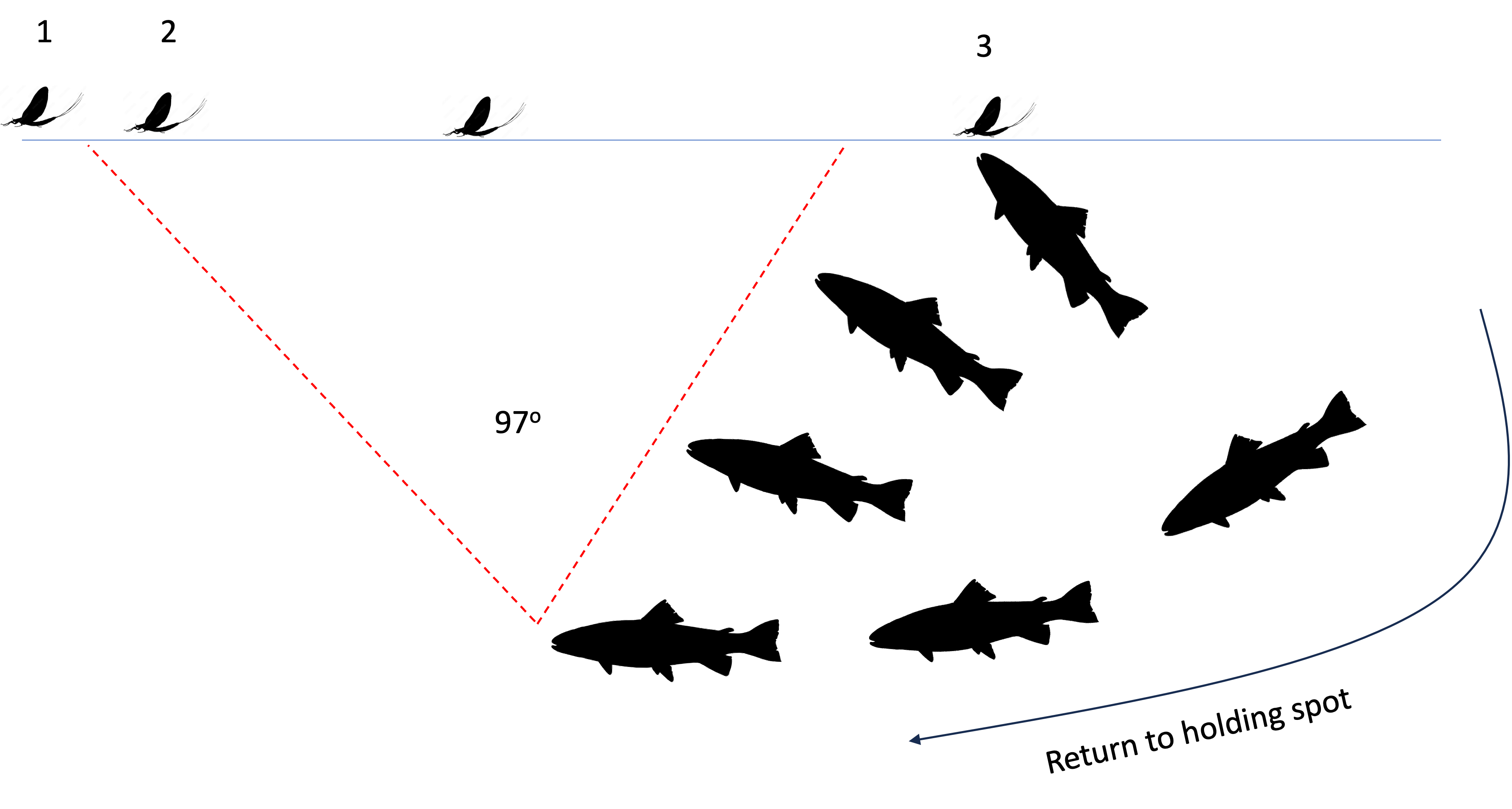
When looking upwards from under the water, there is a circular area where light penetrates through the surface. Beyond that region the underneath of the surface the water actually reflects the streambed and the top surface rflects light away from the surface. So there is a circular region where the things like a fly floating on the surface are actually visible. This region of visibility is about 97 degrees from the fish’s eyes.

In that region where no light passes through the surface a distortion of the surface can sometimes change the angle locally and the light will pass through. An insect’s legs and body may cause such a distortion forming little lenses that will let the light through.
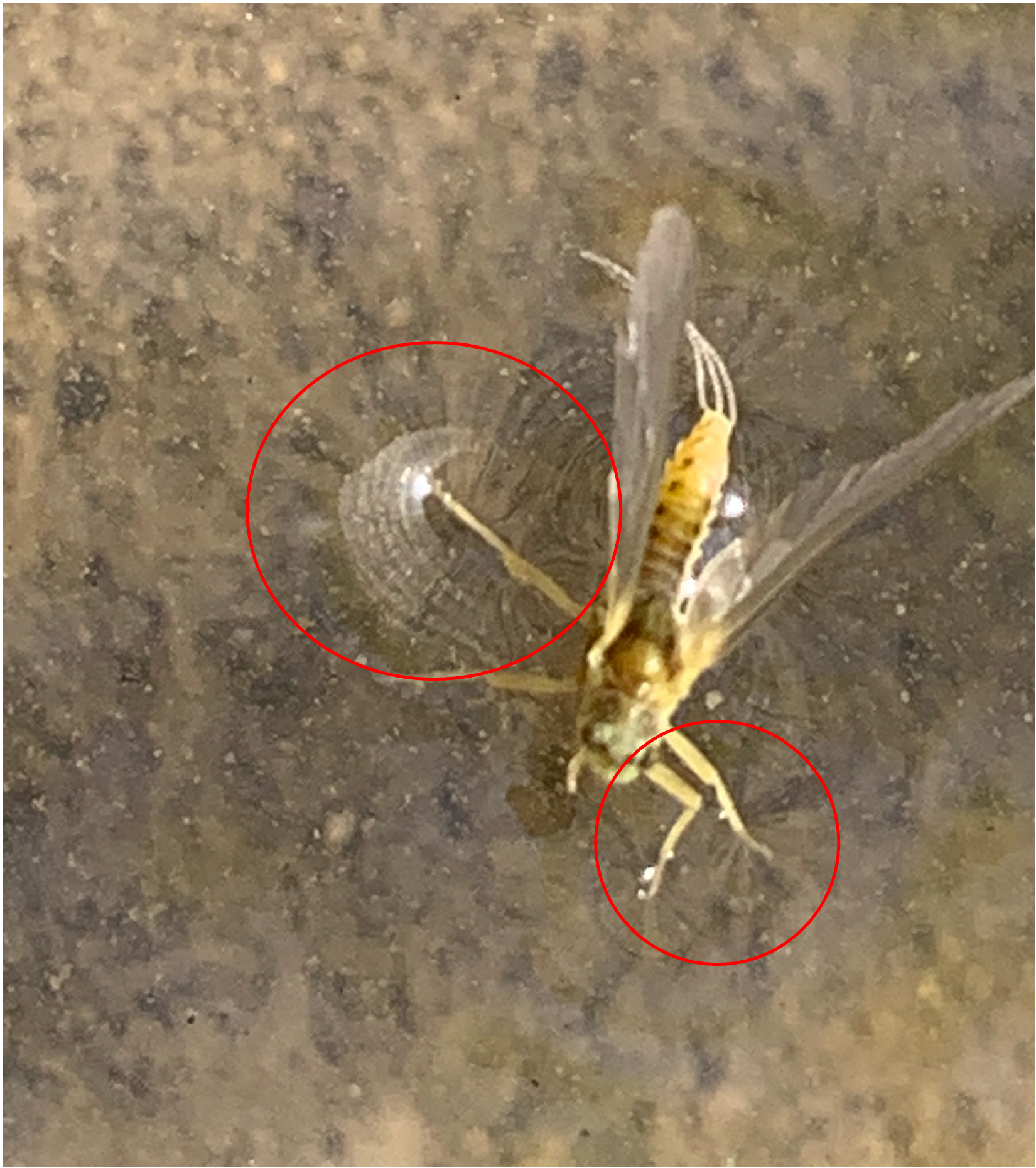
There is also a region in which refraction will cause the wings of a mayfly to appear a little bit before it enters the actual circle of vision.
And as the second piece linked above notes, the trout’s eyesight is actually pretty poor.
The trout sees an insect on the surface. This insect is definitely within its 97 degree cone of vision (Point 2 in the figure below) but it could be outside of the cone (Point 1) however it may still be visible due to its presence affecting the mirror (we talked about this in Part 1 with reference to the lenses formed by the insects legs, tail, etc.). The trout has to make decision to go get the bug and then it intercepts it at point 3.
But while we are looking at this we need to remember that what the trout actually has is a cone of vision and a complex one at that is based on its binocular vision.
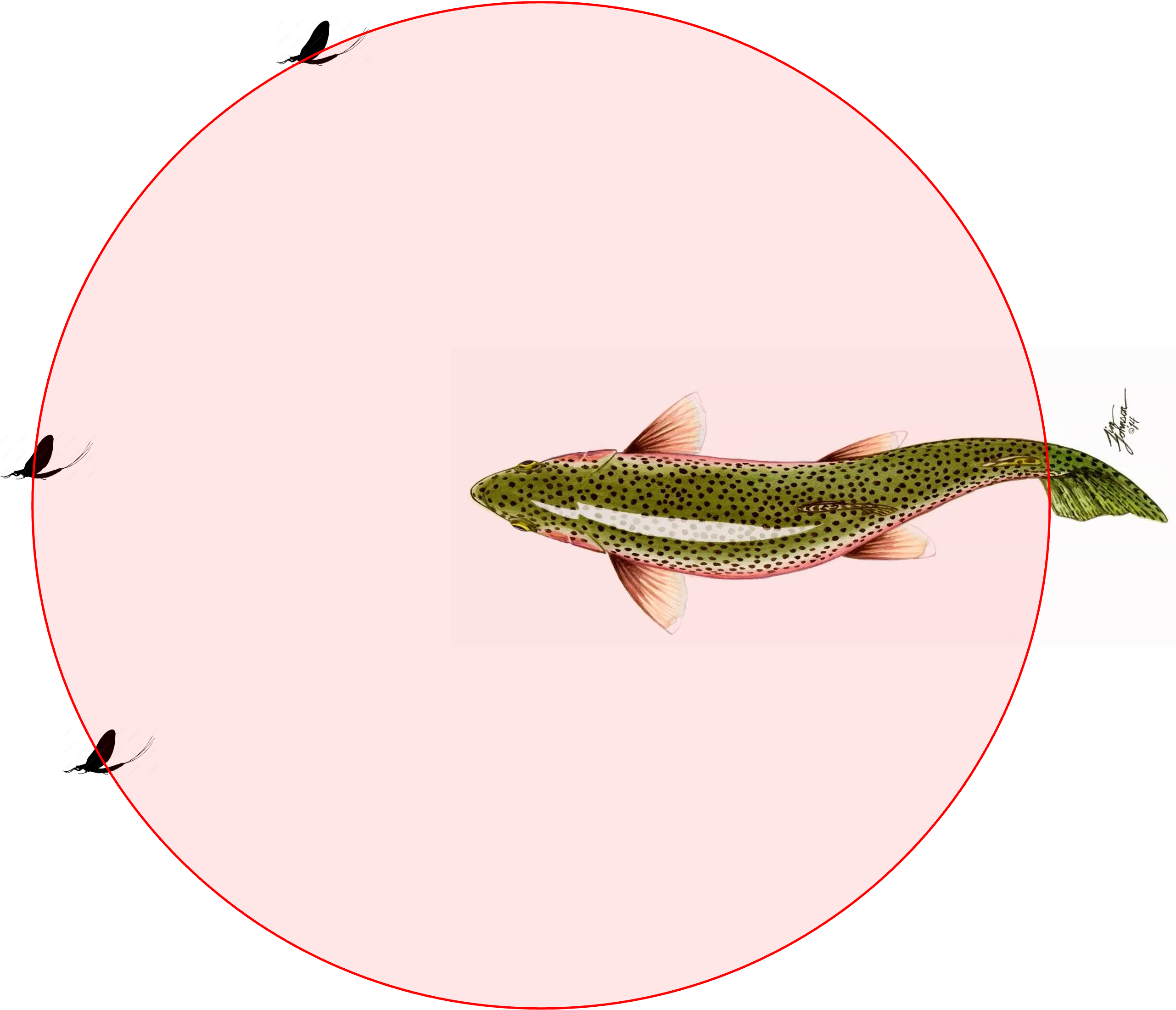
That circle drawn by the cone could actually be very large, many times the size of the fish itself. From Part-1 of this series we know it depends on the depth the fish is sitting below the surface. The insect could appear anywhere in that circle and be visible to the fish. This is probably one of the most challenging parts of dry fly fishing and I’ll come back to it in a bit. For now just remember that the region trout cover in their rise is 2-dimensional on the surface. It’s not just a straight back and front thing. This wonderful video shows this effect extremely well and includes one big bully of a brown (go to 20:35 if this doesn’t cue correctly).
Now comes the critical part of the calculus. There is one thing at which trout seem to be very adept. That is being able to determine which insect they can in fact intercept. You may see a trout miss every once in a while, but for the most part they hit their target with uncanny precision. This includes often turning around and taking it downstream of their own position. A fisherman has to be able to gauge where to present that fly in order to allow the trout to intercept it. And this is where an understanding of the trout’s field of view and the water conditions come together.
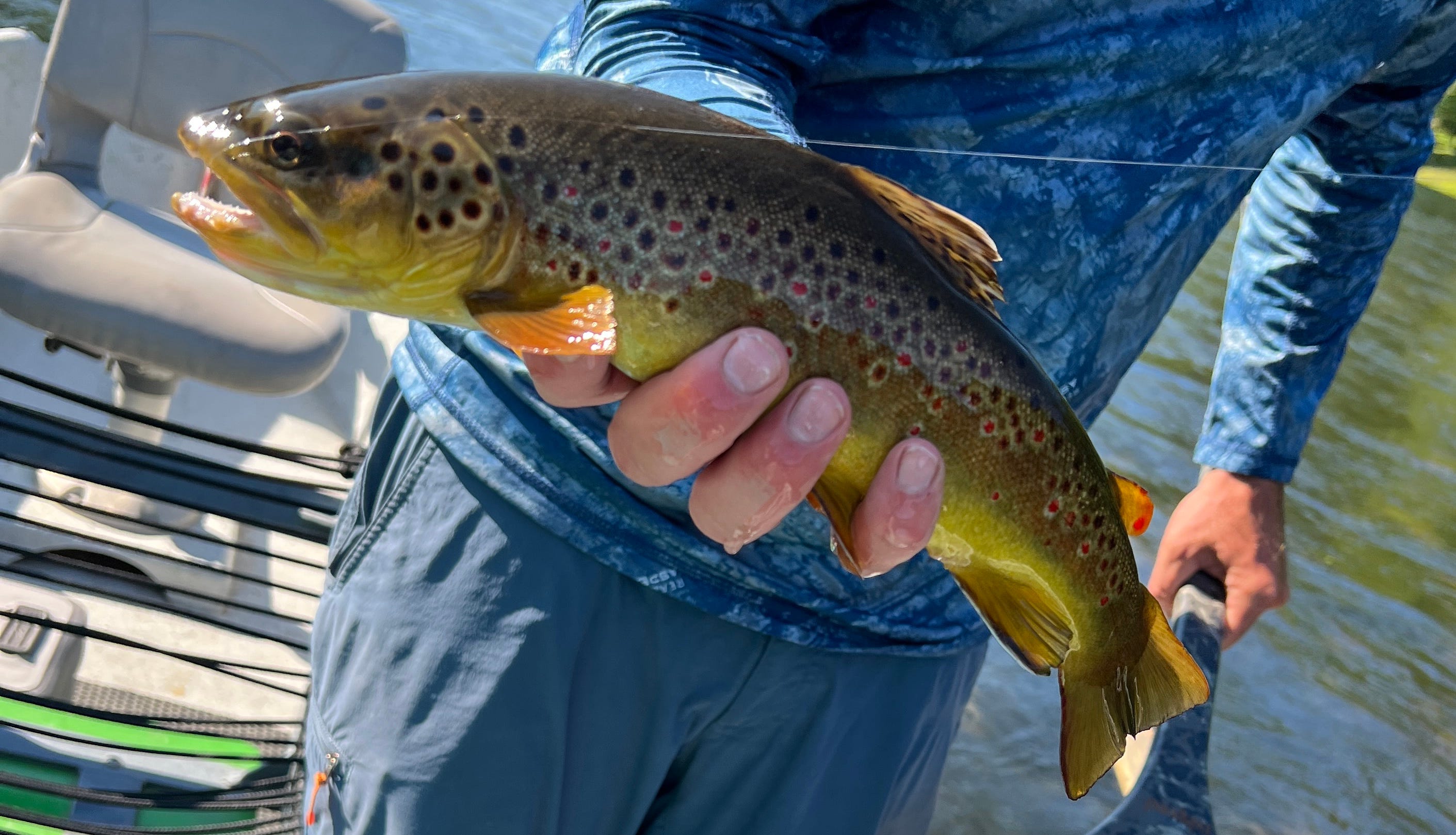
One of the rivers I fish with some regularity is the South Fork of the Holston in Eastern Tennessee. The South Holston has a legendary hatch cycle of yellow mayflies that starts in mid to late April with the Ephemerella Invaria and lasts into the fall with Leucrocuta Hebe and other similar late season species. The South Fork is a hydroelectric generation tailwater, and strangely the mayflies don’t seem to hatch much under low water conditions but more so during high waters when the dam is generating. A lot of South Holston trout don’t seem to change positions much between low and high water conditions. The river also doesn’t spread out in high water conditions. All that happens is the depth and speed of the water increases. Most of the trout still hold in the same lies they did under low water conditions, except the water is now several feet deeper. As a result you’ll see them rising to these yellow mayflies from great depths, often on the order of 5-6 feet. At a depth of 5 ft their cone of vision is 5.67 ft in radius. But unless the fish is spending an inordinate amount of energy fighting currents and propelling itself to rise, it probably needs a lot of advance notice to intercept the fly. Notice it would get if it saw the fly 6 feet ahead of its lie and 7-8 feet ahead of where it intercepted the fly. Especially since the river is moving along at quite a pace during high water. To successfully catch those deep rising fish an angler must gauge how deep the fish is and then present their cast far enough upstream so that the trout has enough time to rise to the fly. Also the fish may be rising to one side or another. Sometimes the currents are such that fish tend to rise to one side or another. Casting to these fish can be an exploration worthy of Dr Livingstone, unless one can see the fish. However it can be done. Here’s one taken by yours’ truly and being held up by one of the three best fishing guides I’ve ever fished with - Matt Murphy.
However, not all fish hold deep and the shallow positioned fish poses a whole different problem. Now the trout’s window is very tight and you have very little margin of error in the accuracy of your cast. A fish sitting 4 inches below the surface only has a field of view that is 5 inches in radius.
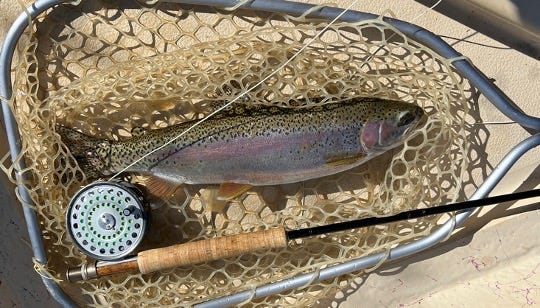
Big rivers like the Colorado have huge eddies in which you can park a drift boat and still need a long cast to cover the entire eddy. In the fall these eddies get concentrations of BWOs twisting and turning in the myriad little counter currents. Fish like this rainbow will hold a couple of inches below the surface just tilting up to such in the passing insects. Now you need an accurate cast. You don’t need a long drift. Six inches in front of the trout is all that’s needed. But the radius of the window they have may only be 3 or 4 inches.
Another challenging situation is one you encounter in big rivers with mayflies and midges hatching in relatively slow, smooth flows in deep pools. The fish in these situations become cruisers. Anyone who’s fished the main stem of the Delaware, the Colorado or the Watauga in Tennessee is familiar with this scenario. These fish cruise very close to the surface and have a tiny window. The key is to present the fly to the fish when you can put it into the sight picture of a cruising fish. You don’t need a very long drift if you can place the fly accurately. On some rivers (the Big D being one) the fish will cruise in a straight line for hundreds of feet before going back to the bottom of their track and doing it again. This situation is easier because you can just cast downstream along their cruise path and hold tight for the confluence. On other rivers like the Watauga, they tend to meander on their cruise. Now you need to drop the fly 3-4 inches in front of their noses. That accuracy produces great results.
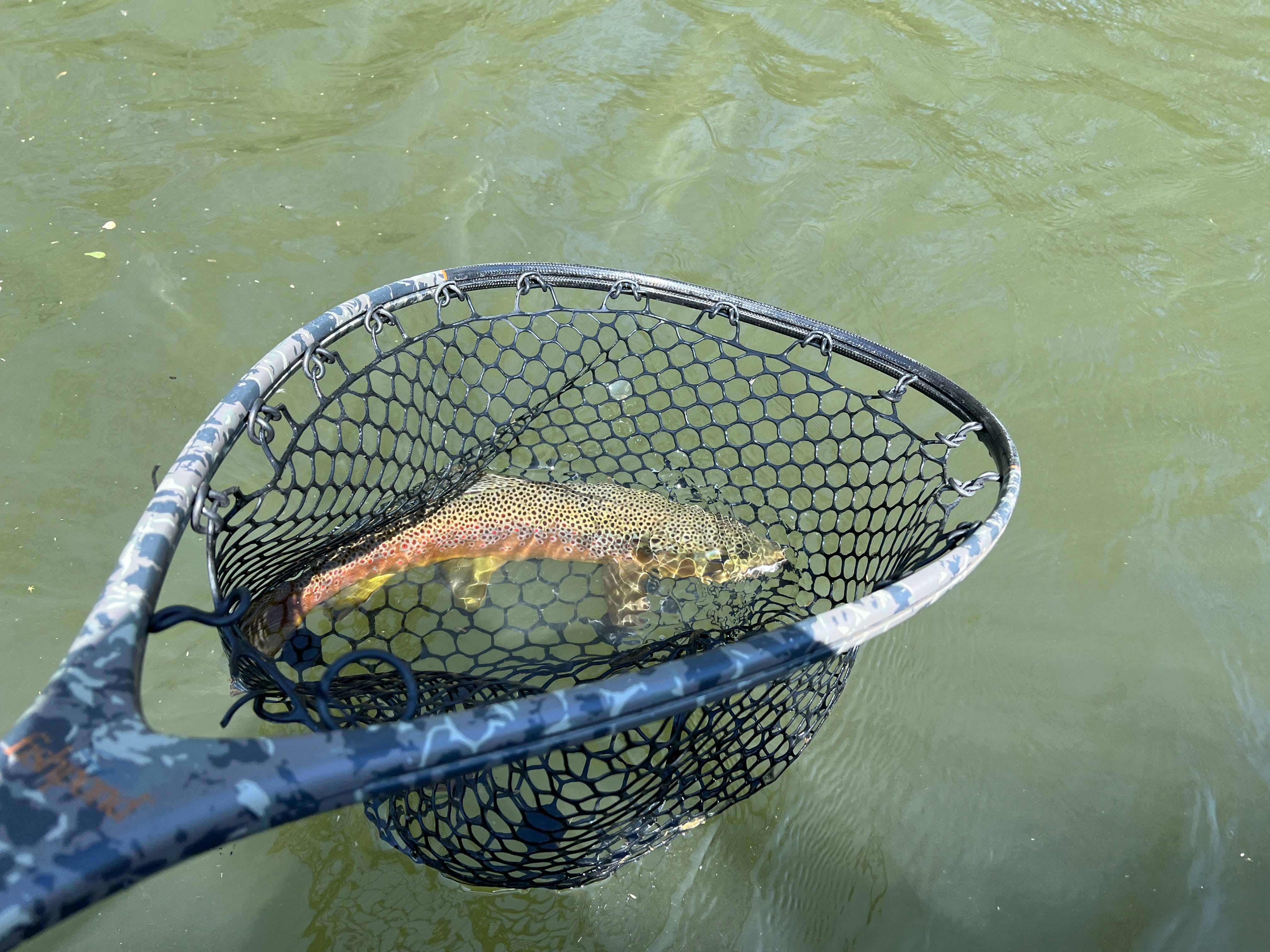
Lastly as I said earlier trout often tend to favor rising to one side or another. I’m guessing it’s mostly because the currents favor that, but it could be that fish sees better in one direction or the other. Who knows what the reason, but the basic fact is that trout may favor one side over the other. If you can see the fish you should be aware of that and target your cast to the appropriate side.
The problems with fly placement always arise when you can’t see the fish. Now is when your understanding of the cone of vision and the depth and speed of the water become important.
Presenting the Fly to Rising Fish
I’m not talking here about casting techniques and such. I want to talk about where you want to place your dry fly to get a fish to take. There are three situation we need to address - one where you have a rising fish and you can see the fish and its rise path, one where you have a rising fish but can’t see where it’s coming from, and one where you’re blind fishing with a dry fly (yes it can be an extremely productive way to fish, often surpassing nymphing).
The first thing to remember in all these cases is that the fish has a cone of vision. Your fly must be in that cone for it to be taken by a fish. The deeper the fish is, the more time it takes for the fish to rise from its lie to the fly. But that is offset by the larger cone and the increased time it has to intercept. A shallower lying fish doesn’t need all that time to reach the surface, but also has a smaller field of view.
If you can see the fish life becomes a bit simpler. You need to put your fly about 1.25 to 1.5 times further up from the fish than its depth. And of course you need to gauge if the fish favors one side or the other and place your fly accordingly. Gauging the depth at which the fish is lying is difficult. If you don’t have success try placing the fly further upstream. Having the fly too close to the fish is never your problem (unless you splash it down and spook the heck out of the fish). But the key is giving the fish enough time to rise and intercept your fly. And remember, your gauging this distance from where the fish is lying and not from where it takes a fly. That could be several feet away from where it actually picks up the fly.
The reason I advocate the 1.25-1.5 times as opposed to the size of the cone is to allow for the lenses formed by the legs t do their thing in attracting the fish’s attention. Goddard and Clark have a good description of this in their book. And here’s a video that actually shows what they observed. (Around the 10:49 mark if the video doesn’t cue there).
Keep this same distance in mind when casting to shallow rising fishing, especially the ones sitting or cruising close to the surface in slow water. It’s often hard to get a good drag free drift in those types of settings, but you don’t need a long drift. Just remember the fish has a smaller window. Every once if a while you’ll see such cruising trout either dart forward or turn to the side to take a fly that should be outside its window. That’s the twinkle from those lenses.
Things get a little more complicated when you can see the rise but not the fish before it rises or where it’s lying. Obviously you need to be able to gauge the depth and speed of the water. That should tell you whether the fish can lie close to the surface (they typically won’t do that in fast water) or is down at depth. That in turn will give you an idea of how far up above the rise you need to cast. Of course, you have no idea how far back the trout drifted to take your fly, so the only recourse you have is to cast successively further upstream. The other problem of course lies in the fact that the fish could be rising to one side or the other. what you need to do then is form a mental grid to both sides and ahead of the rise form and start dropping the fly into those grid squares. The size of the grid obviously depends on your estimate of the depth at which the trout could be lying. Deeper lying trout can be approached with a coarser grid.

Of course how big a grid you cast into and how long you do it depends on your level of patience. I have none, so I make about three shots at it and then start losing it. Others can work this sort of grid for a while. But it really isn’t that tedious. If each cast and drift took 10 seconds, you could cover 10 spots in the grid in less than 2 minutes. That isn’t really that long, in the scheme of things while working to a rising fish.
Also watch the surface current and floating debris for clues. If the the fish is rising to one side or another it is often because of how the current behaves in that area. Suds lines on the surface or even leaves and sticks floating below the surface can give you a clue of what might be going on. But the critical thing to remember is that the fish could be rising to a fly anywhere in the circle formed by its cone of vision, and you have to find the right one to hit. Watch naturals if you can. You’ll see the ones that get taken. Their drift line will give you a path to put the fly down.
All the same stuff applies when you’re blind fishing using dry flies. You imagine where the trout might be lying. Now just place your cast in a grid that would offer up the fly to a trout lying at the spot you envision. same things, cast ahead of the perceived cone of vision, cover both sides if you can and look for features that might give you a hint.
Suds lines are great trout attractors - don’t worry about where you think the lie might be, fish the suds line - the fish can come from far and wide.
The pillow in front of rocks is another good spot. The rock forms, what we aerospace engineers call a stagnation point. There is a whole lot of dead and slow water ahead of the rock. That’s why the fish is there.
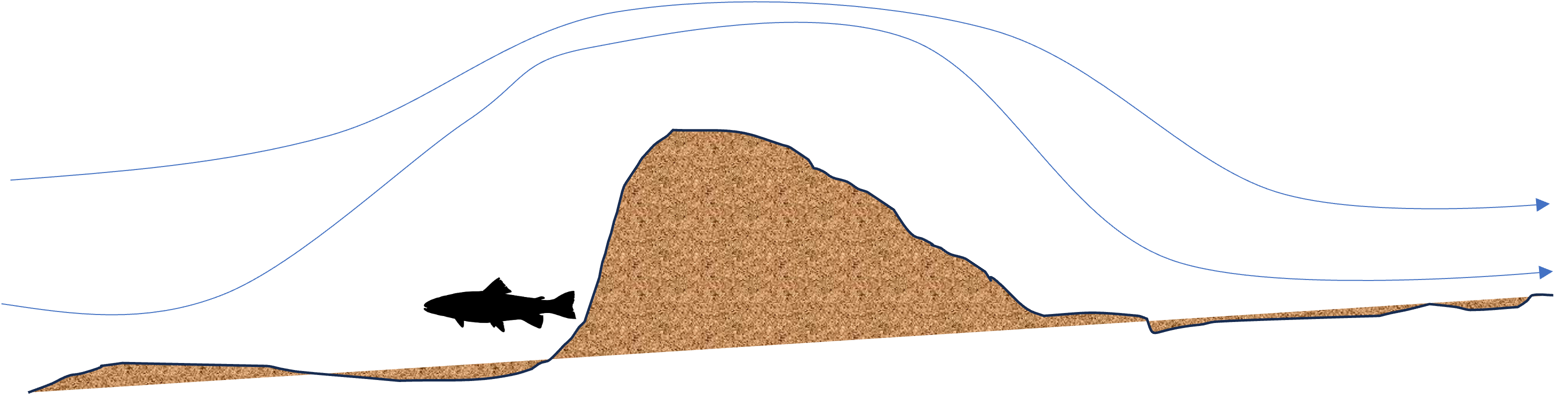
If you can get a fly into the trout’s window straight ahead of the stagnation point he can in fact scoot up and take the fly. currents flowing to the sides of the rock tend to be less conducive to a rise. Here go for the straight down the middle cast first. Again, remember the earlier you get the fly into the trout’s window the better your chances of getting a take.
You’ll often see trout sitting at the edge of an eddy right where the current sweeps things into the eddy. Cast your fly up into the current some way ahead of the fish. let it give them the little twinkle magic from the legs and the n appear in their window.
Never, ever cast your fly to where you saw the fish rise. That’s the intercept point. Keep the Snell’s window and the lens formed by the trout’s feet and the breaking up of the mirror outside the window in mind and present your fly accordingly.
This part of the series dealt with what I see as the most common issue - not casting the fly where it should be. Hopefully this helps show why and where to put your fly. The next part of the series will deal with rise forms and what information to draw from there. I will forewarn you that I’m going to commit all sorts of heresy in that part, so hang on to your britches.
Another great read, and learned a little more. Like never casting to where the fish rose. That at least for me is the natural inclination. That's where the fish is, or was, I've now learned. Which means everything applies to others fish as well. Such as the bass you see rising on the lake at dusk.